
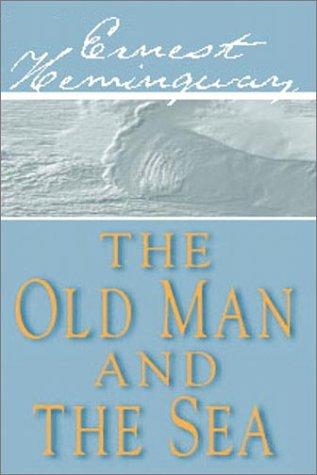
The Old Man and the Sea
Ernest Hemingway · 1899–1961 · USA
Why it matters
An old Cuban fisherman, a giant marlin, and the sharks: endurance distilled to parable. It won the Pulitzer, clinched the Nobel, and gave the iceberg style its most read demonstration.
At a glance
Simple, parable-like prose and a single-thread plot make this Hemingway's most accessible book.
Deep dive
Why Hemingway frames one old fisherman's days-long fight with his greatest catch as a contest between equals rather than a hunt, and what he means by insisting a man can be destroyed but not defeated.
Written for readers who have finished the book. No plot recap, and nothing here is safe to read first.
Themes & symbolism
Santiago's three-day fight with the marlin is framed as a contest between equals rather than a hunt — he calls the fish brother, admires its size and dignity, and grieves killing it even as pride demands he finish the job. That code, endurance and grace applied to a task regardless of what it yields, is Hemingway's clearest late statement of what his heroes owe the world: not victory, which is rarely available, but the discipline of doing a hard thing perfectly for its own sake. 'A man can be destroyed but not defeated' is the novel's thesis stated outright, and Santiago's insistence on fighting the marlin honestly, and later fighting the sharks with a knife lashed to an oar long after the outcome is settled, is the thesis demonstrated rather than merely asserted.
Hemingway threads restrained Christian imagery through the ordeal without ever letting Santiago become a saint outright: he carries the mast up from the shore across his shoulders like a cross, collapses face down with his arms outstretched, and sleeps in something close to a crucified posture. The sharks that follow, arriving in strict order from the noble, worthy mako to the scavenging makos and galanos that finish the job, literalize time and mortality stripping any human achievement down to bone — and the tourists who later mistake the skeleton lashed to his skiff for a shark complete the joke: the world outside Santiago and Manolin will never know what actually happened out there, and Hemingway doesn't seem to think that diminishes it.
The Iceberg Style at Its Purest
Hemingway insisted the book could be read purely as an adventure story by readers who wanted nothing more, and as allegory by readers who wanted more, without one reading canceling the other — and the prose is built to support both at once. Short declarative sentences, almost no interior commentary, and a plot stripped to a single old man, a single fish, and the sea: the parable structure is the iceberg theory made into a whole novel, weight carried entirely beneath a surface that never announces its own depth.
The last seal: what actually happens, and why it lands the way it does.
The ending, explained
Santiago returns with nothing but the marlin's skeleton lashed to his skiff, having won the fight against the fish and lost the fight against the sharks that stripped it on the long tow home. He carries the mast to his shack and collapses into a deep sleep; Manolin finds him, weeps at his torn hands, and vows they'll fish together again no matter what his family wants. At the village terrace, tourists glance at the giant skeleton and idly ask a waiter what kind of shark it was, utterly missing what it actually represents. The closing image — Santiago dreaming, as he often does, of the lions he watched on the beaches of Africa as a young man — signals that whatever the sharks took, the private sense of having lived well and fought honestly survives untouched.
Where to go next
 Ernest Hemingway · 1926The Sun Also RisesLvl 4Fast paced
 Ernest Hemingway · 1929A Farewell to ArmsLvl 4Fast paced
 Robert Olen Butler · 1992A Good Scent from a Strange MountainLvl 4Medium pace
 Tim O'Brien · 1990The Things They CarriedLvl 4Medium pace
 Joan Didion · 1970Play It as It LaysLvl 6Fast paced
 Richard Ford · 1995Independence DayLvl 6Slow burn