
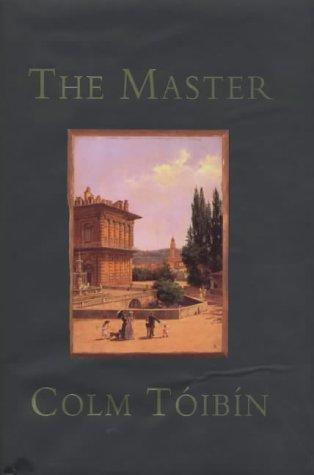
The Master
Colm Tóibín · b. 1955 · Ireland
Why it matters
Henry James moves through the 1890s haunted by a failed play, a friend's suicide, and a lifetime of desires he never let himself name. Tóibín's hushed, exacting portrait of a master of restraint examined from the inside.
At a glance
Quiet, interior prose that withholds as much as it reveals.
Deep dive
What Henry James gave up, and to whom, in exchange for a lifetime spent turning the people closest to him into material, in the years around his most public failure.
Written for readers who have finished the book. No plot recap, and nothing here is safe to read first.
Themes & symbolism
Tóibín opens with the catastrophic 1895 opening night of James's play Guy Domville, booed by the audience when he steps onstage to take a bow, a public humiliation Tóibín treats as the crack through which the rest of the novel enters James's more guarded interior life. What follows is not a career comeback narrative but a retreat into privacy so complete it starts to look like the real subject: James's capacity for intimacy consistently rerouted into observation, correspondence, and fiction rather than anything resembling a lived attachment, whether to Oliver Wendell Holmes Jr. in his youth or to the sculptor Hendrik Andersen decades later.
Two dead women haunt the novel more than any living character does: James's cousin Minny Temple, whose early death he transmuted years later into Milly Theale and, more distantly, Daisy Miller, and his close friend Constance Fenimore Woolson, whose death in Venice leaves James newly guilty about a friendship he had kept carefully unresolved for years. Tóibín lets the rumor that James disposed of Woolson's dresses by weighting and sinking them in the Venetian lagoon sit in the novel unconfirmed but vivid, an image of a man drowning the evidence of an intimacy he could use in fiction but never quite live.
A Sister Kept at the Exact Distance of a Character
James's sister Alice, a brilliant invalid who spent much of her adult life bedridden before her death from breast cancer in 1892, appears throughout the novel as the family's other case of a mind too large for the outlets available to it, hers foreclosed by illness and by the era's limits on unmarried women, his by a discipline of self-withholding he chose. Tóibín draws the parallel without forcing it: Alice's diary, published after her death, becomes one more instance of a sibling's private interior turned into public material, the exact transaction James performs on everyone else in the book, including, finally, himself.
Lamb House, or a Man Building His Own Monastery
The novel closes not on a crisis but on James's settled domestic order at Lamb House in Rye, a small Sussex town where his days are structured around writing, walking, and the company of a devoted manservant, visited occasionally by a brother, William, whose robust American practicality only underlines how far Henry has organized his life around its absence. Tóibín frames this quiet, celibate discipline as neither tragedy nor triumph but a deliberate architecture, a life James built specifically to keep wanting at a manageable distance, the same distance from which he had always written best.
Where to go next
 Colm Tóibín · 2009BrooklynLvl 3Medium pace
 Yael van der Wouden · 2024The SafekeepLvl 4Slow burn
 Jenny Erpenbeck · 2015Go, Went, GoneLvl 5Medium pace
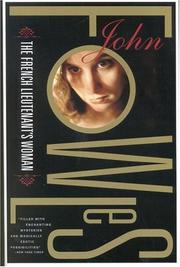 John Fowles · 1969The French Lieutenant's WomanLvl 6Medium pace
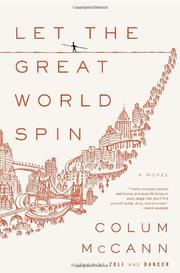 Colum McCann · 2009Let the Great World SpinLvl 5Medium pace
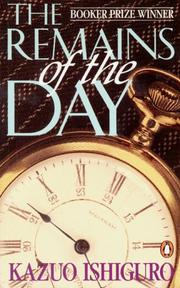 Kazuo Ishiguro · 1989The Remains of the DayLvl 5Slow burn