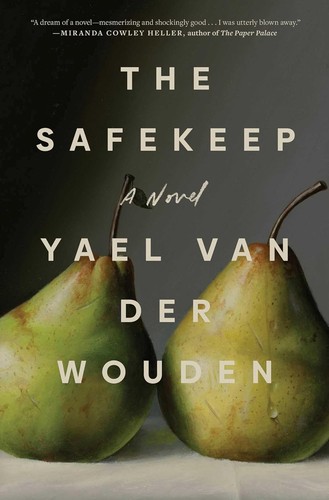
The Safekeep
Yael van der Wouden · b. 1987 · Netherlands / Israel
Why it matters
A reclusive Dutch woman is unsettled when her brother's girlfriend moves in for the summer of 1961, suspicion curdling into obsession before a discovery unravels her family's wartime past. A tightly controlled debut that saves its hardest revelation for last.
At a glance
Controlled, slow-building prose is easy to follow, with tension mounting toward a late structural reveal.
Deep dive
A reclusive Dutch woman's suspicion of her brother's new girlfriend curdles into obsession over one strange summer, and what the novel is actually asking is how a comfortable postwar household came to be furnished so completely.
Written for readers who have finished the book. No plot recap, and nothing here is safe to read first.
Themes & symbolism
Isabel lives alone in her late mother's house in the Dutch provinces, keeping scrupulous inventory of its china and silver, and her fixation on small household thefts, a spoon missing here, a dish out of place there, once Eva moves in for the summer reads at first as simple neurotic possessiveness. Van der Wouden lets that possessiveness slowly reveal itself as something closer to instinct than paranoia: Isabel senses correctly that something about her ownership of this house and its contents does not add up, years before she or the reader learns why.
The novel is set in 1961, sixteen years after the war's end, in a Netherlands that has spent that entire interval declining to look closely at how so many comfortable Dutch households acquired their furniture, and van der Wouden uses the slow-burning romance between Isabel and Eva, suspicion tipping into desire once Isabel's brother Louis is out of the picture, as the mechanism that finally forces the house's real history into the open. Desire here functions as a kind of accidental excavation: wanting to know everything about Eva is what makes Isabel careless enough to find the diary that undoes her family's version of events.
Louis himself, charming and absent for most of the book, represents the generation that inherited the war's spoils without ever having to reckon with them directly; his casual assumption that the house, the china, the whole domestic order simply belongs to his family is the unexamined privilege the novel spends its length dismantling around him while he's off elsewhere.
A Debut Written in a Third Language
Van der Wouden, raised between Israel and the Netherlands and most fluent in English despite it being neither of her first two languages, has spoken about writing in a tongue with no inherited emotional weight from her own family as a kind of freedom, distance enough to approach the Netherlands' wartime property seizures without the reflexive defensiveness a Dutch-language telling might carry. The novel's tight, controlled prose, withholding its central revelation until the very end of a relatively short book, owes something to that chosen remove.
The last seal: what actually happens, and why it lands the way it does.
The ending, explained
Isabel discovers Eva's childhood diary and learns that Eva is the daughter of the house's original Jewish owners, sent into hiding as a child while Isabel's family, entrusted with the property 'for safekeeping' during the deportations, simply kept it once the war ended and its rightful occupants never returned to reclaim it. Confronted with her own family's theft dressed up for two decades as ordinary inheritance, Isabel is left to decide what an apology can possibly repair this late, with the house's furniture itself standing as unrefusable evidence. The novel ends without a clean restitution; what it offers instead is Isabel's reckoning, forced open by desire rather than conscience, with a complicity she had spent her whole adult life mistaking for simple good taste in china.