
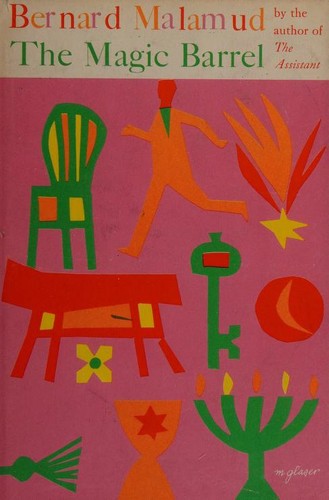
The Magic Barrel
Bernard Malamud · 1914–1986 · United States
Why it matters
Thirteen stories of struggling immigrants, shabby matchmakers, and quietly miraculous grace, mostly set among New York's Jewish poor. Malamud's National Book Award-winning collection distilled his spare, parable-like style into its purest form.
At a glance
Spare, parable-like prose stays plain even as its moral stakes run deep.
Deep dive
What kind of miracle Malamud's matchmakers and angels actually deliver, once you notice how often it costs the person receiving it something they didn't expect to give up.
Written for readers who have finished the book. No plot recap, and nothing here is safe to read first.
Themes & symbolism
Malamud sets most of these thirteen stories among New York's Jewish poor, shoemakers, tailors, students, men whose poverty is total but whose moral stakes are never small. In 'The First Seven Years,' the shoemaker Feld tries to steer his daughter Miriam away from his awkward assistant Sobel toward a more polished suitor, only to learn that Sobel has already labored beside Feld in near silence for five years purely out of love for her, an echo of Jacob's seven years for Rachel that Malamud never spells out and doesn't need to.
The title story pushes the pattern furthest: Leo Finkle, a rabbinical student too absorbed in study to have ever courted anyone, hires the marriage broker Pinye Salzman, then falls not for any of Salzman's respectable candidates but for a photograph of Salzman's own daughter Stella, a woman her father describes as lost, wild, no good. Malamud refuses to let the reader decide whether Salzman engineers this meeting or merely fails to prevent it, and either way the story's grace, if that's what it is, comes wrapped in exactly the shame Salzman warned Leo about.
Salzman Praying Kaddish for a Living Daughter
The story's last image has Salzman leaning against a wall chanting the mourner's prayer while Leo runs toward Stella under a streetlamp, as if Salzman is burying the daughter he's simultaneously handing over to a husband. Malamud lets that gesture carry more ambiguity than any explanation could: relief, grief, calculation, and something like blessing are all plausible readings at once.
Manischevitz and a Black Jewish Angel Named Levine
'Angel Levine' gives the collection its most explicit test of faith: Manischevitz, a tailor broken by illness and misfortune, is visited by a man claiming to be an angel sent to help him, one detail he cannot get past, that the angel is Black. Only after Manischevitz tracks the man to a Harlem nightclub and chooses to believe despite every reason not to does his fortune turn, Malamud's clearest statement that in this book, grace is available strictly to people willing to look foolish first.
Where to go next
 Bernard Malamud · 1957The AssistantLvl 5Slow burn
 Bernard Malamud · 1966The FixerLvl 6Medium pace
 Isaac Bashevis Singer · 1960The Magician of LublinLvl 5Medium pace
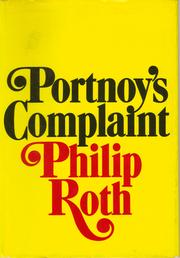 Philip Roth · 1969Portnoy's ComplaintLvl 5Fast paced
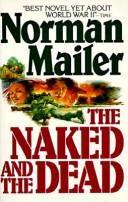 Norman Mailer · 1948The Naked and the DeadLvl 6Fast paced
 Saul Bellow · 1964HerzogLvl 7Slow burn