
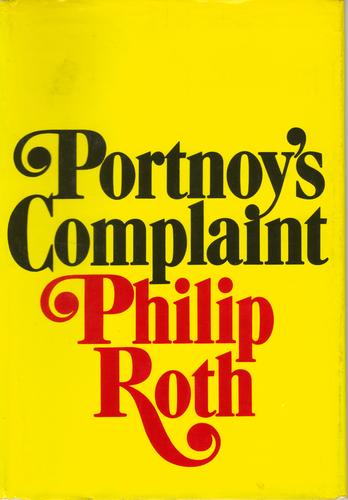
Portnoy's Complaint
Philip Roth · 1933–2018 · USA
Why it matters
One long howl from the analyst's couch: Jewish sonhood, desire, and guilt with every filter removed. The scandal that made Roth famous and the monologue that changed what American fiction was allowed to say.
At a glance
A single unbroken confessional rant, but its manic momentum carries readers along.
Deep dive
Why a monologue this fluent, this compulsively funny, might be less a catharsis than a symptom Roth is diagnosing in real time.
Written for readers who have finished the book. No plot recap, and nothing here is safe to read first.
Themes & symbolism
Portnoy's entire monologue is an act of diagnosis performed on himself in real time, and the joke Roth is playing is that self-diagnosis this fluent, this articulate, and this compulsively funny is itself a symptom rather than a cure. Sophie Portnoy's suffocating control over her son's body — his diet, his bowels, his every physical function narrated back to him as moral failure — becomes the template for everything that follows: Alexander cannot experience desire without simultaneously experiencing guilt, cannot separate his intellect and public respectability from what he treats as a shameful, ungovernable private self. The comedy is the point, not a decoration on top of the trauma. Roth pushes the explicitness of Portnoy's sexual confessions past what American fiction had allowed itself, and the effect is to make guilt and hilarity inseparable — the reader laughs and flinches in the same breath, which is exactly the bind Portnoy himself can't escape.
"The Monkey" — Mary Jane Reed, whom Portnoy barely dignifies with her real name — represents everything he wants and cannot tolerate at once: total sexual availability paired with a class and temperament he considers beneath the life he's supposed to want. Their trip to Rome, where the relationship curdles into mutual humiliation, plays as the logical endpoint of a man who can only desire what he also despises, in himself and in his partner both. Jack Portnoy's constipation, meanwhile, is the novel's quieter running joke and its saddest one — decades of a life-insurance career and a marriage under Sophie's thumb have left him as blocked, literally and figuratively, as his son is compulsively unblocked, and father and son end up as mirror images of the same repression expressed in opposite directions.
Impotence in Israel
The novel's late detour to Israel is its cruelest irony. Portnoy goes looking for a healthier, unashamed version of Jewish identity and finds it embodied in a strong, direct kibbutznik who wants him without any of the neurotic negotiation he's used to — and at the exact moment his fantasy is offered to him unconditionally, he goes impotent. The gag is structural: his dysfunction was never really about Jewish guilt versus gentile freedom, or America versus Israel, or any external condition he could escape by changing location. It travels with him. Geography was never going to fix a self this thoroughly built around the collision of desire and shame, and the woman's own bewildered contempt for his failure only confirms that the problem was diagnosed correctly from page one — it's his, not his mother's, not America's, and not fixable by finding the supposedly right kind of partner in the supposedly right place.
The last seal: what actually happens, and why it lands the way it does.
The ending, explained
As Portnoy's account catches up to the present moment of the analysis itself, his fluent monologue finally breaks down into inarticulate, wordless howling, rendered typographically on the page as pure sound rather than sentences — the one point where his compulsive talkativeness fails him. Then comes the novel's single deadpan punchline: Dr. Spielvogel's clinical voice, breaking the frame for the first time, suggesting that now, perhaps, they can begin. The line retroactively strips the entire preceding confession of any therapeutic weight — it wasn't treatment, it was just the patient warming up — and denies both Portnoy and the reader the relief of resolution.
Where to go next
 Philip Roth · 1959Goodbye, ColumbusLvl 4Medium pace
 Philip Roth · 1995Sabbath's TheaterLvl 6Medium pace
 Philip Roth · 1997American PastoralLvl 6Slow burn
 Saul Bellow · 1964HerzogLvl 7Slow burn
 Joshua Cohen · 2021The Netanyahus: An Account of a Minor and Ultimately Even Negligible Episode in the History of a Very Famous FamilyLvl 6Medium pace
 Bernard Malamud · 1957The AssistantLvl 5Slow burn