
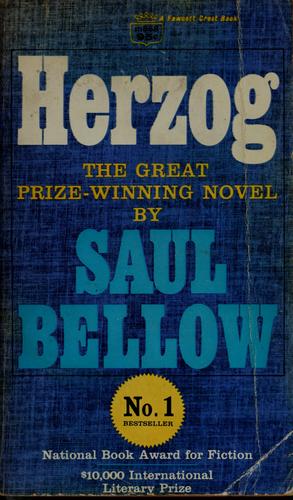
Herzog
Saul Bellow · 1915–2005 · Canada / USA
Why it matters
A twice-divorced professor writes unsent letters (to Nietzsche, Eisenhower, God) while his life burns down. The postwar novel of consciousness at its funniest and most humane; a bestseller about a man thinking.
At a glance
Stream-of-consciousness letters and dense intellectual allusion slow the pace.
Deep dive
Why Moses Herzog writes to Nietzsche, Eisenhower, and God but can't confront the two people who actually wronged him, and what it means that his last recorded thought is having nothing left to say.
Written for readers who have finished the book. No plot recap, and nothing here is safe to read first.
Themes & symbolism
Herzog's unsent letters aren't confession, they're evasion dressed as intellectual labor — writing lets him refight his marriage with Nietzsche and Heidegger as seconds instead of ever confronting Madeleine or Valentine Gersbach directly. The letters escalate from domestic grievance to grand philosophical complaint (against Eisenhower's foreign policy, against "wastelandism" itself, against the whole modern intellectual fashion of despair) precisely because abstraction is safer than the specific humiliation of being cuckolded by his own best friend. Bellow keeps the comedy and the anguish running on the same track: Herzog is genuinely devastated and also, audibly, a man who can't stop being clever about his devastation, and the gap between those two registers is where the novel's famous tragicomic tone lives.
The clearest test of that gap comes when Herzog flies to Chicago with his dead father's pistol, intending — he tells himself — to kill Madeleine and Gersbach, and instead peers through a bathroom window to watch Gersbach tenderly bathe Herzog's own daughter. The sight disarms him more completely than any argument could; thought, the novel suggests, is what Herzog does instead of acting, and here for once seeing does the job thinking never manages. Bellow surrounds him with what the book itself calls "reality instructors" — Gersbach, the lawyer Sandor Himmelstein, Madeleine — people who claim a hard-won mastery of how the world actually works and use it to bully Herzog for his excess of ideas. The letters are Herzog's rebuttal and his prison at once: proof he can out-think anyone in the book, and the reason he can't simply live.
The Reality Instructors
Sandor Himmelstein, the hunchbacked lawyer who lectures Herzog on suffering while fleecing him for a fee, and Gersbach, who steals Herzog's wife while performing brotherly concern at dinner parties and on the radio, both traffic in the same claim: that they, unlike Herzog, have looked reality in the face. Bellow lets the claim curdle under scrutiny — Himmelstein's toughness is self-pity in a harder register, Gersbach's plainspoken manliness is theater good enough to fool a whole social circle. Herzog's intelligence, mocked throughout as impractical, turns out to be the only thing in the book that isn't performance, even when it can't save him from being ridiculous.
A Marriage Bellow Lived Through Twice
Bellow wrote Herzog in the wreck of his own second marriage, to Alexandra Tschacbasov, whose affair with a family friend supplied the Madeleine-Gersbach betrayal almost intact — an autobiographical debt so direct that friends in Bellow's Chicago circle reportedly recognized themselves. The novel became his bestseller and his prize-winning peak partly because it refused to prettify the humiliation into dignified suffering; the letters' comic excess is Bellow's own revenge and self-mockery running simultaneously, a portrait of the wounded intellectual that indicts the pose even while indulging it.
The last seal: what actually happens, and why it lands the way it does.
The ending, explained
After months of frantic correspondence, Herzog simply stops. He retreats to his half-ruined inherited house in Ludeyville, the pregnant Ramona announces she's coming to see him, and rather than draft a defense or a plan, Herzog putters — repairing a window, arranging flowers, lying down in the overgrown garden. The letters, which have driven the entire book, go quiet without explanation or resolution; Madeleine and Gersbach are never punished, the marriage never avenged, nothing settled in the way four hundred pages of argument would seem to demand. Bellow ends on Herzog's own inventory of his silence: he has "no messages for anyone. Not a single word." It's a deliberate reversal of the novel's whole method — a man who thought his way through every crisis finally choosing, wordlessly, just to be.
Where to go next
 Saul Bellow · 1953The Adventures of Augie MarchLvl 7Fast paced
 Saul Bellow · 1970Mr. Sammler's PlanetLvl 7Slow burn
 Saul Bellow · 1975Humboldt's GiftLvl 6Slow burn
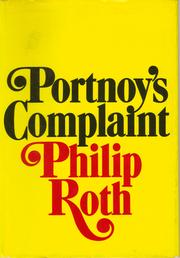 Philip Roth · 1969Portnoy's ComplaintLvl 5Fast paced
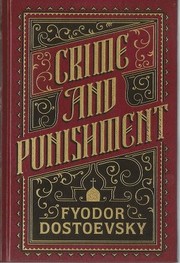 Fyodor Dostoevsky · 1866Crime and PunishmentLvl 6Fast paced
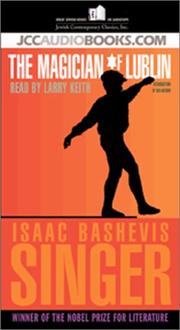 Isaac Bashevis Singer · 1960The Magician of LublinLvl 5Medium pace