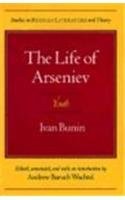
The Life of Arseniev
Ivan Bunin · 1870–1953 · Russia
Originally Жизнь Арсеньева (Russian)
Why it matters
A Russian émigré recalls his provincial childhood, first loves, and a vanished country estate in prose of aching sensory precision. Bunin's autobiographical novel, singled out in his Nobel citation as his finest sustained work.
At a glance
Lyrical, memory-driven prose with little plot momentum to carry the reader forward.
Deep dive
Bunin's own boyhood on a crumbling provincial estate, rebuilt from exile in France into a five-part novel about how completely memory can outlive both a country and the woman it belongs to.
Written for readers who have finished the book. No plot recap, and nothing here is safe to read first.
Themes & symbolism
Written from emigration in the 1920s, The Life of Arseniev reconstructs a pre-revolutionary Russia that had, by the time Bunin was composing it, already ceased to exist, and the novel's texture reflects that double distance: Aleksei Arseniev narrates his own provincial childhood, schooling, and early ambitions as a writer with a sensory precision, the smell of hay, the particular quality of steppe light, that reads less like ordinary nostalgia than like a man rebuilding a country stone by stone because it's the only way left to keep it. Bunin's prose, famously exact and unhurried even by the standards of Russian realism, treats every remembered object as worth dwelling on precisely because dwelling is now the only access anyone has left to it.
The novel's final section turns from landscape to a single love affair, Arseniev's relationship with Lika, and Bunin lets his own jealousy and restlessness curdle a genuinely deep attachment without ever excusing it: Arseniev's infidelities and moods drive Lika away long before the novel is finished punishing him for it, and the retrospective narration, an old man describing his young self's failures with total clarity and no self-forgiveness, gives the romance a weight closer to confession than reminiscence.
Bunin published the book across the 1920s in installments, with the Lika section arriving last and separately, and revised the whole text repeatedly for the rest of his life, treating it less as a finished novel than as a document he could never stop correcting. That restlessness matches its subject: a narrator who keeps returning to the same handful of scenes from his youth, the family estate at Kamenka, his brother's arrest for radical politics, his first sight of Lika at a provincial gathering, because getting them exactly right is the only form of return to Russia still available to him.
A Nobel Citation Built Around One Book
Sweden's Academy made Bunin, in 1933, the first Russian writer ever given the Nobel Prize in Literature, and its citation praised 'the strict artistry with which he carries on the classical Russian traditions in prose writing,' language shaped substantially by The Life of Arseniev, which Bunin had completed only a few years earlier and considered his most personal achievement. He kept revising the book for years afterward, in exile in France with no prospect of returning to the country it describes, treating its accuracy about a vanished world as a task that was never quite finished.
The last seal: what actually happens, and why it lands the way it does.
The ending, explained
Lika, worn down by Arseniev's jealous scenes and his frequent absences pursuing his own literary ambitions, finally leaves him, and Bunin lets the separation happen without any climactic confrontation, just an accumulation of smaller failures that finally reach a limit she won't cross again. Arseniev, narrating decades later from exile, reveals that he learned of her death from illness sometime after their parting, a loss he says he has never stopped mourning, and the novel's last pages fold that private grief into the larger one running under the whole book: a Russia that no longer exists, a woman who is gone, and an old man's prose the only place either of them still survives intact.