
The Journal of Čarnojević
Miloš Crnjanski · 1893–1977 · Serbia
Originally Dnevnik o Čarnojeviću (Serbo-Croatian)
Why it matters
A Serbian soldier drifts through the trauma of the First World War in fragments of memory, dream, and yearning for a lost homeland. Crnjanski's founding text of Serbian literary modernism, written before Migrations.
At a glance
Fragmented, lyrical, dreamlike structure resists conventional chronology.
Deep dive
A Serbian soldier comes home from the trenches of the First World War and tells his story with almost no regard for chronology or cause and effect, and the fragmentation on the page is the book's whole argument about what the war actually did to him.
Written for readers who have finished the book. No plot recap, and nothing here is safe to read first.
Themes & symbolism
Petar Rajić narrates his own life in fragments that refuse to settle into a conventional sequence: memories of fighting against Russian forces on the Galician front and later on the Italian front bleed directly into recollections of his mother, his childhood, and the various illnesses that punctuate his adult life, with almost none of the connective tissue, this happened, then this happened because of it, that a conventional war memoir or bildungsroman would supply. Crnjanski's refusal of causality is not a failure of craft but the book's central formal argument: a mind that has been through the trenches no longer experiences its own life as a story with a shape, only as a series of intensities, some beautiful, most not, arriving and receding without any guarantee of meaning connecting one to the next.
Rajić drifts between a passionate, demanding wife he married too soon after his mother's death and a second woman in Kraków who offers him only physical comfort without any of the emotional weight he can no longer sustain, and Crnjanski treats both relationships with the same numb, glancing attention he gives the war itself, intimacy rendered as one more sensation a shattered man can register but not fully inhabit. Against that numbness, Crnjanski sets the novel's brief, strange center: Rajić's encounter with a fellow soldier and kindred spirit, Čarnojević, who preaches a private philosophy of total cosmic connectedness, the conviction that everything in the world, however distant, is bound to everything else. The theory, which Crnjanski would develop separately as 'Sumatraism', offers Rajić the one framework in the whole book that lets suffering mean something, not because it resolves the war's damage but because it insists nothing, not even that damage, is ever truly isolated or wasted.
A War Novel Written Against the War Novel
Published in 1920, only two years after the armistice, The Journal of Čarnojević broke sharply with the realist, cause-and-effect war fiction Serbian readers expected, offering instead a lyrical, associative prose closer to poetry than narrative, and its reception marked Crnjanski as the leading voice of Serbian literary modernism at exactly the moment the young Kingdom of Serbs, Croats and Slovenes was trying to construct a coherent national story out of its own catastrophic recent history. Crnjanski's insistence on fragmentation, incoherence, and private cosmology instead read, to many contemporaries, as a far more honest account of what surviving the war had actually felt like than any tidier narrative could have offered.
Where to go next
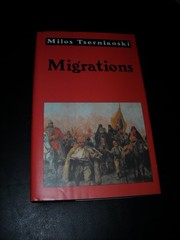 Miloš Crnjanski · 1929MigrationsLvl 7Medium pace
 Danilo Kiš · 1976A Tomb for Boris DavidovichLvl 7Medium pace
 Boris Pasternak · 1957Doctor ZhivagoLvl 6Slow burn
 Meša Selimović · 1966Death and the DervishLvl 6Slow burn
 Ivo Andrić · 1945The Bridge on the DrinaLvl 4Slow burn
 Claude Simon · 1960The Flanders RoadLvl 9Slow burn