
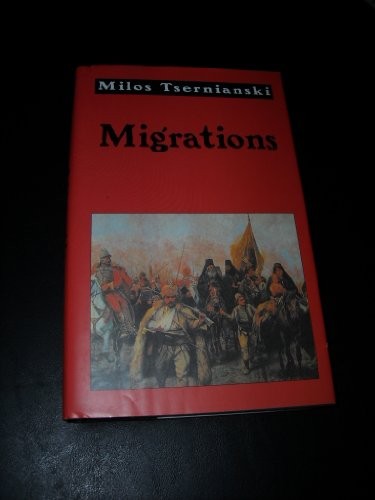
Migrations
Miloš Crnjanski · 1893–1977 · Serbia
Originally Seobe (Serbo-Croatian)
Why it matters
Serbian soldiers serving the Habsburg Empire drift across the eighteenth century's wars in restless, lyrical prose. A modernist epic of people who never stop moving and never quite arrive.
At a glance
Lyrical, fragmentary modernist prose and a deliberately restless, disorienting structure.
Deep dive
A Habsburg-serving Serbian officer marches toward a war that isn't his, carrying a lifelong dream of Russia as the promised destination his people never actually reach.
Written for readers who have finished the book. No plot recap, and nothing here is safe to read first.
Themes & symbolism
Crnjanski sets Migrations amid the historical Great Migrations of the Serbs, the mass exoduses of Orthodox Serbs out of Ottoman territory into Habsburg-ruled Vojvodina at the end of the seventeenth century, a displaced population that then spent generations supplying border regiments to an empire that used their loyalty without ever fully trusting them. Vuk Isakovič, an officer in one of those regiments, is called away from his wife Dafina to fight on the Rhine in a Habsburg war against France he has no personal stake in, and the marching, quartering, and waiting that fill most of the novel are rendered less as military narrative than as a prolonged, exhausted state of being perpetually in transit.
Vuk's private compensation for a life spent fighting other people's wars is a half-mystical longing for Russia, a shared Orthodox homeland he has never seen and can only imagine as the place his displaced people might finally stop moving. Crnjanski treats that longing with real tenderness while never letting the novel confirm it as anything more than a dream sustained by people who have nowhere else to put their exhaustion. Dafina, left behind through the whole campaign, drifts toward a kinsman managing the household in Vuk's absence, a quieter, domestic version of the same drift the whole novel is built from.
The Great Migrations Behind the Title
The Serbian exodus the novel takes its name from happened in 1690, when Patriarch Arsenije III Čarnojević led tens of thousands of Serbs out of Ottoman-held territory into the Habsburg Empire after backing the losing side in a war against the Turks, trading one imperial master for another in exchange for promised religious and military privileges. Vuk's generation, born into the border regiments that resulted, inherited a homeland that was really a series of provisional arrangements with whichever empire currently needed their swords, which is the historical fact Crnjanski's fictional restlessness is built directly on top of.
A Sentence Built to Never Quite Stop
Crnjanski's prose in Migrations favors long, cumulative sentences that pile clause on clause without settling into a clean stop, a style Serbian critics later credited with importing genuine modernist technique into a national literature still largely working in nineteenth-century realist forms. The style isn't ornamental. A novel about a people who can't stop moving is written, at the sentence level, so that the reader can't quite stop moving either, denied the small, regular satisfactions of a prose that resolves its own rhythms the way Vuk's life never resolves his.
Where to go next
 Danilo Kiš · 1976A Tomb for Boris DavidovichLvl 7Medium pace
 Boris Pasternak · 1957Doctor ZhivagoLvl 6Slow burn
 Meša Selimović · 1966Death and the DervishLvl 6Slow burn
 Ivo Andrić · 1945The Bridge on the DrinaLvl 4Slow burn
 Claude Simon · 1960The Flanders RoadLvl 9Slow burn