
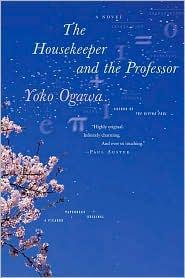
The Housekeeper and the Professor
Yōko Ogawa · b. 1962 · Japan
Originally Hakase no Aishita Sūshiki (Japanese) · translated by Stephen Snyder
Why it matters
A math professor whose memory lasts only eighty minutes forms a fragile bond with his housekeeper and her son through the beauty of numbers. Ogawa's tender, luminous novel of connection across forgetting.
At a glance
Gentle, simple prose and a small, tightly contained cast of characters.
Deep dive
What it takes to build real intimacy with a man who loses you every eighty minutes, and why Ogawa lets mathematics, not memory, be the thing that holds.
Written for readers who have finished the book. No plot recap, and nothing here is safe to read first.
Themes & symbolism
The Professor's memory has been fixed at eighty minutes since a 1975 car accident, so every day the housekeeper sent to care for him must reintroduce herself, and every day he greets her as a stranger while a suit covered in handwritten notes, pinned there each morning, supplies the facts his mind can no longer keep. Ogawa treats this not as tragedy played for pathos but as a structural puzzle: how do two people build something lasting when one of them cannot accumulate shared history, and what, besides memory, might actually be doing the work of a relationship.
The Professor's answer is mathematics. He greets the housekeeper each morning by asking a number, her shoe size, her birthday, and turns it instantly into a small proof about perfect numbers or twin primes, a habit that reads at first like nervous tic and gradually reveals itself as his only fluent language for affection, since numbers, unlike people, don't require memory to be loved consistently and correctly. Her son, nicknamed Root for the flat top of his head that reminds the Professor of a square root sign, becomes the household's third point, and the two of them are drawn steadily into a domestic unit built entirely on daily reintroduction rather than continuity.
Enatsu's 1975 Season, Frozen in Place
The Professor's memory stops in 1975, which happens to be the final season pitcher Yutaka Enatsu played for the Hanshin Tigers before being traded, and Enatsu's baseball cards become a shared ritual between the Professor and Root, one of the only subjects where the Professor's frozen knowledge and Root's living enthusiasm meet as equals. Ogawa grounds an otherwise abstract novel about memory in a real, specific sporting history, and the fact that the Professor can discuss Enatsu's statistics with total fluency while forgetting Root's name from one morning to the next is the book's clearest single illustration of what kind of memory has, and hasn't, survived the accident. Root's own growing expertise, cross-checking the Professor's decades-old recall against newer stats and box scores, quietly turns the boy into the keeper of a history the Professor can recite but never update.
The last seal: what actually happens, and why it lands the way it does.
The ending, explained
As the Professor's condition worsens, his sister-in-law moves him into a care facility, ending the daily household the three of them built. The housekeeper and Root keep visiting, and the novel closes years later with Root, now grown into a math teacher himself, bringing the Professor a cake on his birthday exactly as they did when he was a boy, though the Professor, as always, has no memory of any of the birthdays before it. Ogawa lets the scene stand without sentimentality about what has been lost: the relationship's proof was never going to depend on his remembering it, only on their continuing to show up, which is the theorem the whole novel has been quietly demonstrating all along.
Where to go next
 Yōko Ogawa · 1994The Memory PoliceLvl 4Slow burn
 Kōbō Abe · 1962The Woman in the DunesLvl 5Medium pace
 Banana Yoshimoto · 1988KitchenLvl 2Medium pace
 Mieko Kawakami · 2019Breasts and EggsLvl 4Slow burn
 Sayaka Murata · 2016Convenience Store WomanLvl 2Fast paced
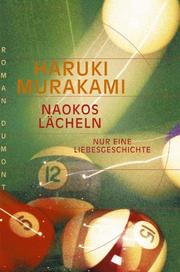 Haruki Murakami · 1987Norwegian WoodLvl 3Fast paced