
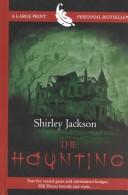
The Haunting of Hill House
Shirley Jackson · 1916–1965 · United States
Why it matters
Four strangers investigating a notoriously unwell house find its horrors are inseparable from their own fragile psychologies. Widely considered the finest haunted-house novel ever written, its dread entirely psychological.
At a glance
Ambiguous, psychologically slippery narration deliberately destabilizes the reader.
Deep dive
Dr. Montague invites three strangers to a notoriously unfriendly house to study whether it's actually haunted, and Jackson never lets you be sure if the house is doing the haunting or if Eleanor brought it with her.
Written for readers who have finished the book. No plot recap, and nothing here is safe to read first.
Themes & symbolism
Hill House itself is described in the novel's famous opening lines as 'not sane,' built by its original owner Hugh Crain with angles that are subtly, deliberately wrong, doors that won't stay open on their own, rooms that feel imperceptibly tilted even when a level would show them true. Jackson uses that architectural wrongness as psychological portraiture rather than mere gothic atmosphere, a house shaped like the disordered mind of whoever inside it is most vulnerable to it. Eleanor Vance, arriving at the investigation after years spent as her invalid mother's sole, resentful caretaker with no home, income, or identity that isn't defined by that service, is exactly that vulnerable, and the house seems to recognize it immediately.
Jackson refuses to settle whether Hill House's phenomena, cold spots, pounding that shakes the whole corridor, a child's message chalked on a wall, are genuinely supernatural or projections thrown off by Eleanor's own fracturing mind, and that refusal is the novel's actual design rather than a failure of nerve. Every apparent haunting is witnessed collectively enough by the whole group to seem objectively real, and filtered closely enough through Eleanor's own perception and desire to seem entirely hers. The ambiguity itself generates the dread: a house independently malevolent would almost be a relief compared to one that might simply be answering exactly what some part of Eleanor already, secretly wants.
A House Born Wrong
Hugh Crain built Hill House with angles just slightly off true throughout, and its reputation for tragedy, a previous companion's death, earlier family deaths tied to the house, precedes Dr. Montague's investigation before anyone arrives. Jackson's prose keeps making the house itself the subject of nearly every descriptive sentence, doors swinging shut with no draft to explain them, a cold spot that won't warm no matter the season, so that Hill House reads as performing intention constantly while never providing anything close to proof that it actually has any.
Whose Hand Was I Holding
During one of the novel's worst nights, Eleanor grips what she's certain is Theodora's hand in the dark through hours of pounding along the corridor, only to discover, once the lights come back on, that Theodora had been across the room the entire time. Jackson never explains whose hand it actually was, and that single unresolved detail is the whole book's method compressed into one scene: intimate comfort, exactly the connection Eleanor has spent her whole life starved of, arriving with no confirmed source at all, leaving open whether the house supplied it or Eleanor's own need for it was strong enough to manufacture the sensation herself.
The last seal: what actually happens, and why it lands the way it does.
The ending, explained
As Eleanor's identification with the house deepens, insisting she's finally found somewhere she's wanted, somewhere that recognizes her, Dr. Montague and the others grow alarmed enough by her obsessive attachment to decide she has to leave Hill House for her own safety, against her own wishes. Driving away down the same curved driveway where an earlier companion died decades before, Eleanor deliberately steers the car into a tree, an act that reads simultaneously as the house finally claiming her for its own and as the single moment of decisive, self-directed agency she's had across the entire novel. Jackson gives her one last, chilling flicker of doubt even as it happens, a half-formed thought wondering why she's doing this if she doesn't actually mean to, before the impact. The house, the novel's closing lines note, stands afterward exactly as it always has, whatever walked there walking alone.
Where to go next
 Shirley Jackson · 1962We Have Always Lived in the CastleLvl 4Fast paced
 E. T. A. Hoffmann · 1816The SandmanLvl 6Medium pace
 Nathaniel Hawthorne · 1850The Scarlet LetterLvl 7Slow burn
 Carson McCullers · 1940The Heart Is a Lonely HunterLvl 5Medium pace
 Peter Taylor · 1986A Summons to MemphisLvl 5Slow burn
 Richard Wright · 1940Native SonLvl 5Fast paced