
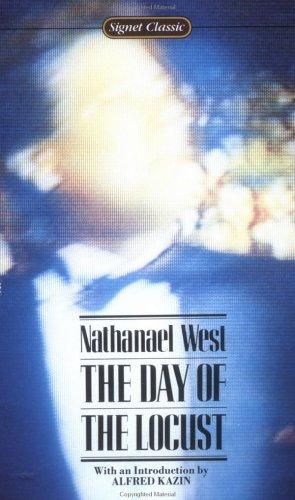
The Day of the Locust
Nathanael West · 1903–1940 · United States
Why it matters
A studio artist watches Hollywood's discarded dreamers curdle into a mob outside a movie premiere. West's savage, hallucinatory vision of American celebrity culture souring into violence.
At a glance
Grotesque, hallucinatory imagery compressed into a short, densely allusive novel.
Deep dive
What happens to the men and women Hollywood auditioned and then discarded, once enough of them gather outside a movie premiere with nothing left to lose.
Written for readers who have finished the book. No plot recap, and nothing here is safe to read first.
Themes & symbolism
Tod Hackett, a Yale-trained painter working as a set and costume designer, spends the novel orbiting Faye Greener, an aspiring actress who trades on her looks without any discernible talent to back them, and through Tod's eyes West assembles a gallery of Hollywood's rejects: has-been vaudevillians, failed prospectors, retired accountants who moved west chasing a sun-drenched retirement that never materializes. West worked as a Hollywood screenwriter himself and writes the industry's machinery with an insider's contempt, but the novel's real subject is the crowd that machinery manufactures and then abandons, people who came to California to watch their lives turn into a movie and instead got nothing at all.
Homer Simpson, a mild, sexless Iowa transplant who has never wanted anything as badly as he wants Faye, absorbs one humiliation after another from her and her circle without ever fighting back, his enormous, restless hands the novel's most persistent image of a violence he refuses, for most of the book, to let out. West builds Homer as the reader's dread made visible: everyone around him senses that his passivity has a limit, and the novel's suspense is entirely a question of when, not whether, it breaks.
Tod is painting an apocalyptic canvas throughout the novel called The Burning of Los Angeles, imagining the city's discarded dreamers finally torching the place that failed them, and West structures the whole book as a slow approach to that painting becoming real: the crowd outside a movie premiere, gathered to watch celebrities they'll never meet, curdles by the final pages into exactly the mob Tod had been sketching in advance.
Adore Loomis and the Machinery That Made Him
Adore is a child actor whose stage mother has drilled him into performing a lewd adult nightclub number on command, a routine the novel presents as simply how the town raises its children, and his taunting of Homer late in the book is what finally detonates Homer's restraint. West doesn't stage Adore's fate for shock value alone; he's been building the case for pages that Hollywood manufactures its own violence out of the same machinery that manufactures its stars, and the child performing an adult's number is that machinery's clearest, ugliest product.
The last seal: what actually happens, and why it lands the way it does.
The ending, explained
Adore Loomis taunts Homer once too often outside the premiere, and Homer, who has spent the entire novel absorbing humiliation without retaliating, finally turns on him with the full weight of everything he's swallowed. The crowd, already keyed up and directionless, converts Homer's outburst into an excuse for its own violence, and Tod is swept into the resulting riot, nearly trampled, his consciousness dissolving into something close to the apocalyptic canvas he'd spent the novel painting. West ends on Tod being carried off in a police car, mimicking a siren under his breath, the line between the disaster he predicted and the disaster he's now living inside no longer holding.
Where to go next
 Nathanael West · 1933Miss LonelyheartsLvl 6Fast paced
 Katherine Anne Porter · 1939Pale Horse, Pale RiderLvl 6Medium pace
 Wright Morris · 1980Plains Song: For Female VoicesLvl 5Slow burn
 William Maxwell · 1979So Long, See You TomorrowLvl 5Slow burn
 Mary Lee Settle · 1977Blood TieLvl 6Medium pace
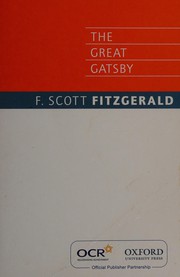 F. Scott Fitzgerald · 1925The Great GatsbyLvl 4Fast paced