
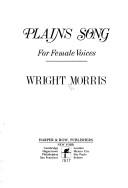
Plains Song: For Female Voices
Wright Morris · 1910–1998 · United States
Why it matters
Three generations of women on a Nebraska farm get the telling that the men's version of plains history always talked over: marriage, birth, and quiet rebellion rendered in spare, elliptical prose. Morris's second National Book Award winner recovers what agrarian myth-making left out.
At a glance
Elliptical, understated prose withholds interior feeling rather than stating it outright.
Deep dive
A novel titled after a form of communal singing whose real subject is everything these women never said to each other out loud.
Written for readers who have finished the book. No plot recap, and nothing here is safe to read first.
Themes & symbolism
Cora Atkins's marriage sets the baseline the rest of the novel measures itself against: her wedding night is rendered as genuine bewilderment and fear rather than romantic initiation, a woman given no preparation for what was expected of her and no vocabulary afterward for naming what happened. That silence becomes the template for her whole adult life on the Nebraska farm — duty performed without complaint, security found in daily labor rather than in any relationship that might have explained itself to her. The "song" of the title isn't triumphant; it's endurance sustained by women who were never taught to ask for anything else.
Sharon Rose's flight east, toward music and a self-determined life, is the novel's counter-voice to Cora's stoicism, but Morris refuses to let her escape read as unambiguous victory. Her independence carries its own cost in isolation — once she's left the plains and the family's rhythms behind, she belongs fully nowhere, which mirrors, from the opposite direction, Cora's own condition of belonging completely to a life she never had much say in choosing. Neither woman's path is offered as the corrective to the other's; the novel holds both as equally real, equally partial answers to the same constrained set of options.
Polyphony as Structure
The "for female voices" subtitle describes the book's actual form: overlapping, cross-generational perspectives arranged more like a round than a single continuous plot, with silences between mothers and daughters carrying as much weight as anything spoken aloud. Morris, also a noted photographer, composes many scenes as still, held tableaux rather than dramatized action — a technique that suits a novel more interested in what accumulates across generations of women's unspoken lives than in any single dramatic turn.
Morris spent his career chronicling the Great Plains as a place that shapes character through deprivation as much as through open space, and the novel's brevity is itself a formal argument: rather than the sprawling multi-generational family saga the material could easily have supported, he compresses four generations of women into a slim book whose short chapters mimic the terse, undemonstrative speech of the women themselves, women whose lives were long but whose vocabulary for describing them stayed permanently small.
Where to go next
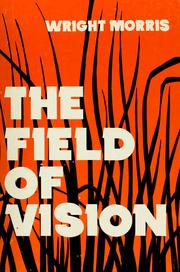 Wright Morris · 1956The Field of VisionLvl 6Slow burn
 William Maxwell · 1979So Long, See You TomorrowLvl 5Slow burn
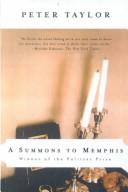 Peter Taylor · 1986A Summons to MemphisLvl 5Slow burn
 Carol Shields · 1993The Stone DiariesLvl 5Medium pace
 Jaimy Gordon · 2010Lord of MisruleLvl 6Slow burn
 John Casey · 1989SpartinaLvl 4Medium pace