
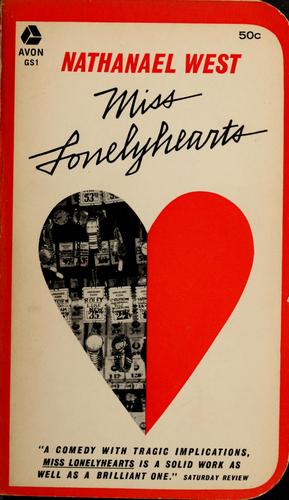
Miss Lonelyhearts
Nathanael West · 1903–1940 · United States
Why it matters
A male advice columnist drowns in the real despair behind his readers' anonymous letters. American compassion curdling into farce and horror in a slim, prophetic satire.
At a glance
Compressed, grotesque imagery packed into a very short book.
Deep dive
West keeps daring his advice columnist to actually feel what his anonymous letter-writers feel, and keeps punishing every attempt he makes to do it — through cynicism, drink, sex, and finally religion — with something worse than the last.
Written for readers who have finished the book. No plot recap, and nothing here is safe to read first.
Themes & symbolism
Miss Lonelyhearts (his name is never given; the column's byline is the only identity he has) takes to staring at a crucifix nailed to his apartment wall until it starts to seem less like devotion than compulsion, a messiah complex he can't distinguish from genuine faith and can't act on without becoming faintly ridiculous — the novel keeps him permanently suspended between sincere suffering and self-parody. Shrike, his editor, functions as a kind of satirist-devil who methodically forecloses every escape route the culture offers for pain: art, the soil, drugs, hedonism, Christ itself, each demolished in one of Shrike's cruel, brilliant set-piece monologues before Miss Lonelyhearts can try it. The letters themselves — deliberately semi-literate, signed 'Desperate,' 'Broken-hearted,' 'Sick-of-it-all' — are the novel's rawest material, real Depression-era anguish (deformity, incest, poverty, dying children) presented without irony, which is precisely what makes the surrounding satire feel less like cruelty for its own sake than a diagnosis of a culture with no functioning apparatus for processing suffering except jokes, violence, or a column that can offer nothing but clichés.
West's prose keeps reaching for stone and rock imagery to describe Miss Lonelyhearts's own interior — his heart 'like a rock' — a hardness that's less callousness than self-defense against letters he can't actually answer, and the novel's violence toward women (his assault on Fay Doyle, his cruelty to his fiancée Betty, Shrike's public humiliation of his own wife) reads as displaced rage at a suffering he has no legitimate outlet for. Betty's pastoral fantasy of a farm in Connecticut, floated mid-novel as a genuine alternative, gets dismissed by the narrative itself almost as quickly as Shrike dismisses everything else — West doesn't believe in an innocent exit any more than his editor-antagonist does.
A Slim Novel from the Bottom of the Depression
West wrote this in 1933, at the Depression's grinding low point, drawing on his own stint managing a Manhattan hotel where he read guests' mail and, by his own account, on an actual advice column he'd been shown whose letters were too painful to be entirely invented. The book was barely read on arrival — it sold poorly, its publisher went bankrupt within weeks of release, and West's contract advance evaporated with it — and its reputation was built almost entirely after the fact, championed by critics like Alfred Kazin and later reclaimed alongside West's other short novel, The Day of the Locust, as one of the era's two great, pitilessly funny anatomies of American desperation. West died in a car crash in 1940 at thirty-seven, the day after F. Scott Fitzgerald's fatal heart attack, before either book had found the audience that would eventually make him a touchstone for Nathanael West-shaped absurdist-despair fiction from Kurt Vonnegut to Denis Johnson.
Its scale is part of its power: at barely sixty thousand words, Miss Lonelyhearts reads almost as an extended prose poem of American compassion curdling in real time, and it now looks prophetic about a culture that would go on to industrialize empathy into talk radio, therapy-speak, and the entire self-help apparatus — all of it, West suggests, no better equipped than his columnist to actually bear anyone else's pain.
The last seal: what actually happens, and why it lands the way it does.
The ending, explained
After drifting between cynicism, a brief affair with Shrike's wife, illness, and an unstable religious delusion in which he believes he has finally achieved genuine spiritual union with God and with all human suffering, Miss Lonelyhearts sees Peter Doyle, a crippled letter-writer, arriving at his apartment and rushes downstairs to embrace him in what he experiences as an act of pure, redeemed love. Doyle, however, has come believing — wrongly — that Miss Lonelyhearts slept with his wife Fay, and is carrying a gun. In the ensuing scuffle on the stairs the gun goes off and kills Miss Lonelyhearts, an entirely senseless death delivered by the very embodiment of suffering he was finally, ecstatically trying to embrace. The irony is total and deliberately unredemptive: his one moment of what feels like genuine transcendence produces not communion but a stray bullet, West's final refusal to let religious feeling, however sincerely experienced, actually save anyone in a world this broken.
Where to go next
 Nathanael West · 1939The Day of the LocustLvl 6Fast paced
 Katherine Anne Porter · 1939Pale Horse, Pale RiderLvl 6Medium pace
 Wright Morris · 1980Plains Song: For Female VoicesLvl 5Slow burn
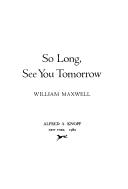 William Maxwell · 1979So Long, See You TomorrowLvl 5Slow burn
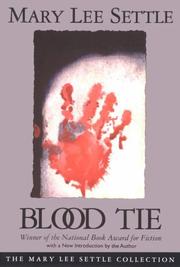 Mary Lee Settle · 1977Blood TieLvl 6Medium pace
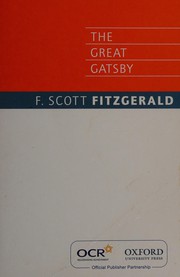 F. Scott Fitzgerald · 1925The Great GatsbyLvl 4Fast paced