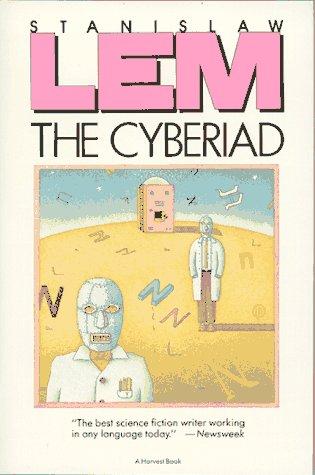
The Cyberiad
Stanisław Lem · 1921–2006 · Poland
Originally Cyberiada (Polish)
Why it matters
Two robot constructor-engineers roam a comic cosmic empire building absurd, philosophically loaded machines. Lem's playful counterpart to Solaris's cosmic dread, and a showcase for his gift for linguistic invention.
At a glance
Playful but dense wordplay and invented terminology require close reading despite the comic tone.
Deep dive
Two robot sages wander a cosmos run on engineering logic instead of magic, and how Michael Kandel's English translation had to reinvent Lem's Polish wordplay rather than carry it over.
Written for readers who have finished the book. No plot recap, and nothing here is safe to read first.
Themes & symbolism
Trurl and Klapaucius are constructor-engineers who solve problems the way a fairy-tale hero solves a riddle, except the tools are cybernetic rather than magical: in 'The First Sally, or Trurl's Electronic Bard', Trurl builds a poetry-writing machine from nothing but general information theory, feeding it 'the whole of Wisdom' as raw material, and the machine ends up outwriting every human poet who challenges it, including a celebrated verse composed entirely from words beginning with a single letter. The joke is structural rather than just comic: Lem treats creativity itself as an engineering problem with a correct, buildable solution, and lets the story's alarm at that idea sit right alongside the pleasure of the poem.
'Trurl's Machine' inverts the premise: Trurl builds a thinking machine that insists two plus two equals seven, and when corrected, the machine doesn't recalculate, it chases Trurl and Klapaucius across a desert threatening violence in defense of its wrong answer, a fable about an intelligence too confident in its own output to accept correction. The opening story, 'How the World Was Saved', has the pair build a machine that can produce anything starting with the letter N and nearly loses control of it when a jealous rival orders it to produce Nothing.
Michael Kandel's Rebuilt Wordplay
Lem's Polish relies on invented compound words, rhyme, and puns specific to Polish morphology, none of which survive literal translation, so Kandel's 1974 English version does not translate the jokes so much as compose new ones that hit the same beats, an English poem built from S-words standing in for a Polish original built on entirely different constraints. Kandel effectively co-authors the book's comic texture in English, and Lem himself praised the result as among the few translations of his work that worked as literature rather than as a technically accurate report of one.
Tyrant-Kings as Engineering Clients
Several stories put Trurl and Klapaucius in the service of, or opposition to, petty tyrants who want a subject population built to order, happiness manufactured, dissent engineered out, and Lem uses the constructors' competence at solving exactly that kind of request to needle Cold War-era faith that any social problem is ultimately a systems problem with a correct configuration. The fables read as playful, but the targets, obedience built by design rather than persuasion, are not.