

The Conservationist
Nadine Gordimer · 1923–2014 · South Africa
Why it matters
A wealthy white industrialist's weekend farm becomes an uneasy stage for apartheid South Africa's buried violence when an unidentified Black body surfaces on his land. Joint winner of the 1974 Booker Prize, and Gordimer's most formally daring novel: interior monologue circling a guilt it can't name.
At a glance
Dense, elliptical stream-of-consciousness prose withholds context deliberately, demanding close rereading.
Deep dive
A wealthy industrialist buys a weekend farm to escape politics, and an unclaimed body surfaces on his land that his whole country would also rather not claim.
Written for readers who have finished the book. No plot recap, and nothing here is safe to read first.
Themes & symbolism
Mehring's possession of his farm — bought as a tax shelter and a weekend retreat from his real business life, run through Black workers whose actual claim to the land, through labor and ancestry, is deeper than his ever will be — is Gordimer's exact model in miniature for white ownership under apartheid: legal title without moral legitimacy, a relationship to land built entirely on capital and abstraction rather than the working, dwelling knowledge the Black farmhands and their families actually possess of the same ground.
The unidentified Black corpse that surfaces early in a drainage ditch, is given a cursory police burial on Mehring's own property, and then resurfaces again after seasonal flooding partway through the novel, functions as apartheid's literal buried and unresolved violence refusing to stay put: the land itself won't hold what the state wants ignored, and the corpse's eventual, final burial performed properly by the farm's Black workers according to their own rites — an act Mehring never witnesses and never authorizes — quietly enacts the reclamation of the land the whole novel has been building toward.
Gordimer's dense, elliptical interior monologue, sliding without warning between Mehring's present observations, memories, fantasies, and half-suppressed anxieties, mirrors his own psychological structure: a man who prides himself on rational control and detachment (he calls himself, without irony, 'the conservationist,' a careful steward of resources) is revealed through the very form of his own narration to be disintegrating, unable to fully suppress the guilt, isolation, and buried violence of the system sustaining his comfortable life.
A Novel of Displaced Voices
Gordimer opens each chapter with an epigraph drawn from a study of Zulu custom and belief, threading indigenous cosmology and burial ritual — voices entirely absent from Mehring's own consciousness — through a novel otherwise confined almost claustrophobically to one white industrialist's interiority; the effect is a formal argument as much as a stylistic one, insisting that the land's real meaning is being narrated in a register the novel's own protagonist can't hear or access. Joint winner of the 1974 Booker Prize, the novel remains, alongside Burger's Daughter and July's People, central to the case Gordimer's 1991 Nobel citation made for fiction that served, in the Academy's words, humanity directly, without ever softening apartheid's texture into more digestible allegory.
The last seal: what actually happens, and why it lands the way it does.
The ending, explained
Mehring's carefully managed life comes apart across the novel's final stretch — his son emigrates to avoid conscription, his mistress leaves him, his business dealings sour, and a random, unsettling sexual encounter with a stranger at a rest stop leaves him newly aware of his own physical vulnerability — until he is effectively expelled from the farm's ordinary rhythms even while remaining, on paper, its owner. In the closing pages, seasonal flooding washes the improperly buried corpse back to the surface, and the farm's Black workers, without consulting or informing Mehring at all, take the body and give it a proper burial according to their own customs — an act of quiet, total reclamation that happens entirely outside Mehring's awareness or control. Gordimer's closing image, of the land finally and correctly receiving what was owed it, delivers the novel's verdict without a single confrontation: the country's actual owners simply proceed, competently and without permission, to do what needed doing all along, while the man who thought he owned the ground is left, functionally, already elsewhere.
Where to go next
 Nadine Gordimer · 1979Burger's DaughterLvl 7Slow burn
 Nadine Gordimer · 1981July's PeopleLvl 7Slow burn
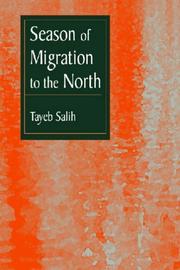 Tayeb Salih · 1966Season of Migration to the NorthLvl 7Slow burn
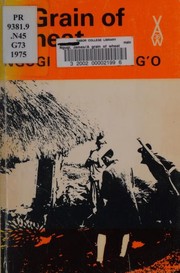 Ngũgĩ wa Thiong'o · 1967A Grain of WheatLvl 6Slow burn
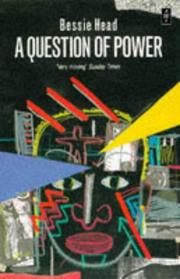 Bessie Head · 1973A Question of PowerLvl 8Slow burn
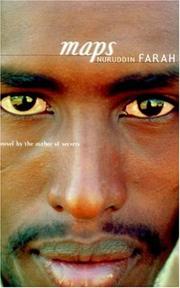 Nuruddin Farah · 1986MapsLvl 8Slow burn