

Burger's Daughter
Nadine Gordimer · 1923–2014 · South Africa
Why it matters
The daughter of a martyred anti-apartheid hero struggles to claim a life of her own outside the struggle. Gordimer's most searching novel of political inheritance: banned in South Africa on publication.
At a glance
Dense, digressive sentences and shifting narrators trace a fractured political consciousness.
Deep dive
Rosa Burger spends her whole life being introduced as her father's daughter, and the novel is what happens when she finally has to decide whether that is an identity or a debt.
Written for readers who have finished the book. No plot recap, and nothing here is safe to read first.
Themes & symbolism
At twenty-six, Rosa learns that her father, Lionel Burger, has died three years into the life sentence a South African court gave him for decades spent running the underground Communist Party. Gordimer built Lionel directly out of Bram Fischer, the real Afrikaner lawyer and Communist who defended Nelson Mandela at the Rivonia Trial before being convicted himself and dying shortly after his own release on medical grounds, and she gave the manuscript to Fischer's daughter before publication, who told her it captured the life that was theirs. Rosa's whole childhood, hiding messages, standing watch, absorbing her parents' certainty that the struggle came before any private need, is the deliberate cost of raising a child inside a real underground movement rather than a symbolic one.
Gordimer structures much of Rosa's narration as address rather than plain first person, sections spoken silently to her former lover Conrad and later to her dead father, a device that keeps making visible whose approval or understanding Rosa is currently performing for. The device breaks completely when she runs into Baasie, the Black child raised for a time alongside her as living proof of her family's non-racial convictions, now a grown man who coldly refuses the shared childhood she remembers so fondly and denies he was ever close to her at all. Baasie's rejection punctures the Burgers' self-image with more force than any state prosecutor manages across the whole book: it says the family's whiteness structured even its own martyrdom.
Offered a life in France with her lover Bernard Chabalier, entirely outside politics and outside her father's shadow, Rosa comes closer than at any other point in the novel to simply walking away from the inheritance altogether, and Gordimer treats the choice with real ambivalence rather than inevitability, refusing to make Rosa's eventual return to South Africa read as predestined heroism.
A Novel Vetted by the Family It Was Based On
The South African government banned Burger's Daughter within months of its 1979 publication, objecting specifically to its inclusion of material lifted from a real pamphlet distributed during the Soweto uprising; the ban was lifted before the year was out, after international protest, but the swiftness of the initial reaction confirmed exactly what Gordimer's fiction was arguing, that this material was dangerous because it was accurate rather than because it was inflammatory. Ilse Wilson, Bram Fischer's actual daughter, read the manuscript before publication and told Gordimer she had captured their family's life precisely.
The last seal: what actually happens, and why it lands the way it does.
The ending, explained
Rosa turns down Chabalier's offer of a life in France and returns instead to her old work as a physiotherapist among poor Black patients in Soweto, work she has never treated as political even though her father would have called it exactly that. When the June 1976 student uprising breaks out around her, Rosa is swept up in the unrest and detained under state security legislation, the same apparatus that held her father and, before him, her mother. The novel ends with her in detention rather than in France, having arrived, without any single dramatic conversion, at the same inheritance she spent the whole book trying to hold at arm's length.
Where to go next
 Nadine Gordimer · 1974The ConservationistLvl 8Slow burn
 Nadine Gordimer · 1981July's PeopleLvl 7Slow burn
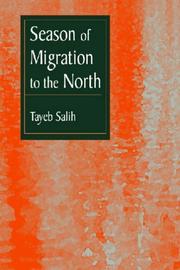 Tayeb Salih · 1966Season of Migration to the NorthLvl 7Slow burn
 Ngũgĩ wa Thiong'o · 1967A Grain of WheatLvl 6Slow burn
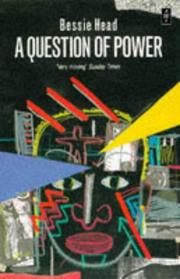 Bessie Head · 1973A Question of PowerLvl 8Slow burn
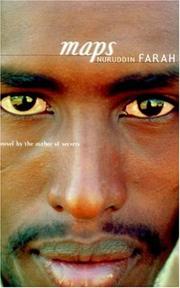 Nuruddin Farah · 1986MapsLvl 8Slow burn