
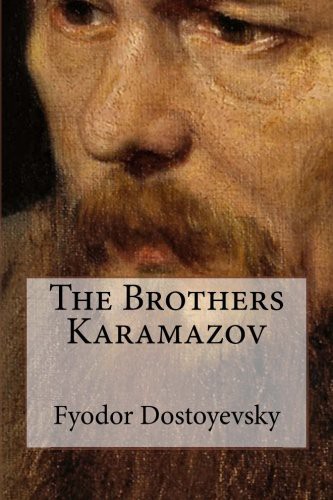
The Brothers Karamazov
Fyodor Dostoevsky · 1821–1881 · Russia
Originally Bratya Karamazovy (Russian)
Why it matters
Patricide, three brothers (sensualist, intellectual, saint), and the Grand Inquisitor's case against Christ. Dostoevsky's summa and, by many votes, the deepest novel ever written; he died two months after finishing it.
At a glance
Vast cast, embedded philosophical treatises, and theological argument woven through a murder plot.
Deep dive
How Ivan's abstract case against God turns out to have a taker he never anticipated, and why the courtroom that follows convicts the wrong kind of guilt entirely.
Written for readers who have finished the book. No plot recap, and nothing here is safe to read first.
Themes & symbolism
The novel's real crime scene isn't the murder, it's the Grand Inquisitor chapter Ivan recites to Alyosha two hundred pages before Fyodor Pavlovich dies — Ivan's case that Christ, by refusing miracle, mystery, and authority in favor of freedom, demanded more of humanity than humanity can bear, and that the Church has spent centuries quietly correcting his error by handing people back the bread and certainty he denied them. It's the most fully argued attack on faith in the novel, maybe in the language, and Dostoevsky's answer to it isn't a counter-argument — it's Alyosha's silent kiss, and later, the entire plot, which shows what Ivan's ideas do when someone actually lives by them.
That someone is Smerdyakov, the epileptic servant and Fyodor's likely bastard son, who takes Ivan's repeated claim that everything is permitted without God literally, murders the father, and considers himself Ivan's instrument even though Ivan never gave an order — he simply supplied the permission and then left town at a moment Smerdyakov could read as consent. Dmitri, meanwhile, is guilty of everything except the actual killing: the threats, the violence, the public declarations of intent to kill his father over money and over Grushenka, all true, none of it the murder he's convicted for. Dostoevsky's design is exact: the son morally guiltiest of parricide in spirit walks free into madness, while the son guiltiest in every visible way except the fact goes to Siberia for a crime he didn't commit — guilt and legal guilt refusing to line up, the theodicy problem restaged as courtroom drama.
Three brothers, one argument
Dostoevsky builds the brothers as an argument in three simultaneous registers rather than three characters who happen to be related — Dmitri is the case for the body, appetite and honor pursued without governance; Ivan is the case for the intellect pushed to its logical, world-rejecting conclusion; Alyosha is the case for active love as a discipline rather than a feeling, learned under the dying elder Zosima's insistence that everyone is responsible for everyone. None of the three positions wins cleanly. Dmitri's appetite nearly destroys him, Ivan's intellect produces a murder, and even Alyosha's faith is tested to its limit by Zosima's corpse decaying faster than sainthood was supposed to allow. The novel stages the argument; it doesn't referee it.
The last seal: what actually happens, and why it lands the way it does.
The ending, explained
Smerdyakov confesses the murder to Ivan alone, then hangs himself, timing it so his confession dies with him and Ivan has no way to clear Dmitri without evidence — only his own unraveling sanity, which the court reads as a guilty man's breakdown rather than an innocent brother's plea. Ivan collapses into brain fever, tormented by a hallucinated devil who talks back in his own ironic voice, dramatizing that his atheism was never as settled as his arguments. Dmitri is convicted and sentenced to Siberian exile, with an escape plan floated but never resolved. Dostoevsky ends not on any of this but on Alyosha, at Ilyusha's funeral, urging the schoolboys to carry this one moment of grief and love forward as a foundation — the novel's actual answer to Ivan isn't argument, it's the deliberate memory of goodness, offered without knowing whether Dmitri, Ivan, or Russia itself survives it intact.
Where to go next
 Fyodor Dostoevsky · 1864Notes from UndergroundLvl 7Slow burn
 Fyodor Dostoevsky · 1866Crime and PunishmentLvl 6Fast paced
 Fyodor Dostoevsky · 1867The GamblerLvl 4Fast paced
 Fyodor Dostoevsky · 1869The IdiotLvl 7Slow burn
 Fyodor Dostoevsky · 1872DemonsLvl 8Medium pace
 Nikolai Gogol · 1842Dead SoulsLvl 5Medium pace