
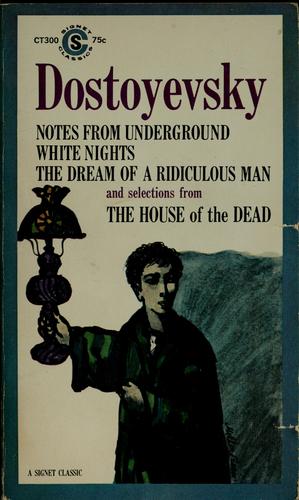
Notes from Underground
Fyodor Dostoevsky · 1821–1881 · Russia
Originally Zapiski iz Podpolya (Russian)
Why it matters
A spiteful ex-clerk's monologue against reason, progress, and his own best interests: the first modern anti-hero. Existentialism's acknowledged starting gun: Nietzsche, Kafka, and Ellison all built on this voice.
At a glance
A rambling, self-contradicting philosophical rant with no plot scaffolding to lean on.
Deep dive
A nameless, furious man in a Petersburg basement builds an entire philosophy out of spite, aimed squarely at anyone who thinks reason alone can make a person good, and then tries out his own theory on someone who has done him no harm at all.
Written for readers who have finished the book. No plot recap, and nothing here is safe to read first.
Themes & symbolism
Part One is a monologue directed less at the reader than at Nikolai Chernyshevsky's What Is to Be Done?, the rational-egoist utopianism that assumed self-interest, properly understood, would make people behave well; the Underground Man's whole argument is that a person will wreck his own advantage on purpose, will choose suffering and self-destruction, simply to prove he's not a piano key that plays whatever tune reason dictates. 'Twice two makes four,' he says, 'is no longer life, but the beginning of death,' insisting that free will, even irrational and self-harming free will, matters more than any Crystal Palace of engineered contentment.
That argument stays abstract and almost bearable in Part One; Part Two, 'Apropos of the Wet Snow,' tests it on an actual person. Humiliated at a dinner he forces his way into with old schoolmates who despise him, the Underground Man follows them to a brothel afterward and meets Liza, a young prostitute he lectures, with real eloquence, about the ruin awaiting her, a performance more for his own vanity than her benefit, though it lands, and she takes it to heart far more sincerely than he intended.
The Crystal Palace as the Enemy
The Crystal Palace, the glass-and-iron exhibition hall Dostoevsky had actually seen in London on a trip to Europe that left him contemptuous of Western rationalism generally, becomes his shorthand for every rationalist utopia that promises to organize human need out of existence: a world so perfectly engineered for satisfaction that spite, waste, and self-sabotage would become literally impossible. The Underground Man treats that promise as the real threat, not because comfort is bad, but because a species stripped of the freedom to act against its own interest has been stripped of the only thing, in his account, that makes it human rather than an organ stop. Dostoevsky wrote the novella not long after his own years in Siberian exile, and his narrator's contempt for progressive theorizing carries the particular bitterness of a man who had once been a radical himself.
The last seal: what actually happens, and why it lands the way it does.
The ending, explained
Liza arrives at the Underground Man's shabby apartment days later, having taken his brothel speech seriously enough to want to leave that life, and finds him mid-argument with his servant, ashamed of his own poverty and instantly furious at being caught in it. He turns his humiliation on her, first with cruel words and then, after a moment of genuine, unbearable tenderness passes between them that he can't sustain, by pressing money into her hand as payment, converting an act of real human contact back into the only transaction he trusts himself to survive. Liza leaves without a word, and he chases her into the snow only to find her already gone, the money left behind on the table. He talks himself back into believing the humiliation was necessary, even correct, closing the notes on the same defiant, self-justifying spite the book opened with, proof that his theory of human contrariness has just been demonstrated on the one person who offered him something real.
Where to go next
 Fyodor Dostoevsky · 1866Crime and PunishmentLvl 6Fast paced
 Fyodor Dostoevsky · 1867The GamblerLvl 4Fast paced
 Fyodor Dostoevsky · 1869The IdiotLvl 7Slow burn
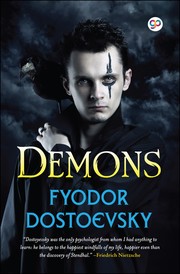 Fyodor Dostoevsky · 1872DemonsLvl 8Medium pace
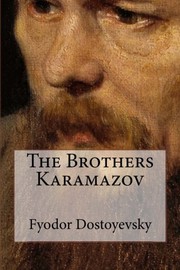 Fyodor Dostoevsky · 1880The Brothers KaramazovLvl 8Slow burn
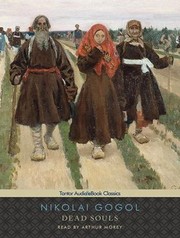 Nikolai Gogol · 1842Dead SoulsLvl 5Medium pace