
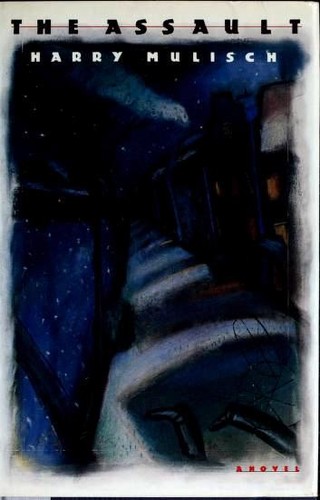
The Assault
Harry Mulisch · 1927–2010 · Netherlands
Originally De Aanslag (Dutch)
Why it matters
A boy's family is executed in reprisal after a collaborator is shot outside their house, and he spends decades reassembling what really happened that night. Mulisch's tightly constructed reckoning with Dutch wartime memory.
At a glance
A clear five-part structure moving steadily through decades.
Deep dive
How a few meters of Haarlem pavement in the last winter of the war decide, arbitrarily, which family gets destroyed, and what it costs one survivor forty years to understand about that night.
Written for readers who have finished the book. No plot recap, and nothing here is safe to read first.
Themes & symbolism
Mulisch tells Anton Steenwijk's story in five widely spaced episodes, 1945, 1952, 1956, 1966, 1981, each triggered by a chance encounter rather than by any effort of Anton's own, and the structure argues something specific about how atrocity actually reaches its survivors: not as a coherent narrative delivered whole, but as intrusion, a stranger at a party, an old acquaintance on the street, each holding one more fragment of a night Anton was too young and too traumatized to assemble at the time.
The mechanism behind his family's destruction turns out to be almost unbearably arbitrary: after the collaborator Fake Ploeg is shot by the resistance outside the Kortewegs' house, the terrified Korteweg family drags the body a few doors down and leaves it in front of the Steenwijks instead, ensuring the German reprisal falls on Anton's parents and brother rather than their own. Mulisch refuses his readers any moral logic to hold onto: no betrayal, no political stance, nothing the Steenwijks did explains why they burned and the Kortewegs didn't, only a handful of meters of Haarlem street.
That Anton grows up to become an anesthesiologist, a doctor whose entire practice is switching consciousness off rather than confronting it, is exactly the kind of detail Mulisch treats as too obvious to underline directly. A boy who survived by not fully registering what was happening to him chooses, as a man, a profession built on managed unconsciousness, and the novel lets the reader draw the connection between the two without ever pointing to it itself.
Each Return Arrives Wrapped in the Day's Politics
Mulisch anchors each of Anton's five encounters to an unmistakable moment in postwar politics, a hospital corridor in the early 1950s, the shock of 1956, campus unrest a decade later, disarmament marches by 1981, so his private history keeps arriving folded inside the era's public one, never sought out and never escaped.
Cor Takes Wants a Verdict Anton Won't Give
Cor Takes, the resistance fighter who actually shot Ploeg, tracks Anton down decades later and presses him, almost violently, to take a political position on what happened, to feel something usable rather than simply survive it. Anton's stubborn refusal to supply Cor with the reckoning he wants becomes Mulisch's sharpest instrument for examining a Dutch postwar culture that preferred closure to confrontation, comfortable amnesia to the harder work Cor is demanding.
Karin Ploeg, the Collaborator's Daughter
Ploeg's daughter Karin resurfaces in Anton's life insisting her father wasn't the monster the neighborhood still remembers, complicating a story that would otherwise sort neatly into villain and victims. Mulisch refuses to let Karin's grief cancel Ploeg's collaboration or let Ploeg's collaboration cancel Karin's grief, holding both at once as a way of resisting the tidy moral bookkeeping the rest of Dutch memory seemed eager to perform.
The last seal: what actually happens, and why it lands the way it does.
The ending, explained
At a 1981 nuclear disarmament demonstration on Amsterdam's Museumplein, decades after the war, Anton unexpectedly runs into Karin Ploeg among the crowd. They recognize each other and briefly compare what each has carried since that January night, he the deaths of his parents and brother, she a father the neighborhood still treats as pure monster. Mulisch declines to resolve this into forgiveness or judgment, letting the two simply stand together in a crowd protesting a different, future violence, each shaped for life by one night neither controlled or fully understood as it happened. The assault never really ends for those it touches, the novel's last image insists, it just stops being explicable, arriving instead as coincidence, as a stranger in a crowd, the past surfacing without asking permission.
Where to go next
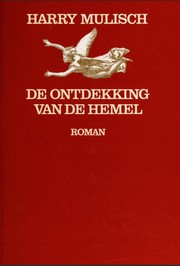 Harry Mulisch · 1992The Discovery of HeavenLvl 6Medium pace
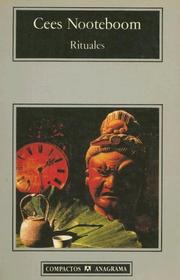 Cees Nooteboom · 1980RitualsLvl 6Slow burn
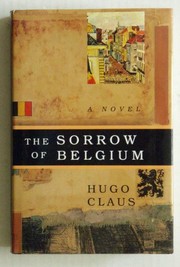 Hugo Claus · 1983The Sorrow of BelgiumLvl 6Medium pace
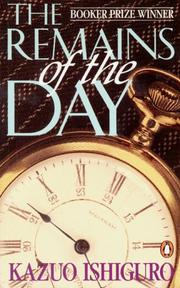 Kazuo Ishiguro · 1989The Remains of the DayLvl 5Slow burn
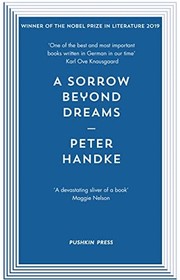 Peter Handke · 1972A Sorrow Beyond DreamsLvl 6Slow burn
 D. H. Lawrence · 1913Sons and LoversLvl 5Medium pace