
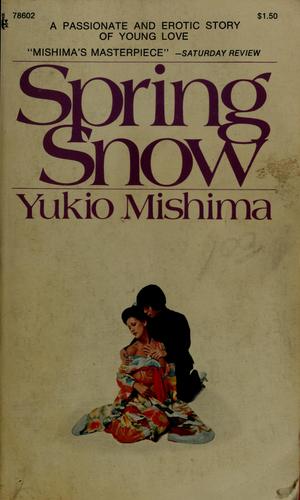
Spring Snow
Yukio Mishima · 1925–1970 · Japan
Originally Haru no Yuki (Japanese) · translated by Michael Gallagher
Why it matters
A doomed aristocratic love in 1912 Tokyo opens The Sea of Fertility, the tetralogy Mishima finished the morning of his death. His most gorgeous novel: snow, silk, and a passion chosen precisely because it is forbidden.
At a glance
Ornate, formal prose and courtly ritual detail slow the otherwise linear plot.
Deep dive
What Kiyoaki's practiced indifference toward Satoko is actually protecting him from, and why Mishima frames one doomed Taisho-era romance as only the opening turn of a much larger wheel.
Written for readers who have finished the book. No plot recap, and nothing here is safe to read first.
Themes & symbolism
Kiyoaki Matsugae is raised inside a household straining to look aristocratic, the Matsugae fortune being new money grafted onto old court manners by way of the aristocratic Ayakura family, who fostered him as a boy specifically to refine his breeding. That secondhand refinement produces a young man who has learned elegance as performance rather than feeling: his early coldness toward Satoko, a woman he has known since childhood and plainly loves, is staged cruelty, a way of proving to himself that he is above ordinary wanting until her engagement to an imperial prince makes wanting her impossible, and therefore, for the first time, real.
Once Satoko is formally sanctioned to marry Prince Toin, with the emperor's own blessing attached to the match, Kiyoaki's desire stops being adolescent hesitation and becomes a direct transgression against the imperial house itself. Mishima is precise about what that raises the stakes to: this is no longer a story about two young people finding their nerve, it's a story about a boy testing whether personal will can survive contact with the entire structure of state and family honor built to crush it.
Honda, Kiyoaki's rational, legally minded friend, watches all of this from just outside the passion he can't share, and it's through Honda's eyes, and a small birthmark under Satoko's arm noted early and half-forgotten, that Mishima plants the machinery for the rest of his Sea of Fertility tetralogy: a belief in reincarnation that will let this single Taisho-era tragedy recur, transformed, across three more volumes and several more decades of Honda's life.
The First Wave of the Sea of Fertility
Spring Snow is the opening volume of Mishima's four-book Sea of Fertility, whose title borrows the name of a lunar mare, a 'sea' that is in fact a dry, dead plain, an irony Mishima intended as commentary on beauty that promises fertility and delivers only barrenness. He finished the tetralogy's final pages on the morning of November 25, 1970, the same day he committed ritual suicide after a failed attempt to incite a coup, which has made it difficult ever since to read the series, and this novel's obsession with youth, purity, and self-annihilating will, as separate from the life of the man who wrote it.
The last seal: what actually happens, and why it lands the way it does.
The ending, explained
Satoko and Kiyoaki begin a secret affair after her engagement is announced, and she becomes pregnant. The family arranges a covert abortion and rushes her formal marriage to the prince forward to cover the scandal; immediately afterward, devastated and now permanently unreachable, Satoko takes vows and becomes a Buddhist nun at the temple of Gesshuji, refusing to see anyone from her old life. Kiyoaki, having finally recognized his love only once it is unrecoverable, travels repeatedly through the winter to beg an audience, and the abbess turns him away every time on Satoko's own instruction. Exhausted and ill from the journeys, he collapses and dies of pneumonia shortly after his last, failed visit, leaving Honda, at his bedside, with a promise that they will meet again, a promise the rest of the tetralogy will spend decades testing.
Where to go next
 Yukio Mishima · 1956The Temple of the Golden PavilionLvl 6Slow burn
 Yukio Mishima · 1963The Sailor Who Fell from Grace with the SeaLvl 5Fast paced
 Yasunari Kawabata · 1947Snow CountryLvl 5Slow burn
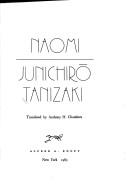 Jun'ichirō Tanizaki · 1925NaomiLvl 4Fast paced
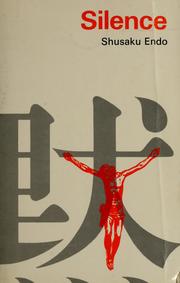 Endō Shūsaku · 1966SilenceLvl 5Slow burn
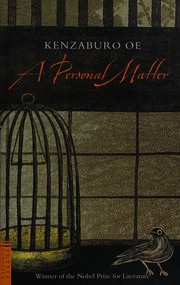 Kenzaburō Ōe · 1964A Personal MatterLvl 5Medium pace