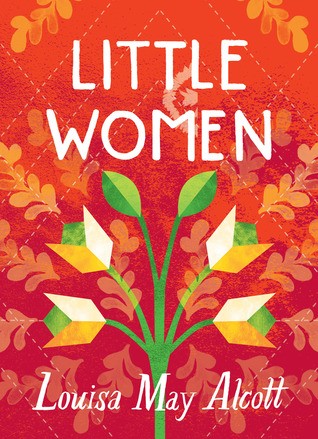
Little Women
Louisa May Alcott · 1832–1888 · United States
Why it matters
Four sisters navigate poverty, ambition, love, and loss in Civil War-era New England. A domestic novel that made girls' inner lives and creative ambitions serious literary material for the first time.
At a glance
Warm, direct prose aimed at a young readership.
Deep dive
Why Jo's ink-stained ambition keeps colliding with the marriage plot the novel otherwise seems happy to hand every other March sister.
Written for readers who have finished the book. No plot recap, and nothing here is safe to read first.
Themes & symbolism
Alcott takes material Victorian fiction treated as filler — sewing, amateur theatricals, a homemade newspaper, sisters bickering over a Christmas breakfast — and insists on its seriousness, at a moment when boys' adventure counted as literature and girls' domestic life mostly didn't. But the domestic sphere here is never cozy on its own terms: genteel poverty runs under every chapter, from the girls giving up their Christmas breakfast to a hungry immigrant family to Jo selling her hair for cash to Amy's blunt, unromantic acknowledgment that marriage is the one economic lever available to a woman without a fortune. Marmee's confession that she's been quietly managing a violent temper for forty years reframes the sisters' individual flaws — Jo's temper, Meg's vanity, Amy's selfishness, Beth's paralyzing shyness — as a shared curriculum modeled openly on Pilgrim's Progress, each girl carrying her own "burden" toward grace.
Jo is the only sister whose flaw the novel is visibly reluctant to fully cure. Her temper gets managed, not eliminated; her ambition gets redirected, not renounced; her refusal of conventional femininity (cutting her hair, wanting to be a boy, running rather than walking) is treated as a real cost rather than a phase to be corrected on the way to marriage. That reluctance is the book's engine: everyone assumes Jo and Laurie belong together, which makes her refusal of him, and the novel's refusal to reward her ambition with the fairy-tale ending readers expected, the site of its real tension.
Alcott's Fight Against the Marriage Plot
Alcott, unmarried her whole life and raised in a Transcendentalist household with Emerson and Thoreau as literal neighbors, resisted marrying Jo off at all — she wanted Jo to end the book an independent "literary spinster," and said so. Her publisher and her readers, flooding her with letters demanding Jo marry Laurie, forced her hand, and Alcott's response was pointedly perverse: she paired Jo not with the romantic, wealthy, conventionally desirable Laurie but with Professor Bhaer, older, poor, foreign, unglamorous, a match she herself called a joke on the public that wanted a fairy tale. Read that way, the marriage isn't a capitulation so much as Alcott's own act of authorial control — Jo gets a partner who respects her mind rather than one who would have absorbed her into his own story.
The last seal: what actually happens, and why it lands the way it does.
The ending, explained
By the novel's close, Beth has already died of the illness she never fully recovers from after nursing a poor family through scarlet fever — a loss the book treats as the cost of the sisters' moral education rather than a plot twist to be softened. Jo, having already turned down Laurie's proposal, reunites in New York with Professor Bhaer, whose honest criticism of her sensational potboiler fiction pushes her toward better, harder work; they marry, and when Aunt March dies and leaves Jo her house, Plumfield, Jo turns it into a school for boys rather than a private domestic retreat. Laurie, spurned by Jo, eventually marries Amy instead, a pairing the book frames as more compatible than tragic. The final tableau — an apple-picking family reunion at Marmee's birthday — resolves the novel as a negotiated compromise rather than a surrender: Jo gets a marriage, but one built around a shared vocation instead of romance, and channels her ambition into running an institution rather than renouncing it, which is about as much independence as an 1868 ending could plausibly grant her.