
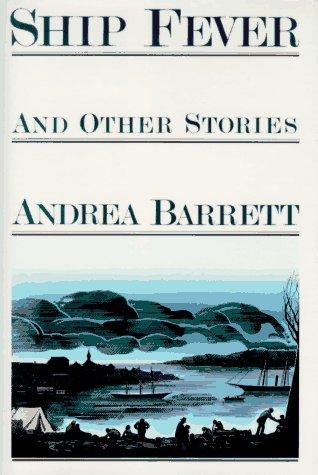
Ship Fever and Other Stories
Andrea Barrett · b. 1954 · United States
Why it matters
Linked stories follow nineteenth-century naturalists and doctors at the edges of what their era understood, the title novella tracking a young physician through a lethal typhus epidemic among Irish famine emigrants. Barrett's National Book Award winner treats scientific history as genuine drama.
At a glance
Period scientific detail spread across multiple linked stories asks for patient, attentive reading.
Deep dive
How a National Book Award winning cycle of stories about nineteenth-century naturalists turns the history of science itself into genuine suspense, from Linnaeus's fading mind to a lethal quarantine island.
Written for readers who have finished the book. No plot recap, and nothing here is safe to read first.
Themes & symbolism
The title novella, roughly half the book's length, follows Lauchlin Grant, a young Canadian physician, to Grosse Isle in 1847, where tens of thousands of Irish emigrants fleeing famine arrive carrying typhus, and the quarantine station meant to contain the epidemic instead becomes a mass grave Grant can barely keep pace with. Barrett grounds the horror in exact period medicine, contemporary doctors still debated whether typhus spread by contagion or miasma, and Grant's own growing infatuation with a fellow volunteer nurse, so the historical catastrophe never crowds out the individual lives caught inside it.
The shorter stories orbit the same basic question from different centuries: what does it cost to actually look closely at the natural world before your era has the tools to understand what you're seeing. "The English Pupil" imagines Carl Linnaeus in his final, mentally failing years, unable to recall the very taxonomic system he invented, tended by a former student who once idolized him. "Rare Bird" stages an eighteenth-century argument among naturalists over whether swallows hibernate underwater in winter, a theory that sounds absurd now and was taken with total seriousness then.
Barrett keeps returning to the gap between a scientist's private, often obsessive devotion and the indifferent scale of what they're studying, plague, extinction, geologic time, and "Soroche," the collection's contemporary outlier, applies the same logic to altitude sickness in the Andes, proving the pattern isn't only historical. Read together, the stories argue that scientific curiosity has always been a form of intimacy with mortality, whether the century in question knew enough to name what it was looking at or not.
Grosse Isle's Real Death Toll
Barrett builds the title novella on an actual 1847 catastrophe: several thousand Irish famine emigrants died at the Grosse Isle quarantine station in a single season, overwhelming a facility designed for a fraction of that number, and period accounts describe conditions nearly identical to what Grant witnesses in the story. Keeping the setting and casualty scale historically accurate lets Barrett's fiction carry documentary weight without ever feeling like a lecture, Grant's exhaustion reads as the exhaustion of someone actually present for a disaster this size.
Linnaeus Forgetting His Own System
"The English Pupil" takes its irony from documented fact: Linnaeus genuinely did suffer a severe cognitive decline in his final years, reportedly unable to recognize his own published work, and Barrett uses that historical detail to ask what happens to a mind that organized all of nature once it can no longer organize itself. The story's real tenderness comes from the pupil's refusal to correct or pity his former teacher, tending him instead with the same patient attention Linnaeus once taught him to give a specimen.
Where to go next
 Valerie Martin · 2003PropertyLvl 5Slow burn
 Michael Chabon · 2000The Amazing Adventures of Kavalier and ClayLvl 5Fast paced
 James Alan McPherson · 1977Elbow RoomLvl 5Medium pace
 Elizabeth Strout · 2008Olive KitteridgeLvl 4Medium pace
 Jayne Anne Phillips · 2023Night WatchLvl 6Slow burn
 Charles Frazier · 1997Cold MountainLvl 4Medium pace