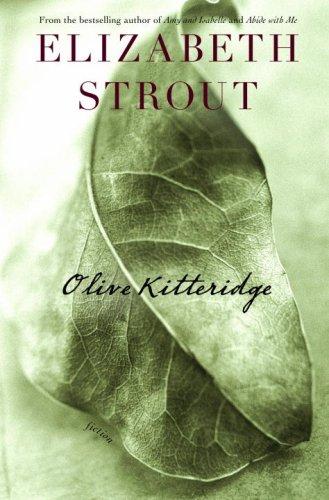
Olive Kitteridge
Elizabeth Strout · b. 1956 · United States
Why it matters
A blunt, difficult retired schoolteacher moves through the edges of her small Maine town's linked stories, sometimes central, sometimes barely glimpsed. Strout's Pulitzer-winning novel-in-stories makes an unlikable woman unforgettable.
At a glance
Linked stories shift focus away from Olive, requiring patient tracking.
Deep dive
Thirteen linked stories set in one small Maine town let a blunt, difficult retired teacher drift between the center of her own story and the edge of everyone else's.
Written for readers who have finished the book. No plot recap, and nothing here is safe to read first.
Themes & symbolism
Strout builds Olive Kitteridge's portrait sideways as often as head on: in Pharmacy and A Little Burst, Olive fills the frame, prickly, honest to the point of cruelty, capable of stealing a single shoe from her new daughter-in-law's closet out of an unacknowledged jealousy at her son's wedding, but in stories like A Different Road or Winter Concert she recedes to a name other Crosby, Maine, residents mention in passing, glimpsed buying doughnuts or sitting stone-faced at a piano recital. The gap between those two views, Olive's own unsparing self-narration and the town's flatter, kinder or harsher gossip about her, is the book's real subject: a woman convinced she says only what's true finding out, story by story, how selective that truth actually was.
Her marriage to Henry, the town's gentle, endlessly patient pharmacist, absorbs most of that harshness for decades before a stroke leaves him unable to speak or reliably recognize her, and Strout uses his silence to force onto the page what Olive could never quite say to him conscious, her account of their marriage, delivered now to a man who can no longer confirm or contest a word of it. Her son Christopher's slow retreat, first to New York, then away from her almost entirely after a second marriage, runs the same argument down a generation, an inheritance of bluntness nobody in the family quite knows how to apologize for.
Kevin Coulson on the Seawall
In Incoming Tide, Olive sits down uninvited beside Kevin Coulson, a former student parked overlooking the harbor with a gun in his car and a plan for it, and talks to him about nothing in particular until a waitress they both know nearly drowns in the tide below them, an emergency urgent enough to give Kevin something to act on besides his own despair. Olive never learns how close she came to failing him, which is exactly Strout's point: undramatic kindness saves a life here with no one, including its source, aware that's what happened.
The Stolen Shoe in A Little Burst
At Christopher's wedding, humiliated by overhearing his new wife and her mother mock her outfit, Olive slips into their bedroom and takes a single shoe and a bra from among the gifts, a petty, almost involuntary act Strout never lets her fully account for. It is the clearest instance of a pattern the book keeps returning to, Olive doing something genuinely small and mean, then narrating it to herself in terms that make it sound like justice.
The last seal: what actually happens, and why it lands the way it does.
The ending, explained
Henry dies during the collection's later stories, still in the nursing home his stroke left him in, and Olive spends River, the book's final entry, newly widowed and more alone than she has ever let herself notice. She strikes up a wary friendship with Jack Kennison, a wealthy, conservative widower she has little in common with and initially dislikes, and the story ends with the two of them cautiously choosing each other anyway, not out of romance so much as recognition that neither wants to finish life entirely alone. Strout gives Olive no epiphany and no apology tour, only a small, unguarded willingness, after thirteen stories of holding people at arm's length, to let someone else's hand stay in hers a little longer than necessary.