
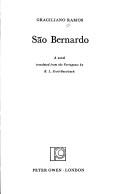
São Bernardo
Graciliano Ramos · 1892–1953 · Brazil
Originally São Bernardo (Portuguese) · translated by Padma Viswanathan
Why it matters
A ruthless self-made landowner narrates his own rise, marriage, and hollow triumph in prose as clipped as his moral vocabulary. Ramos's first novel, and Brazilian social realism's harshest character study.
At a glance
A cold, unreliable first-person narrator withholds any softening context for his own cruelty.
Deep dive
A self-made landowner sits down to write his own story in order to understand it, and the prose keeps proving he understands less than he thinks.
Written for readers who have finished the book. No plot recap, and nothing here is safe to read first.
Themes & symbolism
Paulo Honório narrates his own rise in the vocabulary of a ledger: São Bernardo itself, the land he schemes, threatens, and outmaneuvers his way into owning, gets the same appraising attention he gives crops, laborers, and eventually his own wife, because acquisition is the only mode of attention he has. He tells us early and without apology how he swindled his way to the property from its previous owner, and the prose never softens into regret about the men he ruined doing it. What the novel is actually testing, chapter by chapter, is whether a man who has only ever practiced this one kind of relationship, ownership, can recognize another kind even when it's offered to him.
Madalena, the schoolteacher he marries mostly to secure an heir and manage his household, brings exactly the humane, unmonetized way of seeing he lacks, socialist sympathies, patience with the workers he exploits, a private notebook of her own thoughts he can't stand not controlling. His jealousy escalates from suspicion into open interrogation, less because he has real evidence of betrayal than because Madalena's interior life is the one asset on the estate he's never managed to fully take possession of. Ramos lets Paulo report his own worst behavior in the same flat, self-justifying register he uses for a good harvest, which is exactly what makes the account so damning: he's confessing without recognizing that's what he's doing.
A Ledger Mistaken for a Memoir
Paulo announces at the outset that he's writing this account in retirement, with the help of a schoolteacher friend, specifically to leave a record of how he built his fortune, and Ramos lets that stated purpose collapse over the course of the telling: what starts as a self-congratulatory business memoir keeps sliding, against its narrator's will, into an account of exactly how he destroyed the one relationship that might have redeemed the rest. Paulo notices the drift and comments on it, unable to stop it, still narrating in the acquisitive language that's the only tool he has even while trying to describe its failure.
Madalena's Notebook, Interrupted
The fragments of Madalena's own writing that survive inside Paulo's narrative, quoted secondhand, filtered through his jealous rereading, are the closest the novel gets to a counter-account, and their very incompleteness is the point: Paulo can report what she wrote but never actually inhabit why she wrote it, and his compulsive rereading of her private notebook, hunting for evidence of infidelity that isn't there, is the clearest image the novel offers of a man who can extract anything except understanding.
The last seal: what actually happens, and why it lands the way it does.
The ending, explained
Paulo's jealousy finally curdles into a sustained interrogation of Madalena over an imagined betrayal, cross-examining her the way he'd corner a debtor, until she stops defending herself entirely, worn past the point of arguing back. Rather than continue living inside that surveillance, she poisons herself. Paulo tells us this part of the story in the same flat register as everything else, but the flatness starts visibly failing him: sentences break off, the ledger-keeper's confidence deserts him, and the book he set out to write as a record of triumph ends instead with an old man alone on his own successful estate, still unable to fully name what he did, left only with a young son who barely knows him and a manuscript that has become, almost against its author's will, a confession.
Where to go next
 Graciliano Ramos · 1938Barren LivesLvl 6Slow burn
 Rachel de Queiroz · 1930The FifteenLvl 3Medium pace
 Clarice Lispector · 1977The Hour of the StarLvl 7Slow burn
 Jorge Amado · 1958Gabriela, Clove and CinnamonLvl 3Fast paced
 João Guimarães Rosa · 1956The Devil to Pay in the BacklandsLvl 9Slow burn
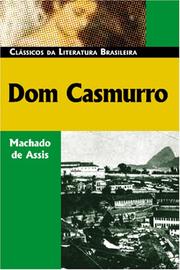 Machado de Assis · 1899Dom CasmurroLvl 6Medium pace