
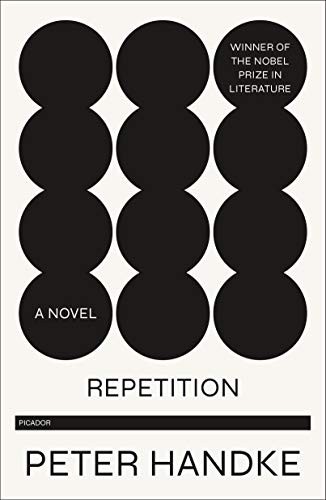
Repetition
Peter Handke · b. 1942 · Austria
Originally Die Wiederholung (German)
Why it matters
A young Austrian retraces his vanished brother's journey into Slovenia, discovering language, landscape, and self through patient, hypnotic observation. Handke's most sustained meditation on perception as a moral act.
At a glance
Patient, hypnotic accretion of detail with little forward plot momentum.
Deep dive
What a young Austrian carries across the border into Yugoslavia to retrace his vanished brother's path, and why the objects doing the real remembering are a farming dictionary and a notebook on grafting fruit trees.
Written for readers who have finished the book. No plot recap, and nothing here is safe to read first.
Themes & symbolism
Filip Kobal, twenty in 1960 and narrating a quarter-century later, crosses from Austria into socialist Yugoslavia retracing the route of his older brother Gregor, missing on the Eastern Front since the war, carrying the only two things Gregor left behind: a Slovene-German dictionary of farming terms and a school notebook on grafting pear and apple trees. Handke gives Filip no grave to visit and no closure to find, only these dry technical documents, which the novel treats as truer inheritance than any elegy could be, precise vocabulary standing in for a brother Filip barely had time to know.
Retracing Gregor's path through Yugoslavia's Karst region becomes, almost without Filip noticing, an act of reclaiming a suppressed inheritance closer to home: his own family are Carinthian Slovenes inside Austria, a minority whose language and identity official Austrian culture has spent generations quietly erasing. Repetition, walking the same ground, relearning the same words, functions as Handke's actual method rather than a theme illustrated from outside, mourning and reclamation accomplished through imitation and return rather than through any single dramatic discovery.
Handke slows the prose to match: long, patient sentences track the exact weight of a hoe, the smell of a drying apple, the particular blue of a Karst sinkhole, refusing any scene the shortcut of summary. Filip's labor among fruit sorters and vineyard workers is rendered with the same unhurried attention he gives the dictionary, work and language treated as the same discipline of noticing, and the novel's slowness is itself the argument: a life, or a death, can only be honored at the pace of the actual looking it takes to see it clearly.
The Brother's Two Books
Gregor's dictionary and grafting notebook contain no narrative and no sentiment, only entries for soil types, cutting angles, and the Slovene names for varieties of pear, and Filip reads both obsessively, copying passages, testing words against the actual orchards he passes through on his journey. Handke treats this flat agricultural vocabulary as more trustworthy than any lyric memory Filip could invent, the precise name for a graft carrying more of Gregor's real presence than sentiment ever could, a familiar Handke argument that exact naming is itself an act of devotion.
The last seal: what actually happens, and why it lands the way it does.
The ending, explained
Filip reaches the Yugoslav coast, the Karst finally opening onto the sea, and Handke never resolves the actual mystery of Gregor's fate, killed or simply lost somewhere on the Eastern Front, his body and even the circumstances of his disappearance never confirmed. Instead Filip arrives at a state in which the search itself has become sufficient: having learned to name the orchards, terraces, and stone walls his brother must once have seen, he experiences the landscape as populated by Gregor's presence rather than emptied by his absence. The novel ends on perception rather than plot, the point of the whole journey never having been to locate a body but to relearn, physically and linguistically, a world his family's own history had made half-foreign to him.
Where to go next
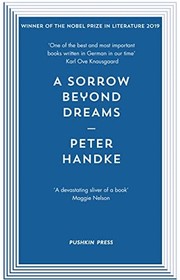 Peter Handke · 1972A Sorrow Beyond DreamsLvl 6Slow burn
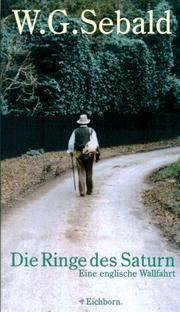 W. G. Sebald · 1995The Rings of SaturnLvl 7Slow burn
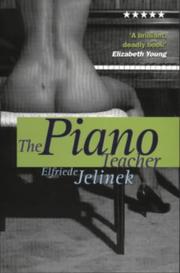 Elfriede Jelinek · 1983The Piano TeacherLvl 7Slow burn
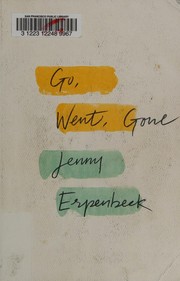 Jenny Erpenbeck · 2015Go, Went, GoneLvl 5Medium pace
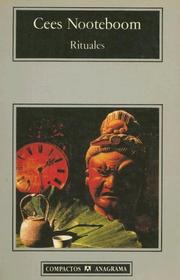 Cees Nooteboom · 1980RitualsLvl 6Slow burn
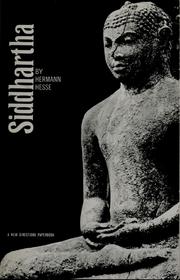 Hermann Hesse · 1922SiddharthaLvl 3Medium pace