

Quicksand
Nella Larsen · 1891–1964 · USA
Why it matters
A biracial woman drifts between Harlem, Copenhagen, and the rural South, at home in none. Larsen's first novel maps the impossible position of a woman caught between races, classes, and desires in the Harlem Renaissance.
At a glance
Dense interior focus on a drifting, conflicted protagonist.
Deep dive
Helga Crane keeps leaving every place that claims her, a Black boarding school, Harlem, Copenhagen, convinced the next departure will finally be the one that fits, and Larsen never lets a single stop prove her wrong or right.
Written for readers who have finished the book. No plot recap, and nothing here is safe to read first.
Themes & symbolism
Helga Crane's biracial identity, a Black father who left before she can remember him and a white Danish-American mother remarried into a family that treats her as an embarrassment, leaves her with no community anywhere in the novel that claims her without conditions. Naxos, the Black Southern boarding school where she teaches at the book's opening, modeled closely on institutions like Tuskegee, runs on an ideology of racial uplift through discipline, modesty, and conformity, and Helga's disgust at being told to suppress both her color and her desire for the sake of the race's collective respectability sets the pattern the rest of the novel repeats: every community that offers Helga belonging turns out to require that she become smaller first.
Denmark, where Helga's aunt and uncle put her on display among Copenhagen's white society, exposes the inverse version of the same problem. Danish suitors and the painter Axel Olsen treat her Blackness as an aesthetic novelty rather than something to discipline away, and Helga discovers she's no freer being desired for her difference than she was being corrected out of it. Larsen keeps her protagonist restless not because Helga is flighty but because the novel keeps proving, stop after stop, that every available community turns her into a symbol, of race pride, of exotic beauty, before it will let her simply be a person choosing her own life.
Naxos and the Politics of Racial Uplift
Larsen drew Naxos directly from her own uneasy experience around Black educational institutions built on Washington-era uplift ideology, schools that treated visible respectability, modest dress, controlled speech, suppressed appetite, as a collective survival strategy under Jim Crow rather than a personal choice. Helga's fury at Naxos isn't a rejection of racial solidarity itself, it's a rejection of solidarity that only functions by erasing exactly the qualities, color, sensuality, individual ambition, that make her who she is. Larsen treats the school's genuine protective logic and its genuine cruelty to Helga as simultaneously true, refusing the easier reading where uplift ideology is simply villainous.
A Portrait for Sale in Copenhagen
Axel Olsen's portrait of Helga renders her more sensual and 'primitive' than she recognizes in herself, and when he proposes afterward, Helga refuses him specifically because the portrait has already told her what she'd be agreeing to: ornament rather than partner, difference curated for a European audience's pleasure. Larsen is writing in the same years Josephine Baker was becoming Paris's favorite performer, and Olsen's painting reads as a compact critique of that broader vogue for Blackness as continental spectacle, a fascination that flatters exactly as it confines.
The last seal: what actually happens, and why it lands the way it does.
The ending, explained
Back in Harlem and increasingly unmoored, Helga takes shelter from a storm one night in a storefront revival church and is swept up in an intense religious conversion she hadn't sought, culminating in her sudden union with the church's preacher, Reverend Pleasant Green, and a move to rural Alabama as a minister's wife. What looks briefly like the settled belonging she's spent the whole novel failing to find curdles fast: repeated childbirth in quick succession leaves her physically depleted, isolated in a community with even less room for her particular restlessness than Naxos had, and the novel's last image is Helga pregnant again, her body doing the one thing that has finally stopped her from being able to leave anywhere. Larsen refuses her any late escape; the restlessness that drove the whole book simply runs out of road.
Where to go next
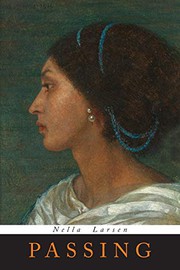 Nella Larsen · 1929PassingLvl 4Medium pace
 Richard Wright · 1940Native SonLvl 5Fast paced
 James Baldwin · 1956Giovanni's RoomLvl 5Medium pace
 Ralph Ellison · 1952Invisible ManLvl 7Medium pace
 Zora Neale Hurston · 1937Their Eyes Were Watching GodLvl 5Medium pace
 Italo Svevo · 1923Zeno's ConscienceLvl 6Medium pace