
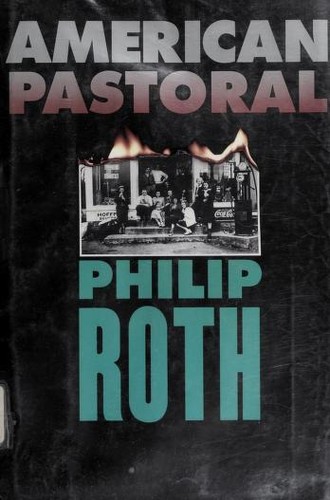
American Pastoral
Philip Roth · 1933–2018 · USA
Why it matters
Swede Levov, all-American success, watches his daughter bomb the local post office: the sixties detonating inside one family. The crown of Roth's late run: the American century as tragedy.
At a glance
Nested narration and digressive meditation extend an otherwise realist family tragedy.
Deep dive
Nathan Zuckerman never actually knew the Swede — every scene of his ruin is Zuckerman's invention. What does it mean that Roth's American tragedy is, admittedly, a guess?
Written for readers who have finished the book. No plot recap, and nothing here is safe to read first.
Themes & symbolism
Seymour "Swede" Levov is assimilation's model student — blond, athletic, a Jewish kid who inherited his father's glove factory and married a shiksa beauty queen — and Roth builds him as pure, deliberate cliché precisely so Merry's bomb can blow the cliché apart. The glove is the novel's controlling image: Newark Maid makes a product defined by fit, decorum, the second skin of civilized restraint, and the Swede has spent his life wearing that same restraint over himself. Merry's stutter is the crack in the seal, rage with nowhere to go until Vietnam gives it a target; when she blows up the Old Rimrock post office and vanishes, the disorder the glove was built to contain simply relocates from the factory floor to the family.
Rita Cohen, the young radical who taunts and extorts the Swede in the name of Merry's politics, and the feral, Jain-vegetarian wreck he eventually finds living in squalor, work as two versions of the same indictment: American violence returning home in a form its author can no longer recognize as his own daughter. Merry's late-novel asceticism — starving herself, refusing to kill even a fly, unable to speak above a whisper — is her stutter's logical endpoint, violence turned so completely inward that self-erasure becomes the only speech left available to her. Dawn's beauty-pageant past and her late-novel face-lift read as the same instinct as the Swede's gloves — surface maintained as a substitute for repair — while Lou Levov's blunt, unfashionable moral certainty is the value system the Swede's whole 'pastoral' project was built to modernize away from, and that the novel ultimately vindicates over his son's blind faith in decency and good intentions.
Zuckerman's Guesswork
The crucial formal fact is that Zuckerman barely knew the Swede — a hero-worshipped older classmate glimpsed a handful of times across decades — and after learning at a reunion that this golden boy's life came apart, he simply imagines the rest, announcing the switch explicitly partway through. Everything that follows, the interiority, the dialogue, the dinner-table catastrophe, is Zuckerman's reconstruction, not reportage. Roth is asking what a biography built entirely from projection is worth, and answering that it may be the only kind anyone ever writes: the tragedy of the American century, rendered by a novelist filling in a stranger's blank spaces with his own dread.
The Indigenous American Berserk
Roth's own phrase for what erupts through Merry — 'the indigenous American berserk' — names a national inheritance running underneath the postwar prosperity narrative the Swede believed he'd inherited cleanly: slavery, genocide, and vigilante violence resurfacing generation after generation, dressed differently each time. The novel treats Merry's bombing not as an aberration imported from campus radicalism but as that older American violence choosing this particular decade, and this particular family, as its latest vessel. First in the loose 'American Trilogy' Roth followed with I Married a Communist and The Human Stain, American Pastoral won the Pulitzer for reading the whole postwar consensus — assimilation, striving, the Norman Rockwell surface — as a pastoral fantasy that the country's actual history was always going to shatter.
The last seal: what actually happens, and why it lands the way it does.
The ending, explained
The novel closes inside the very dinner party Zuckerman has been building toward, at the Levov table in Old Rimrock, and simply stops there rather than resolving anything. Old secrets surface in front of guests — Bill Orcutt's affair with Dawn, the family friend Sheila Salzman's concealment of Merry after the bombing — while the drunk, unraveling Jessie Orcutt lunges at Lou Levov with a fork, drawing blood, an act of random domestic violence that mirrors Merry's political one without any of its ideology. Roth cuts away mid-chaos, offering no aftermath, no reckoning, no return to order. The refusal of closure is the point: the Swede's life, and the American pastoral he stood for, don't resolve — they just keep detonating.
Where to go next
 Philip Roth · 1959Goodbye, ColumbusLvl 4Medium pace
 Philip Roth · 1969Portnoy's ComplaintLvl 5Fast paced
 Philip Roth · 1995Sabbath's TheaterLvl 6Medium pace
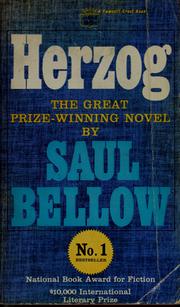 Saul Bellow · 1964HerzogLvl 7Slow burn
 Joshua Cohen · 2021The Netanyahus: An Account of a Minor and Ultimately Even Negligible Episode in the History of a Very Famous FamilyLvl 6Medium pace
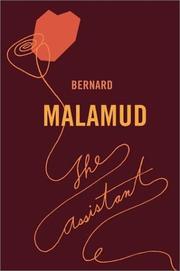 Bernard Malamud · 1957The AssistantLvl 5Slow burn