
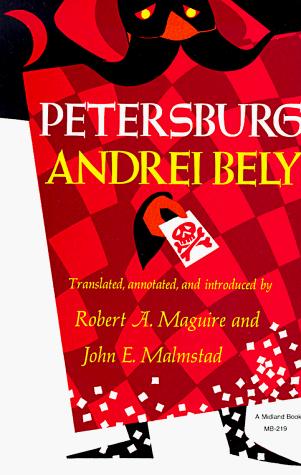
Petersburg
Andrei Bely · 1880–1934 · Russia
Originally Peterburg (Russian)
Why it matters
A czarist bureaucrat is stalked through a city of shadows and fog by his own son, carrying a bomb timed to kill him. Nabokov ranked this rhythmic, hallucinatory novel with Ulysses among the century's four greatest: Russian Symbolism's strangest, most unjustly overlooked masterpiece.
At a glance
Dense sound-patterned prose and fragmented, hallucinatory narration make this one of modernism's hardest novels.
Deep dive
Why the bureaucrat father and the terrorist son are less two characters than two versions of the same crumbling idea of Russia.
Written for readers who have finished the book. No plot recap, and nothing here is safe to read first.
Themes & symbolism
Apollon Apollonovich Ableukhov, senator, thinks entirely in diagrams and believes Petersburg's grid can discipline chaos into order; his son Nikolai, adrift and half-willingly recruited by a revolutionary cell, agrees to plant a bomb — hidden in a sardine tin, running on a timer — that will kill his own father. The device literalizes a civil war already underway inside the household: autocratic rationalism against its own overproduced discontent, each generation the other's bomb. Bely never resolves which side is right; both come to look like symptoms of the same disordered state apparatus, staggering toward 1905. Nikolai himself doubles again at the novel's masked ball, where he appears in a red domino costume that turns him, for one grotesque evening, into the very image of the revolutionary violence he's about to enact — identity in this novel is never singular, only ever a costume laid over a costume.
Petersburg itself, founded by decree on a swamp rather than grown, is rendered less as setting than as collective hallucination — fog, doubled shadows, the Bronze Horseman (Peter the Great's statue, inherited from Pushkin) galloping through Nikolai's fevered visions as the ancestral violence behind the whole imperial project. Bely writes the city's famous straight lines and right angles as an optical trick laid over swamp and chaos, so that Apollon Apollonovich's faith in geometric order comes to read as the same species of delusion as his son's revolutionary fervor — a grid holding nothing down. Even the bureaucrat's carriage rides through the city are staged as abstractions, cubes and prisms sliding past a man who experiences Petersburg as pure geometry precisely because looking at it as a place, with people in it, would be unbearable.
Bely's Sound-Patterned Prose
The novel reads closer to a musical score than conventional prose: recurring motifs — circles, cubes, a hissing "shshsh," the ticking sardine tin — function as Wagnerian leitmotifs, returning and modulating rather than advancing a linear plot. Bely, trained in music and mathematics before literature, built sentences to be heard as rhythm first and sense second, a method notoriously resistant to translation and the reason Nabokov, an unsparing critic of almost everyone, ranked this novel alongside Ulysses among the century's four greatest. Even the novel's much-discussed color scheme — the reds and yellows that saturate Nikolai's revolutionary sections against the grays of his father's world — functions musically, as a recurring key the prose keeps modulating back into rather than a fixed symbolic code to be decoded once and shelved.
Inheriting Pushkin's Statue
Petersburg writes itself explicitly into the "Petersburg text" running from Pushkin's The Bronze Horseman through Gogol and Dostoevsky, a tradition in which the city itself, built by autocratic will against nature, produces the madness of its inhabitants. Nikolai's bomb plot against his own father recasts that tradition's stock figure — the clerk crushed beneath the statue's hooves — as an actual assassination attempt: the son doesn't just suffer under the father-state's weight, he tries to detonate it. Writing in 1913, on the eve of a revolution that would in fact topple the world Apollon Apollonovich embodies, Bely gives the old genre's helpless victim a bomb instead of a grievance, and lets the ambiguity of whether that's progress or just a new kind of ruin sit unresolved.
Where to go next
 Fyodor Dostoevsky · 1866Crime and PunishmentLvl 6Fast paced
 Yevgeny Zamyatin · 1924WeLvl 5Fast paced
 Ivan Turgenev · 1862Fathers and SonsLvl 3Medium pace
 Aleksandr Solzhenitsyn · 1962One Day in the Life of Ivan DenisovichLvl 3Fast paced
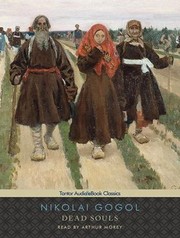 Nikolai Gogol · 1842Dead SoulsLvl 5Medium pace
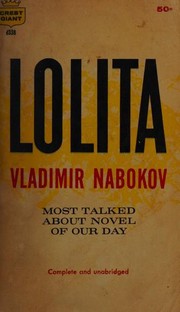 Vladimir Nabokov · 1955LolitaLvl 8Medium pace