
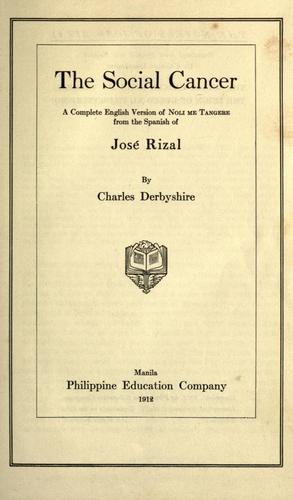
Noli Me Tangere
José Rizal · 1861–1896 · Philippines
Originally Noli Me Tangere (Spanish)
Why it matters
A reformist doctor returns from Europe to find friars and officials corrupting his homeland. Rizal's foundational novel of Filipino nationhood, banned by the colonial government and later cited as a spark of the 1896 revolution.
At a glance
Dense satire of specific 1880s clergy and colonial politics requires historical footnotes to fully land.
Deep dive
Why Rizal called his own country's sickness a cancer in the book's dedication, and what the secret buried in Maria Clara's parentage does to the novel's cleanest moral line.
Written for readers who have finished the book. No plot recap, and nothing here is safe to read first.
Themes & symbolism
Rizal's dedication frames the whole book as a diagnosis before a single character appears: he calls the corruption he's about to describe a cancer, malignant enough that even touching it worsens the pain, and titles the novel after the warning a doctor gives a patient with exactly that kind of wound, noli me tangere, touch me not. Crisóstomo Ibarra comes home from seven years in Europe carrying Enlightenment optimism and a plan to fund a school in San Diego, certain reason can operate on a sick society without anesthetic. Padre Dámaso and Padre Salví exist to prove him wrong: the friars don't just obstruct the school, they own the land, the courts, and eventually Ibarra's excommunication, because reform threatens not the abstraction of empire but the concrete income of the parish.
The novel's second plot, running almost entirely outside Ibarra's reformist frame, does the real damage. Sisa, abandoned by an idle husband, loses both her sons to the same machinery Ibarra hopes to fix by petition: Basilio flees a beating by the Guardia Civil, Crispín is falsely accused of stealing church funds and never comes home. Sisa goes mad searching the town for boys who are no longer in it, and Rizal gives her wandering pages of attention no ilustrado subplot receives, because her ruin is the cancer working at street level, immune to any school Ibarra could build.
Maria Clara anchors the book's most uncomfortable irony. She is raised as the purest expression of Filipino womanhood the novel offers, devout and loyal past reason to Ibarra, and her parentage turns that purity inside out: her mother's affair with Padre Dámaso means the friar Ibarra fights hardest is, by blood, the father of the woman he loves. Rizal isn't reaching for a twist. He's denying the reader a clean line between coloniser and colonised even in his most sympathetic character, exactly the discomfort the friars wanted censored.
Written to Be Banned
Rizal wrote the novel in Madrid, Paris, and Berlin between 1884 and 1887, financing the print run himself until he ran short and a friend, Maximo Viola, covered the balance. Spanish authorities banned it within months of its arrival in Manila, and owning a copy became grounds for suspicion; Rizal's own family had their house searched. The strategy worked exactly as intended: contraband copies circulated faster for being forbidden, the Katipunan later drew on the novel in its recruitment, and Rizal stood trial in 1896 partly on this book's supposed sedition before a firing squad at Bagumbayan settled an argument the friars had already lost everywhere else.
The last seal: what actually happens, and why it lands the way it does.
The ending, explained
Padre Salví frames Ibarra for an armed uprising and has him jailed; Elías, the boatman who has shadowed Ibarra since the opening chapters as his double from the class Ibarra's reforms would never reach, helps him escape by river. Guardia Civil boats catch and fire on them; wounded, Elías sends Ibarra ashore and swims off alone, telling a boy he meets in the forest, Basilio, that he is dying without seeing dawn break over his own country and asking whoever finds him to remember those who died in the dark so others could see the light. Ibarra is presumed dead in the wreck, though the sequel, El Filibusterismo, reveals he escaped abroad. Told Ibarra is gone and threatened with the exposure of her mother's affair, Maria Clara agrees to enter the Santa Clara convent rather than marry Linares, trading one captivity for another.
Where to go next
 Alexandre Dumas · 1844The Count of Monte CristoLvl 4Fast paced
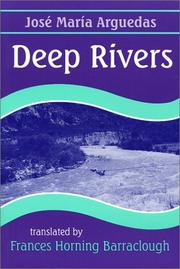 José María Arguedas · 1958Deep RiversLvl 6Medium pace
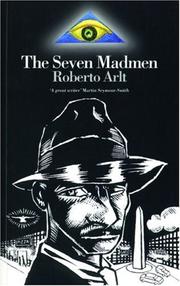 Roberto Arlt · 1929The Seven MadmenLvl 7Medium pace
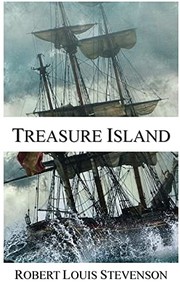 Robert Louis Stevenson · 1883Treasure IslandLvl 3Fast paced
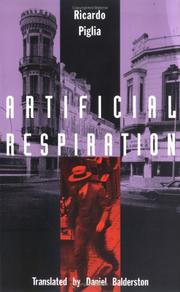 Ricardo Piglia · 1980Artificial RespirationLvl 8Slow burn
 Joseph Conrad · 1899Heart of DarknessLvl 7Slow burn