

Mr. Sammler's Planet
Saul Bellow · 1915–2005 · Canada / USA
Why it matters
An elderly Holocaust survivor navigates late-1960s Manhattan's chaos (riots, moon landings, a pickpocket he can't stop watching) as a lone voice of Old World order. Bellow's National Book Award winner is his bleakest, most conservative reckoning with the era's upheaval.
At a glance
Dense essayistic digressions on philosophy and history slow an otherwise compact plot.
Deep dive
A one-eyed Holocaust survivor watches late-1960s Manhattan come apart, and Bellow can't decide whether he's diagnosing the era or just furious at it.
Written for readers who have finished the book. No plot recap, and nothing here is safe to read first.
Themes & symbolism
Artur Sammler's missing eye — gouged out during the massacre in Poland he survived by crawling out of a mass grave — is the novel's controlling image made literal: a man who has seen genocide up close now moves through a Manhattan of student radicals, moon landings, and a pickpocket he watches work the bus without intervening, seeing everything with a kind of exhausted, partial clarity that the novel presents as both moral authority and a limitation Bellow never lets Sammler, or the reader, fully trust.
The Black pickpocket Sammler repeatedly observes and eventually is confronted by — a subplot that has drawn sustained, warranted criticism for how it renders Black male sexuality and criminality through Sammler's uneasy, fascinated gaze — functions in Bellow's design as the era's raw, pre-civilizational energy set against Sammler's Old World manners and near-total sexual and physical exhaustion; whether the novel is diagnosing that energy or simply recoiling from it is a question later readers and critics have answered less charitably than Bellow clearly intended, and the book is genuinely harder to defend on this point than most of what surrounds it.
Sammler's nephew Elya Gruner — a gynecologist who has quietly done morally compromised favors for gangster clients across his career while also, just as quietly, funding half the family's survival and stability — becomes the novel's actual moral center by the final chapters precisely because his goodness is unglamorous and mixed rather than pure, and Sammler's growing focus on Elya's decline reframes the whole novel's argument: real virtue, in a corrupt and chaotic modern city, looks like Elya's compromised, dutiful decency, not like Sammler's own detached, judgmental clarity.
Bellow's Most Contested Book
Published in 1970 and awarded the National Book Award, Mr. Sammler's Planet marks the point where Bellow's fiction turned openly skeptical of, and increasingly hostile toward, the countercultural upheavals of its moment — student radicalism, sexual permissiveness, urban disorder — filtered through a survivor's understandably low tolerance for chaos after having already witnessed civilization's actual collapse once. That perspective gives the novel real weight, but it also produces some of Bellow's most dated and, in the pickpocket subplot especially, most troubling material; the book remains a landmark less because its cultural judgments have aged well than because its central image, a man who has seen the worst trying and failing to find equivalent seriousness in what came after, still lands.
The last seal: what actually happens, and why it lands the way it does.
The ending, explained
Elya Gruner dies in the hospital as the novel closes, and Sammler, arriving too late to speak with him but in time to stand at the body, delivers an interior prayer that functions as the book's real climax in place of any external plot resolution: he reflects that Elya, whatever his compromises, understood and honored 'the terms of his contract' — the unstated obligation every person owes to be decent, to do right by others, that each of us secretly knows we owe regardless of whether we live up to it. Sammler's closing meditation, repeating that 'we know, God, that we know, that we know, we know, we know' insists on a shared, wordless moral knowledge underneath all the era's noise and disorder that the rest of the novel has been struggling, not always successfully, to locate — the ending grants Sammler, and by extension Bellow, a moment of hard-won affirmation that the preceding chapters' cynicism hasn't fully earned, which is part of what makes it so genuinely moving and so debatable at once.
Where to go next
 Saul Bellow · 1953The Adventures of Augie MarchLvl 7Fast paced
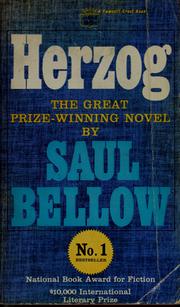 Saul Bellow · 1964HerzogLvl 7Slow burn
 Saul Bellow · 1975Humboldt's GiftLvl 6Slow burn
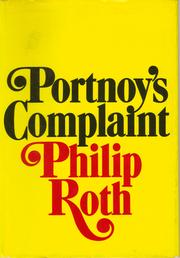 Philip Roth · 1969Portnoy's ComplaintLvl 5Fast paced
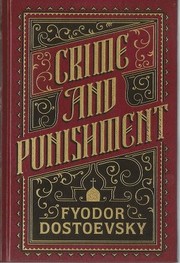 Fyodor Dostoevsky · 1866Crime and PunishmentLvl 6Fast paced
 Isaac Bashevis Singer · 1960The Magician of LublinLvl 5Medium pace