
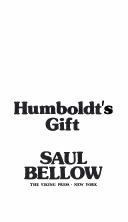
Humboldt's Gift
Saul Bellow · 1915–2005 · Canada / USA
Why it matters
Bellow's alter ego narrator reckons with the wreckage of his mentor and rival, a once-brilliant, now-forgotten poet, while chasing his own success through Chicago's gangsters, ex-wives, and spiritual dabbling. A comic meditation on art and money that won Bellow the Pulitzer the year before his Nobel.
At a glance
Digressive, essayistic riffs on philosophy and anthroposophy interrupt an otherwise comic plot.
Deep dive
Why Charlie Citrine can't decide whether his own late-career comfort makes him better or worse off than the brilliant, self-destructive friend he's spent the whole book mourning.
Written for readers who have finished the book. No plot recap, and nothing here is safe to read first.
Themes & symbolism
Von Humboldt Fleischer, once the most promising poet of his generation, dies broke, paranoid, and forgotten in a flophouse — and functions throughout as Charlie's cautionary double rather than simply his dead mentor. Charlie's own late-career comfort (a Pulitzer, money, a Chicago socialite girlfriend, entanglement with the small-time gangster Cantabile) is haunted by the fear that he's just Humboldt a decade or two behind schedule, talent converted into worldly ease rather than art. Bellow refuses to let either fate look simply preferable to the other, treating Charlie's late-life financial collapse as an overdue payment for having avoided Humboldt's, not an unrelated misfortune.
The anthroposophy Charlie studies throughout — Rudolf Steiner's spiritual system, taken half-seriously across long digressive passages — reads as his attempt to locate meaning outside the transactional Chicago world of lawyers, ex-wives, and hustlers otherwise consuming his attention. Bellow treats the dabbling with real ambivalence, neither mocking nor endorsing it outright, consistent with his larger comic method: take a character's intellectual enthusiasms seriously enough that they're allowed to look a little ridiculous on their own terms, not the author's.
Cantabile's escalating, absurdly theatrical menace — smashing Charlie's car with a golf club over a bounced check, forcing him onto a girder atop an unfinished skyscraper to talk things out — supplies the novel's most purely comic set pieces, and Bellow uses the sheer disproportion between the offense and the response to keep Charlie's more abstract worries about art and mortality tethered to a Chicago that can, at any moment, simply reach out and grab him by the collar.
Chicago as Comic Battlefield
Bellow's Chicago runs on Cantabile's operatic small-time menace, courtroom farce over Charlie's divorce settlement, and a whole cast of hustlers circling his reputation and remaining money. The comic register — sentences swinging from high philosophical digression to street-level slapstick within a single paragraph — makes the novel's real argument formally: intellect and appetite, art and money, were never actually separable in American life, whatever Humboldt's tragic career seemed to prove to the contrary.
The last seal: what actually happens, and why it lands the way it does.
The ending, explained
Humboldt, it turns out, left Charlie a literal gift: an old, unproduced film treatment the two of them cowrote decades earlier, discovered among his papers, which Charlie is able to sell and adapt just as his own finances collapse — a rescue from beyond the grave he could never have engineered himself. With some of that money, Charlie arranges to have Humboldt properly reburied out of the anonymous potter's-field plot he'd been dumped in, alongside his own mother, in a scene of quiet ceremony rather than grand reconciliation. At the graveside, Charlie notices a flower blooming out of season near the disturbed earth, and Bellow lets the image sit unexplained: whatever Humboldt's career amounted to in worldly terms, something of him kept producing value, material and otherwise, long after his own belief in himself had run out.
Where to go next
 Saul Bellow · 1953The Adventures of Augie MarchLvl 7Fast paced
 Saul Bellow · 1964HerzogLvl 7Slow burn
 Saul Bellow · 1970Mr. Sammler's PlanetLvl 7Slow burn
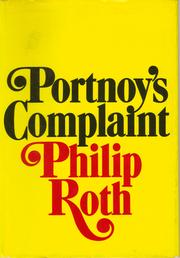 Philip Roth · 1969Portnoy's ComplaintLvl 5Fast paced
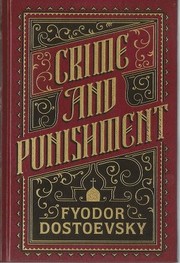 Fyodor Dostoevsky · 1866Crime and PunishmentLvl 6Fast paced
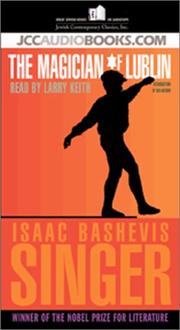 Isaac Bashevis Singer · 1960The Magician of LublinLvl 5Medium pace