
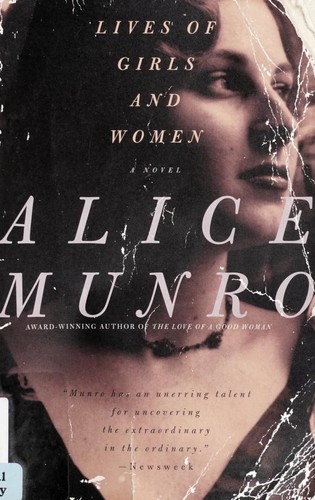
Lives of Girls and Women
Alice Munro · 1931–2024 · Canada
Why it matters
Del Jordan narrates her own sexual and intellectual awakening in linked stories set among her mother's stubborn ambitions and a small Ontario town's petty cruelties. Munro's most novel-like book, and her closest approach to a conventional bildungsroman.
At a glance
Linked stories cohere into a novel-length arc but each also functions as its own compressed unit.
Deep dive
What Del Jordan decides, by the book's final pages, to keep and what to leave out of the account of Jubilee she'll eventually write, and how her mother Ada's arguments with the whole town get there first.
Written for readers who have finished the book. No plot recap, and nothing here is safe to read first.
Themes & symbolism
Munro's linked chapters follow Del Jordan from childhood into adolescence in and around Jubilee, Ontario, anchored by two competing households: her uncle Benny's chaotic farm, where a mail-order bride named Madeleine arrives and turns violent before disappearing again, and her own mother Ada's, where Ada sells encyclopedias door to door and argues openly with neighbors about sex, superstition, and a woman's right to want more than Jubilee is prepared to offer her.
The chapter that lends the book its title turns on an earlier, blunter education than Garnet ever provides: Fern Dogherty, a boarder in the Jordan house who sells encyclopedias alongside Ada, is carrying on an affair with Art Chamberlain, a married radio announcer, and Del ends up alone with Art when he asks her to search Fern's room for some old letters, then exposes himself to her in the woods before skipping town and writing Fern a letter ending things between them. Munro refuses Del any dramatic reaction to what is unmistakably a violation, letting the scene settle into the same flat, cataloguing tone as everything else in Del's adolescence, which is itself the point, how easily a girl's first real brush with adult male desire gets filed away among a crowded catalogue of ordinary small-town incidents rather than singled out as the trauma it is.
Del's own adolescence culminates in Garnet French, a baptism-obsessed young man whose religious fervor and physical hold on her Munro treats with more ambivalence than romance, since wanting Garnet and wanting to sit her scholarship exams turn out to be mutually exclusive. Del's closest friend Naomi, by contrast, marries young and settles into exactly the life Del is trying to write her way out of, a quieter, sadder foil running underneath the louder Garnet plot.
Del's own religious appetite runs alongside her sexual one: she samples the Anglican, Presbyterian, and United churches in turn, hoping ceremony itself might supply the certainty her mother's rationalism and Uncle Benny's superstition both withhold, an experiment Munro treats as continuous with, not separate from, her later hunger for whatever Garnet's baptism is actually offering her.
A Novel Del Never Finishes
The closing 'Epilogue: The Photographer' jumps years ahead to Del as a young writer plotting a Gothic novel about the reclusive Sherriff family, complete with an invented, faintly sinister photographer boarder entirely of her own devising. Visiting the real Bobby Sherriff, an institutionalized member of that family, she watches him perform an odd, formal dance step on his porch that she senses carries a private meaning she cannot translate, and abandons her planned novel once she recognizes that fidelity itself was the wrong ambition, that fiction has to invent and betray its sources to reach something truer than an accurate record ever could.
The last seal: what actually happens, and why it lands the way it does.
The ending, explained
The book's real climax is a scene of near-violence rather than of romance: Garnet, furious that Del would rather study for her scholarship exams than marry him, drags her into the river to be baptized whether she wants it or not, and Del has to fight physically to surface and end the relationship for good, a rupture the novel treats as her decisive break from what Jubilee expects a young woman to want. The epilogue that follows shows Del abandoning her faithful, undistorted draft about the town's eccentrics once she understands that invention, not accuracy, is what fiction actually requires. That recognition, not Del's literal departure from Jubilee, which happens almost offstage, is the book's true ending: Del arriving at the method that produced the very book the reader has just finished.
Where to go next
 Alice Munro · 1978Who Do You Think You Are?Lvl 5Medium pace
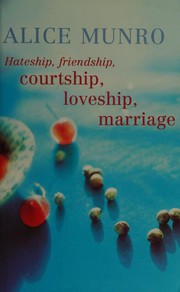 Alice Munro · 2001Hateship, Friendship, Courtship, Loveship, MarriageLvl 5Medium pace
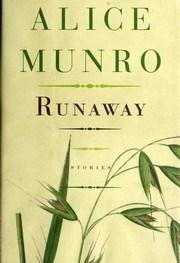 Alice Munro · 2004RunawayLvl 5Medium pace
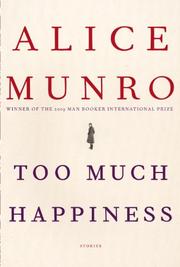 Alice Munro · 2009Too Much HappinessLvl 6Medium pace
 Alice Munro · 2012Dear LifeLvl 5Medium pace
 Elizabeth Strout · 2008Olive KitteridgeLvl 4Medium pace