
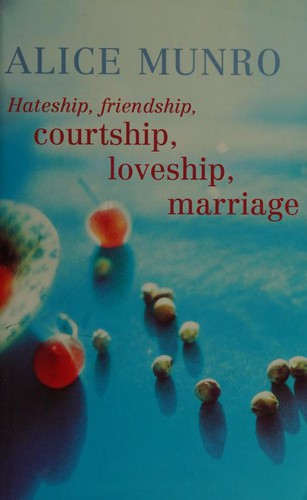
Hateship, Friendship, Courtship, Loveship, Marriage
Alice Munro · 1931–2024 · Canada
Why it matters
A plain, overlooked housekeeper stumbles into an unlikely romance engineered by a stranger's forged letters, one of nine stories charting love's absurd, self-deceiving machinery. Munro at her most narratively sly; one story here became the film Away from Her.
At a glance
Deceptively casual plotting conceals tightly engineered narrative reversals.
Deep dive
Two teenage girls forge a stranger's love letters as a joke, and the plain housekeeper who receives them decides to believe every word of it.
Written for readers who have finished the book. No plot recap, and nothing here is safe to read first.
Themes & symbolism
Johanna Parry, plain and overlooked, corresponds for months with Ken Boudreau, the father of the family she works for, in letters she does not know are entirely invented by his teenage daughter Sabitha and Sabitha's friend Edith, bored and cruel the way only bored teenagers can be. Munro will not let the prank stay a joke: Johanna packs up furniture, quits her job, and rides a train out to Saskatchewan to join a man who has never actually courted her, and the title story's real subject is not the hoax but what Johanna does with it, taking a fiction two girls built to humiliate her and turning it into the vehicle of her own reinvention.
The Bear Came Over the Mountain works the same hinge from the other direction: Fiona's dementia erases her husband Grant from memory while she forms a tender new attachment to a fellow nursing-home resident named Aubrey, and Munro measures that loss against Grant's own decades-old infidelities, which Fiona seems to have forgiven, or forgotten, long before illness gave her a reason to. What Grant owes a wife who no longer remembers being wronged becomes the story's real question, not what the dementia has taken from her.
A Girls' Fortune-Telling Rhyme as the Book's Logic
The title comes from a game girls play flicking apple-stem seeds while chanting hateship, friendship, courtship, loveship, marriage to predict what kind of man they'll end up with, and the nine stories test every stage of that progression against the messier evidence of actual adult lives, where hatred curdles into intimacy and courtship gets skipped altogether in favor of an invented correspondence.
Grant's Negotiation With Aubrey's Wife
When Aubrey is taken home by his own wife, Marian, and can no longer visit Fiona at the facility, Grant seeks Marian out to negotiate bringing Aubrey back for Fiona's sake, a scene thick with an ambiguous charge between Grant and Marian themselves. Munro lets that undertone sit unresolved, one more instance of a man measuring what he owes against what he might still want.
Where to go next
 Alice Munro · 1971Lives of Girls and WomenLvl 5Medium pace
 Alice Munro · 1978Who Do You Think You Are?Lvl 5Medium pace
 Alice Munro · 2004RunawayLvl 5Medium pace
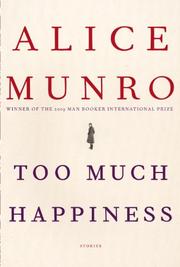 Alice Munro · 2009Too Much HappinessLvl 6Medium pace
 Alice Munro · 2012Dear LifeLvl 5Medium pace
 Elizabeth Strout · 2008Olive KitteridgeLvl 4Medium pace