La Bête Humaine
Émile Zola · 1840–1902 · France
Originally La Bête Humaine (French)
Why it matters
A railway engineer carries a hereditary compulsion to kill inside him like a fault in the family blood, and a murder investigation exposes it: Zola's fastest, darkest Rougon-Macquart volume, part crime novel, part study of inherited violence.
At a glance
Interweaves a murder plot with dense technical railway detail and multiple psychologies.
Deep dive
Why Jacques Lantier can love his locomotive with total steadiness and never once trust himself alone with a woman, and what the magistrate investigating a body on the tracks chooses to believe instead of what actually happened.
Written for readers who have finished the book. No plot recap, and nothing here is safe to read first.
Themes & symbolism
Jacques Lantier's compulsion to kill women he desires is introduced as older than any specific victim, a red mist he has felt rising in himself since adolescence, long before Séverine Roubaud ever enters his life, and Zola is careful to make this something Jacques recognizes and fears in himself rather than a secret the plot springs late: he confesses the urge to Séverine directly, which makes the horror less about discovery than about a man who understands exactly what he is and still cannot prevent it.
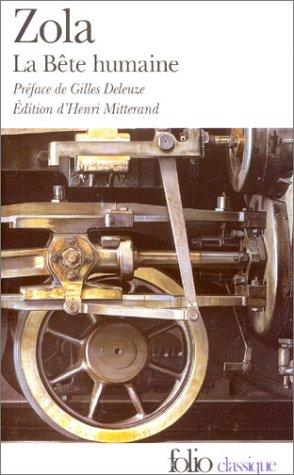
La Lison, the locomotive Jacques drives on the Paris to Le Havre line, receives a tenderness Zola usually reserves for a lover: her firebox, her flanks, the plume of steam that reads almost like breath. She is the one relationship Jacques can sustain without violence, precisely because she is a machine and cannot be desired the way a woman is, competence with something controlled and mechanical standing in for whatever ordinary intimacy his body will not allow him.
The investigation into President Grandmorin's murder aboard the train exposes a second, parallel machine: Judge Denizet studies contradictory evidence, discards the version that actually happened because it would implicate people in his own social circle, and assembles a tidier story that convicts an innocent quarryman, Cabuche, largely because his temper and his class already make him look guilty. Zola's target here is not one corrupt official but the whole apparatus of official truth, manufacturing a convenient story just as blindly as Jacques manufactures a murder.
A Novel Built on Real Timetables
Zola researched the novel on actual footplate rides along the Paris-Le Havre line, absorbing railway operating procedure in the same documentary detail he brought to the mines of Germinal and the still of L'Assommoir. That research pays off most in the runaway-train sequence near the end, La Lison careening driverless through the dark, packed with drunken soldiers singing on their way to war, a single image of a modern machine society has built and can no longer stop that stands in for the whole novel's argument about compulsion outrunning control.
The last seal: what actually happens, and why it lands the way it does.
The ending, explained
Séverine, desperate to be free of her husband Roubaud, asks Jacques to kill him for her; unable to go through with it, Jacques instead turns on Séverine herself in a fit exactly like the ones he has spent the whole novel confessing to fearing, killing her while they are alone together. Roubaud is separately arrested and convicted for the original Grandmorin murder alongside the already-scapegoated Cabuche, while suspicion never touches Jacques for Séverine's death. Later, aboard La Lison, Jacques fights his drunken fireman Pecqueux, who has learned of the affair with Séverine, and the two men fall from the moving footplate to their deaths while the train, now driverless and packed with soldiers singing off to the front, roars on uncontrolled into the night, Zola's bleakest possible image of a machine that answers to no one left to steer it.