
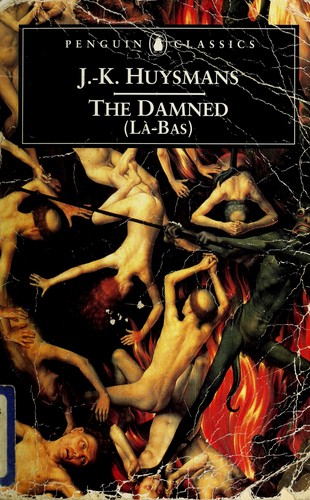
Là-Bas
Joris-Karl Huysmans · 1848–1907 · France
Originally Là-Bas (French)
Why it matters
A disillusioned writer researching a medieval child-murderer is drawn into Belle Époque Paris's occult underworld of Satanism and black masses. Huysmans's descent from decadent aestheticism toward the religious crisis that would define his later work.
At a glance
Dense essayistic digressions on art and Satanism slow an already thin plot.
Deep dive
A novelist researching a medieval child-murderer for a biography finds Paris's occult underground only too happy to show him what that kind of appetite looks like practiced in the present tense.
Written for readers who have finished the book. No plot recap, and nothing here is safe to read first.
Themes & symbolism
Durtal, a novelist researching a biography of Gilles de Rais, the fifteenth-century nobleman, companion of Joan of Arc, and confessed murderer of dozens of children, gives Huysmans a frame for two parallel investigations at once: the historical horror of Gilles's crimes, rendered in genuinely unflinching detail, and Durtal's own restless dissatisfaction with the naturalist literary movement he came up through, which he's come to feel captures only surfaces and none of the era's spiritual sickness. Durtal's contempt for late-nineteenth-century materialism, industrial Paris stripped of any register beyond the visible and the provable, pushes him toward the occult underground precisely because Satanism, however debased its actual practitioners turn out to be, at least admits that something beyond matter might be real.
Canon Docre, a real defrocked priest figure Huysmans fictionalizes into the novel's active Satanist celebrant, gives Durtal his entry into a genuine, functioning occult scene operating openly in contemporary Paris rather than as historical curiosity, and the Black Mass Durtal is eventually taken to witness, a deliberate, systematic inversion of the Catholic liturgy performed with real theological knowledge rather than crude blasphemy, is staged by Huysmans with the same documentary precision he brings to Gilles de Rais's medieval crimes. The parallel is exact and intentional: five centuries apart, Huysmans keeps arguing, the same appetite for transgression against the sacred simply changes its props.
Durtal's affair with Hyacinthe Chantelouve, a woman with her own unsettling ties to the Satanist circle, collapses the distance he'd tried to maintain between scholarly observation and personal participation; by the novel's later chapters he's no longer simply researching decadence, he's living inside a relationship the book keeps implying has genuinely supernatural undercurrents that Durtal can neither fully credit nor dismiss. Huysmans, writing at the height of the Decadent movement he'd already helped define with À Rebours, uses Durtal's inability to stay a detached researcher as the novel's real argument against pure aestheticism: an appetite this genuinely satisfied by the artificial and the perverse doesn't stay contained to the library, it eventually wants a body to act through.
Research Huysmans Didn't Fully Fictionalize
Huysmans conducted much of Durtal's research as his own: he corresponded with real occultists, attended genuine Satanist gatherings in contemporary Paris, and drew Canon Docre from an actual defrocked priest reputed to celebrate real Black Masses, which is part of why the novel's occult sections read less like invented atmosphere than reportage with the names changed. That same firsthand immersion in Satanism, taken up initially out of the same aesthetic curiosity driving Durtal, left Huysmans genuinely disturbed enough by what he found that it became one of the pressures pushing him toward his own eventual, sincere conversion to Catholicism a few years later.
The First Novel in Huysmans's Own Conversion
Là-Bas turns out to be the opening volume of a loose sequence following Durtal, transparently a stand-in for Huysmans himself, through En Route, La Cathédrale, and L'Oblat as he moves from Satanist curiosity toward an eventual, hard-won Catholic faith, meaning the novel's occult investigation reads in hindsight as the first, darkest step of a spiritual autobiography rather than a stand-alone gothic exercise. Read against that later trajectory, Durtal's exhausted disgust after witnessing the Black Mass, revulsion at what he's seen without any accompanying relief or resolution, looks less like an ending than the novel's honest admission that Durtal, like Huysmans, has more searching left to do than one book can hold.
Where to go next
 Joris-Karl Huysmans · 1884Against Nature (À rebours)Lvl 7Slow burn
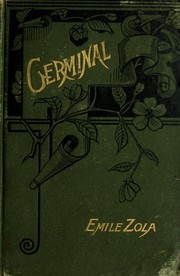 Émile Zola · 1885GerminalLvl 5Medium pace
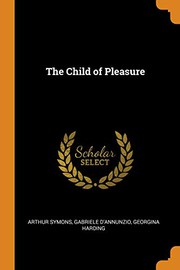 Gabriele D'Annunzio · 1889The Child of PleasureLvl 6Slow burn
 Oscar Wilde · 1890The Picture of Dorian GrayLvl 4Medium pace
 Gustave Flaubert · 1857Madame BovaryLvl 5Slow burn
 Marcel Proust · 1913Swann's WayLvl 8Slow burn