

Kairos
Jenny Erpenbeck · b. 1967 · Germany
Originally Kairos (German) · translated by Michael Hofmann
Why it matters
A destructive love affair between a young East Berlin woman and an older writer tracks the GDR's own slow-motion collapse. Erpenbeck's International Booker winner fuses the intimate and the historical with unusual precision.
At a glance
Fragmented, nonlinear timeline mirrors the collapse it depicts.
Deep dive
A love affair in the last years of East Germany, told entirely through the tapes, letters, and recordings one increasingly controlling partner insists on keeping — and what all that documentation starts to resemble the longer it accumulates.
Written for readers who have finished the book. No plot recap, and nothing here is safe to read first.
Themes & symbolism
The novel's Greek title names the god of the fleeting, opportune moment — as opposed to chronos, ordinary chronological time — and Erpenbeck applies it doubly: to the charged, seemingly fated instant nineteen-year-old Katharina and fifty-something Hans meet on an East Berlin bus in 1986, and to the historical kairos of 1989, the narrow opportune window in which the GDR itself could have reformed rather than simply collapsed. Both 'right moments' curdle in the same direction — the romance that begins as electric mutual recognition decays into control, surveillance, and cruelty, exactly as the promise of 1989 gives way to disillusioned absorption into a reunified Germany that treats the East as a problem to be corrected rather than a society with its own legitimate history.
Hans's escalating psychological domination of Katharina — interrogating her fidelity, sending her long cassette tapes cataloguing her supposed betrayals and failures, demanding what he calls a full accounting of her inner life — is written as intimate partner abuse in its own right, but Erpenbeck lets the novel's late revelation of Hans's actual Stasi collaboration reframe the entire relationship retroactively: his need to monitor, catalogue, and correct Katharina wasn't a personal failing separate from the state's machinery of informants and files, it was that machinery, practiced at home on the one person he claimed to love most.
The physical archive of letters, photographs, and cassette tapes that opens the novel — delivered to Katharina after Hans's death, the record of their entire affair preserved in his own obsessive documentation — mirrors the actual Stasi files she goes on to request and read, so that the personal act of hoarding a lover's whole history and the political act of state surveillance turn out, formally, to be the same gesture: total records kept by someone who believes total knowledge of another person is a form of ownership.
A Divided City Written From the Inside
Erpenbeck, who grew up in East Berlin and was a teenager when the Wall fell, resists the reflexive narrative in which 1989 is pure liberation; Kairos gives real texture and even tenderness to the GDR's cultural world — theater, radio, the specific intellectual milieu Hans moves in — before tracing how quickly and completely that world's institutions, and the people who staffed them, were dismantled or discredited after reunification. The novel's late chapters, following Katharina through a newly capitalist Berlin where her old certainties about culture and value no longer hold currency, extend the book's central argument about lost opportune moments from the bedroom to the whole absorbed country.
The last seal: what actually happens, and why it lands the way it does.
The ending, explained
After Hans's death, Katharina works through the archive of tapes and letters he compiled of their relationship, then requests and reads his Stasi file — and discovers he had been an informer for the state for decades, reporting on colleagues and friends, and was later himself placed under surveillance as a suspected liability. The revelation doesn't come as a plot twist so much as a delayed confirmation of something the whole relationship has already demonstrated in miniature: Hans's controlling, self-justifying possessiveness toward Katharina was never separate from the state's own logic of total information and total control, just practiced on a smaller, more intimate scale. Katharina's closing reflection — that she was, all along, his mirror image, complicit in the intimacy that let him surveil her so completely — refuses her either full victimhood or full innocence, closing the novel on the same unresolved entanglement of love and domination, private history and political history, that it has been tracing from the first page.
Where to go next
 Jenny Erpenbeck · 2015Go, Went, GoneLvl 5Medium pace
 W. G. Sebald · 1995The Rings of SaturnLvl 7Slow burn
 Elfriede Jelinek · 1983The Piano TeacherLvl 7Slow burn
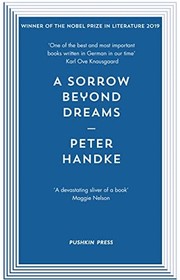 Peter Handke · 1972A Sorrow Beyond DreamsLvl 6Slow burn
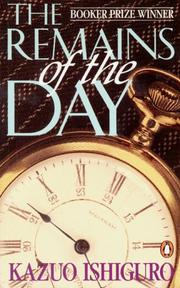 Kazuo Ishiguro · 1989The Remains of the DayLvl 5Slow burn
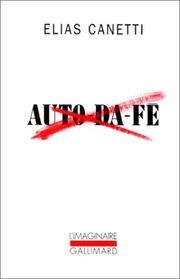 Elias Canetti · 1935Auto-da-FéLvl 7Slow burn