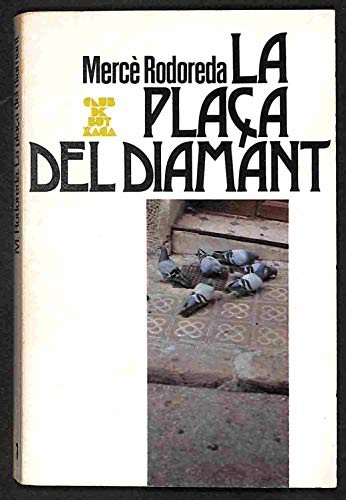
In Diamond Square
Mercè Rodoreda · 1908–1983 · Spain
Originally La plaça del Diamant (Catalan)
Why it matters
Shy, naive Natàlia marries, raises children, and endures hunger and bombing as her Barcelona neighborhood is swept from Republic to Civil War to Franco's occupation. Rodoreda's Catalan masterpiece renders a whole era's catastrophe at the intimate scale of one ordinary woman's kitchen and square.
At a glance
Simple, interior narration, though its quiet accumulation of loss rewards close attention.
Deep dive
A shy Barcelona shopgirl meets a man at a dance who renames her before their first date is even over, and Rodoreda follows everything that name costs her through a war, a famine, and a whole ruined neighborhood.
Written for readers who have finished the book. No plot recap, and nothing here is safe to read first.
Themes & symbolism
Natàlia meets Quimet at a dance in the Plaça del Diamant and within minutes he has decided to call her Colometa, little dove, a nickname he never bothers to ask if she wants and that sticks for the rest of the novel; Rodoreda opens with that small, almost cheerful act of renaming precisely because it previews everything the marriage will do to her afterward, deciding what she is called, what she wants, and what her days consist of without ever quite asking.
Quimet's consuming hobby, breeding pigeons on their small balcony, escalates from charming eccentricity into genuine household occupation: the birds multiply, foul the apartment, and eat money and space the family doesn't have, and Rodoreda lets the pigeons carry a weight of political meaning too, doves as the sentimental symbol of peace, overrunning a home in a country about to tear itself apart in civil war. Natàlia's late, exhausted rebellion against the birds is one of the only moments in the marriage where her own preference visibly wins.
The Spanish Civil War arrives in the novel entirely at street level, ration lines, bombing raids overheard rather than described in strategic terms, Quimet's departure for the front narrated through what Natàlia doesn't know rather than what she does, and Rodoreda's refusal to zoom out to the war's larger politics is the book's whole method: history happens to Natàlia through hunger, silence, and waiting, never through anything she's told directly.
Colometa: A Name Given, Never Chosen
Natàlia narrates the entire novel in the first person, yet she's Colometa to nearly everyone in it, including, eventually, herself, and Rodoreda tracks how thoroughly a name imposed casually at a dance becomes the only identity available to a woman with no real say in her own marriage, motherhood, or survival. The rare moments she reclaims 'Natàlia' in her own narration read as small, hard-won assertions of a self the war and Quimet both worked to erase.
The last seal: what actually happens, and why it lands the way it does.
The ending, explained
Quimet is killed fighting at the front, and postwar hunger and destitution push Natàlia, alone with two children, to the edge of the ration lines and, in the novel's darkest scene, to the brink of ending all three of their lives together with cooking gas before something in her, never fully explained, pulls her back. She eventually remarries Antoni, a kind, stable grocer who gives her and the children security Quimet's pigeons and schemes never could, and the novel closes years later with Natàlia walking back through the Plaça del Diamant, older, no longer performing anyone's idea of Colometa, recognizing the square and her own losses in it without either forgiving or being crushed by them.