
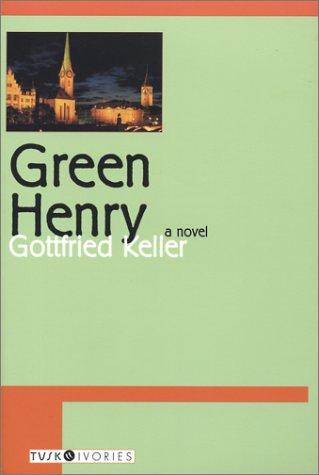
Green Henry
Gottfried Keller · 1819–1890 · Switzerland
Originally Der grüne Heinrich (German)
Why it matters
A failed painter looks back on his provincial upbringing, artistic ambitions, and slow disillusionment. Swiss realism's great Bildungsroman, generous toward its hero's failures in a way few coming-of-age novels manage.
At a glance
Leisurely nineteenth-century retrospection with long digressive stretches.
Deep dive
A failed painter looks back on the mother who scrimped to fund his training and the two very different women he loved along the way, and Keller rewrote how the story ends a quarter century after he first told it.
Written for readers who have finished the book. No plot recap, and nothing here is safe to read first.
Themes & symbolism
Heinrich Lee, nicknamed Green Henry for the hand-me-down green clothes his widowed mother dresses him in, narrates his own slow, expensive failure as a landscape painter, and Keller draws the material almost directly from his own abandoned Munich training: years of half-talent, half-application, and a mother back in Zurich taking on debt to keep her son's dream funded past the point either of them can really afford it. The novel's patience with Heinrich's mediocrity, rather than treating his lack of genius as tragedy or punishing it as moral failure, is what sets it apart from the Bildungsroman tradition it's working in.
Heinrich's two attachments split the novel's emotional argument in half: Judith, an older, unmarried neighbor, offers a frank, unsentimental, physically direct love that scandalizes the village and that Heinrich keeps circling back to across decades, while Anna, a consumptive minister's daughter, represents an idealized, doomed purity Heinrich mistakes for his true calling until her early death forecloses it. Keller never lets either woman simply win the argument; Judith's earthiness and Anna's fragility both expose something Heinrich actually needs and can't fully commit to.
Zurich's cantonal politics run underneath the personal plot as a second education, Heinrich's exposure to republican debate and civic reform mirroring his more private reckoning with talent and vocation, and Keller, who spent fifteen years himself as a senior Zurich civil servant, treats bureaucratic public service without irony, as a legitimate, even redemptive, alternative to the art Heinrich can't master.
The Death Keller Took Back
The 1854-55 first edition, written in the first person, ends with Heinrich dying not long after his mother, worn out by guilt and failure, a bleak conclusion critics read as close to autobiographical self-punishment. When Keller returned to the book in his sixties for the 1879-80 revision, he switched to a partly third-person frame and let Heinrich live: guilty, chastened, and permanently done with painting, but alive to become the minor civil servant Keller himself had become, and to be reunited late in life with Judith, now returned wealthy from years in America. The rewrite is the clearest evidence in Keller's whole career of a writer revising his own verdict on failure.
The last seal: what actually happens, and why it lands the way it does.
The ending, explained
Heinrich rushes home from Munich only to arrive after his mother has already died, worn down by the debts his training required and the years of waiting for a success that never arrived, and the guilt of that timing never fully leaves him. He renounces painting for good and settles into minor government work, living out a quiet, unglamorous version of the civic usefulness Zurich had offered him all along; late in life Judith returns from America with a modest fortune of her own, and the two become inseparable companions, sharing a household without ever marrying, Keller's final, deliberately unheroic answer to a lifetime spent chasing the wrong vocation.
Where to go next
 Hermann Hesse · 1922SiddharthaLvl 3Medium pace
 Roddy Doyle · 1993Paddy Clarke Ha Ha HaLvl 4Medium pace
 Theodor Fontane · 1894Effi BriestLvl 4Medium pace
 Edna O'Brien · 1960The Country GirlsLvl 3Medium pace
 Bjørnstjerne Bjørnson · 1857Synnøve SolbakkenLvl 3Medium pace
 Karl Gjellerup · 1906The Pilgrim KamanitaLvl 5Slow burn