
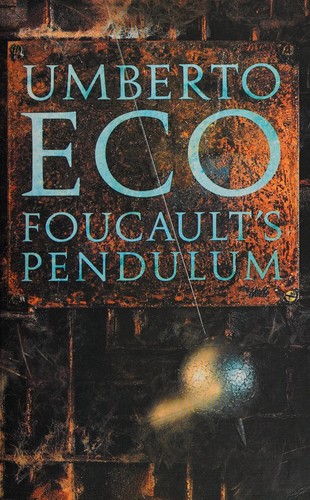
Foucault's Pendulum
Umberto Eco · 1932–2016 · Italy
Originally Il pendolo di Foucault (Italian) · translated by William Weaver
Why it matters
Three editors invent a grand conspiracy as a game, and are consumed when believers take it for truth. Eco's prescient satire of occultism and the paranoid style, decades before the internet industrialized it.
At a glance
Encyclopedic esoterica and interlocking conspiracies demand sustained scholarly patience.
Deep dive
Three bored editors invent a global occult conspiracy as a private joke, and Eco's satire of the paranoid mind gets uncomfortably literal about what happens when the joke finds an audience that needs it to be true.
Written for readers who have finished the book. No plot recap, and nothing here is safe to read first.
Themes & symbolism
Casaubon, Jacopo Belbo, and Diotallevi, editors at a Milan vanity press worn down by years of manuscripts from occultists they privately call the Diabolicals, start feeding real historical fragments, the Templars, the Rosicrucians, ley lines, the forged Protocols of the Elders of Zion, into a random-connection generator purely as parody. Eco's actual target isn't the occult but the mental habit underneath it, the refusal to let any two facts stay unconnected, a habit the editors indulge for sport and then watch metastasize into something that believes itself.
Foucault's Pendulum itself, hanging in Paris's Conservatoire des Arts et Métiers exactly where the physicist Léon Foucault installed it in 1851 to demonstrate the earth's rotation, is the one fixed point in a novel otherwise devoted to interpretations that spin freely around any fact you hand them. Eco stages the climax directly beneath it because it is the single object in the book that means only what it demonstrates, no matter how badly the conspiratorial mind wants it to mean anything more.
Diotallevi, the group's Kabbalist and the third of the three editors, develops cancer partway through the game and comes to read his own illness as the Plan's first real retribution, insisting that fabricating sacred meaning where none exists is itself a transgression the universe will eventually answer. Eco lets his slow death run alongside Belbo's unraveling as the novel's quietest argument that the parody was never entirely costless, even for the one editor who had treated it, until his diagnosis, as pure intellectual sport rather than anything requiring belief.
Colonel Ardenti and the Message That Started It All
Years before the editors invent their game, an occultist calling himself Colonel Ardenti brings them a supposed decoded medieval Templar message and then vanishes, possibly murdered for it. Eco lets that earlier, half-real episode supply the raw material Belbo's later invention cannibalizes, deliberately blurring the line between what the editors are making up and what may already have gotten someone killed before the novel even begins.
Abulafia, or Making Meaning by Machine
The editors name their random-connection-generating computer program after the medieval Kabbalist Abraham Abulafia, and let it manufacture apparent significance out of pure noise, any two facts fed in will produce a plausible-sounding link. Writing in the mid-1980s, Eco anticipates with unsettling precision how algorithmic pattern-matching would later manufacture belief at internet scale, decades before search engines made exactly this kind of manufactured connection ordinary.
The last seal: what actually happens, and why it lands the way it does.
The ending, explained
Believers in the invented Plan, convinced the editors possess a genuine map to hidden Templar power, corner Belbo at the Conservatoire and demand he produce the secret; he has none to give, since he made all of it up, and his inability to hand over a fiction as though it were fact gets him hanged as a substitute weight from the pendulum itself, his death staged directly beneath the one object in the whole story that actually proves what it claims. Casaubon, who escapes and narrates from hiding, understands too late that irony offers no protection from people who need the joke to be literally true, and closes the book expecting the Diabolicals to find him next, the difference between inventing a conspiracy and dying for one having turned out, in practice, to be no difference at all.
Where to go next
 Umberto Eco · 1980The Name of the RoseLvl 8Medium pace
 Italo Calvino · 1972Invisible CitiesLvl 5Slow burn
 Jorge Luis Borges · 1944FiccionesLvl 7Slow burn
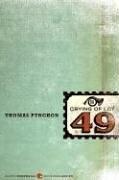 Thomas Pynchon · 1966The Crying of Lot 49Lvl 8Medium pace
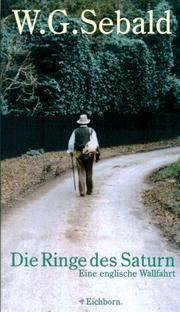 W. G. Sebald · 1995The Rings of SaturnLvl 7Slow burn
 Roberto Bolaño · 1998The Savage DetectivesLvl 7Medium pace