
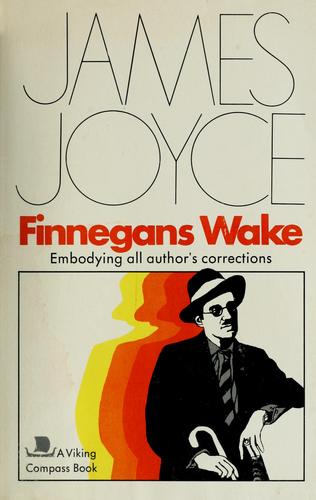
Finnegans Wake
James Joyce · 1882–1941 · Ireland
Why it matters
Seventeen years in the making, Joyce's final book dissolves English into a river of puns, portmanteaus, and multilingual dream-language circling a sleeping Dublin publican. Where Ulysses stretched the novel, this abandons it: language itself becomes the only subject.
At a glance
Written in an invented multilingual dream-language that abandons conventional syntax and narrative almost entirely.
Deep dive
Joyce writes a single sentence that begins mid-thought on page one and only completes itself when the book's last words loop back around to it, and the whole dream in between runs on that same principle of return.
Written for readers who have finished the book. No plot recap, and nothing here is safe to read first.
Themes & symbolism
HCE, Humphrey Chimpden Earwicker, keeps a pub in Chapelizod and carries an obscure, never-clarified guilt over some act in Phoenix Park, possibly voyeurism, possibly worse, that the book's rumor mill inflates and multiplies without ever settling into a single fixed accusation. His initials scatter through the text disguised as dozens of different three-word phrases, Here Comes Everybody among them, Joyce's method for making one guilty man stand in for a whole species' inherited shame.
Anna Livia Plurabelle, HCE's wife, fuses with the River Liffey so completely that her chapter, written to be read partly for sound, lists the names of hundreds of rivers folded into ordinary dialogue, treats her as landscape and person at once, flowing from the book's opening word, riverrun, through washerwomen's gossip on the riverbank toward the sea her final monologue will eventually reach.
Shem and Shaun, the couple's twin sons, replay a single mythic opposition across the book's many disguises, the exiled artist against the establishment man of action, roughly Joyce's own self-image against everything that rejected him, while their sister Issy fractures into multiple flirtatious selves reflected in mirrors and rainbow girls, a family romance told so many times, in so many costumes, that plot dissolves into pattern.
Vico's Cycles and a Dropped Apostrophe
Joyce structures the book's four parts on Giambattista Vico's theory that history moves through recurring ages, theocratic, aristocratic, democratic, and a ricorso that returns civilization to the start again, and the title itself performs the same trick: the comic Irish-American ballad Finnegan's Wake tells of a bricklayer named Tim Finnegan who falls from a ladder, is presumed dead, and revives at his own wake when spilled whiskey splashes his corpse. Joyce drops the ballad's apostrophe, turning Finnegan's into Finnegans and wake from a noun into a command, every reader's own awakening built into the same word that names a funeral. He spent seventeen years assembling the book this way, publishing sections under the working title Work in Progress and only announcing its real name on the eve of publication, portmanteau words fusing a dozen languages into single syllables so that a word like bababadalgharaghtakamminarronnkonnbronntonnerronntuonnthunntrovarrhounawnskawntoohoohoordenenthurnuk can carry an entire history of human falls, Adam's, Finnegan's, Humpty Dumpty's, at once.
The last seal: what actually happens, and why it lands the way it does.
The ending, explained
The book's last page becomes Anna Livia's final monologue as the river reaches the sea, an old woman's voice thinning into the ocean she is dissolving into, addressed to the husband and children she is leaving behind, and the sentence breaks off unfinished on the word the. The reader is meant to carry that fragment back to page one, where the book's opening line, riverrun, past Eve and Adam's, completes it: a way a lone a last a loved a long the riverrun. Death and return happen in the same grammatical gesture, the river becoming the sea becoming, eventually, rain that will fall and run back to a river again, and the Viconian ricorso Joyce built the whole structure on turns out to be not a metaphor for the ending but the ending's literal mechanics.
Where to go next
 James Joyce · 1914DublinersLvl 3Slow burn
 James Joyce · 1916A Portrait of the Artist as a Young ManLvl 6Slow burn
 James Joyce · 1922UlyssesLvl 10Slow burn
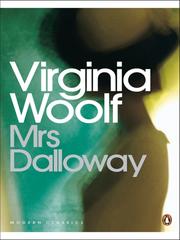 Virginia Woolf · 1925Mrs DallowayLvl 7Slow burn
 Eyvind Johnson · 1946Return to IthacaLvl 6Medium pace
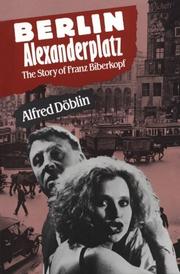 Alfred Döblin · 1929Berlin AlexanderplatzLvl 8Slow burn