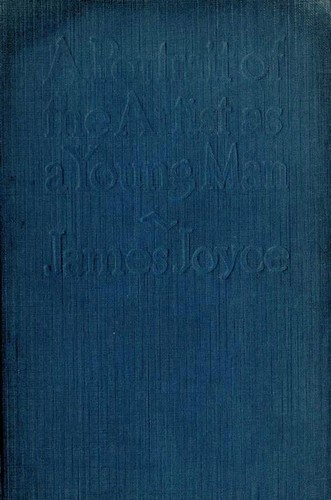
A Portrait of the Artist as a Young Man
James Joyce · 1882–1941 · Ireland
Why it matters
Stephen Dedalus grows from baby-talk to aesthetic manifesto, the prose maturing with him: style as biography. The novel of vocation: 'to forge in the smithy of my soul the uncreated conscience of my race.'
At a glance
Style shifts with the protagonist's age, from simple to dense aesthetic argument.
Deep dive
How five chapters, each ending in the same fall from confidence, teach a boy to build an entire aesthetic theory out of surviving his own recurring collapse.
Written for readers who have finished the book. No plot recap, and nothing here is safe to read first.
Themes & symbolism
Joyce structures the novel's five chapters around a repeating pattern: Stephen Dedalus rises to some peak of confidence or belonging, school triumph, sexual transgression, religious terror, aesthetic vision, and then falls, humiliated at Clongowes, sermon-shocked into blank terror at Belvedere, disgusted by his own hollow piety after over-committing to it. The pattern itself becomes the novel's real subject, each collapse teaching Stephen a little more precisely what he refuses to keep believing in, family, nation, and finally the Church his own mother wants him to serve.
The bird-girl Stephen watches wading in the sea near the novel's end crystallizes an aesthetic theory he has been building in fragments throughout, that true art requires stasis, arresting desire and loathing alike into contemplation, rather than kinesis, art that merely provokes appetite or revulsion. Joyce tests the theory immediately afterward by having Stephen compose a villanelle, a genuinely difficult, self-consciously wrought form, proof that his aesthetic is not just undergraduate posturing but something he can actually execute, however imperfect the result.
The Christmas dinner argument over Parnell, erupting between Dante's religious fury and Mr. Casey's nationalist grief, is Stephen's first exposure to the idea that Ireland's two great inherited loyalties, faith and country, can turn savagely on each other at his own family's table, and Joyce places the scene early and lets it recur as a kind of buried key: everything Stephen later renounces, church, nation, family obligation, was already shown to him as irreconcilable before he was old enough to have a theory about any of it.
Non Serviam, Spoken Quietly
Stephen's private renunciation of family, nation, and church, delivered to his friend Cranly rather than staged as any public confrontation, borrows its Latin, I will not serve, directly from Lucifer's refusal of God, and Joyce is careful to make the declaration sound less triumphant than exhausted, a young man choosing silence, exile, and cunning not because he is certain it is right but because every other available role, dutiful son, Irish patriot, ordained priest, has already collapsed under him once in the preceding chapters.
The last seal: what actually happens, and why it lands the way it does.
The ending, explained
The novel's final pages abandon the free indirect narration that has tracked Stephen's consciousness from infancy onward and switch abruptly into diary entries, fragmented, present-tense, and increasingly confident in their own voice, as Stephen prepares to leave Dublin for the Continent to become the artist his whole life has been circling toward. The change in form is the actual ending: rather than describe Stephen's departure from the outside, Joyce lets the prose itself perform the escape it is narrating, a young man's voice finally breaking free of the third-person mold that has shaped and constrained him since the book's opening baby-talk, closing on his own invocation of the old artificer Daedalus to help him forge what Ireland's church, family, and nation could not give him a form for.