
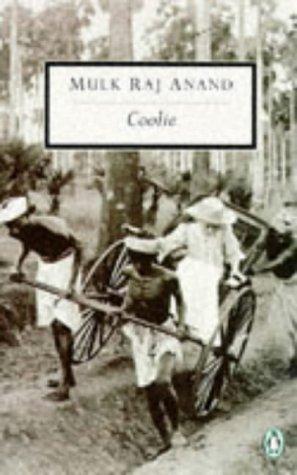
Coolie
Mulk Raj Anand · 1905–2004 · India
Why it matters
A fourteen-year-old boy is driven from his Himalayan village into a punishing odyssey through servant work, a Bombay factory, and a rich family's household. Anand's second novel widens Untouchable's indictment from caste to the whole machinery of colonial labor.
At a glance
An episodic journey through multiple settings and social classes, told in plain, direct prose.
Deep dive
One boy is passed from a hill village to a small-town household to a factory floor to a hill-station rickshaw stand, never once given a chance to stop moving long enough to ask why none of it adds up to a life of his own.
Written for readers who have finished the book. No plot recap, and nothing here is safe to read first.
Themes & symbolism
Munoo's journey through the novel has no single villain and no single system to blame, which is exactly Anand's point: an orphaned hill boy passed first into domestic servitude in a small town, then into factory work in the industrial town of Daulatpur, then into rickshaw-pulling for a British household in Simla, is failed in turn by feudal village obligation, industrial capitalism, and colonial domestic service, three entirely different economic arrangements that treat a child's labor as equally disposable.
Anand, writing under the influence of European social realism, refuses Munoo any of the interiority-building education or slow self-discovery a Bildungsroman would usually grant its young protagonist: each new setting promises him a step up, a wage, a trade, a city, and each one instead extracts more from his body than the last did, so that the novel's episodic, picaresque structure isn't simply variety, it's an argument that mobility under these conditions is indistinguishable from exploitation repeating itself in a new location.
Munoo's own resilience, his capacity for wonder at a new city, his brief friendships, his flashes of real happiness even inside degrading work, is never treated as proof that he might yet escape his circumstances. Anand lets those qualities make the novel harder to read rather than more hopeful, since a boy this alert and this likeable being worn down regardless is a sharper indictment of the system than a duller, less sympathetic protagonist would have produced.
A Factory Floor as a Second Education
Munoo's time in the Daulatpur cotton mill exposes him to industrial labor unrest for the first time, strikes, wage disputes, workers organizing against conditions Anand describes in close, unsentimental detail, and the sequence functions as the novel's most direct engagement with organized class politics, even as Munoo himself remains too young and too exhausted to fully join the movement forming around him.
A Body Used Up Rather Than a Villain Punished
Where Untouchable ends on an unresolved argument between competing solutions, Coolie refuses its reader even that: Munoo's decline into tuberculosis in the novel's final pages isn't traced to any single employer's cruelty so much as to the simple accumulated arithmetic of years of underfed, overworked child labor, and Anand's choice to end on that plain physical fact rather than on a debate about reform makes Coolie the harsher, less hopeful companion piece to his own earlier novel.
The last seal: what actually happens, and why it lands the way it does.
The ending, explained
By the time Munoo reaches Simla, working as a rickshaw puller and servant for an Anglicized household that treats him with the same casual disregard as every earlier employer, his body is already failing under the cumulative weight of years of malnutrition and physical strain. He contracts tuberculosis, and Anand traces its progress with the same unsentimental attention he's given every earlier stage of Munoo's labor, refusing any late reprieve or rescue. Munoo dies still a child, having passed through village, small town, factory, and hill station without ever once landing anywhere that treated his labor as worth more than his survival, and Anand ends the novel on that plain fact rather than on any lesson drawn from it, letting the accumulated weight of the preceding chapters make the argument instead.
Where to go next
 Mulk Raj Anand · 1935UntouchableLvl 3Fast paced
 Alan Paton · 1948Cry, the Beloved CountryLvl 4Medium pace
 Mahasweta Devi · 1974Mother of 1084Lvl 5Medium pace
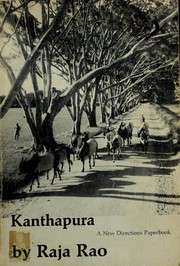 Raja Rao · 1938KanthapuraLvl 6Medium pace
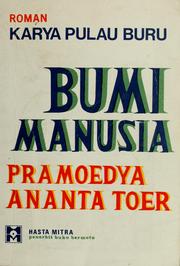 Pramoedya Ananta Toer · 1980This Earth of MankindLvl 4Medium pace
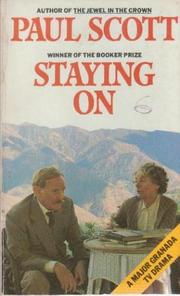 Paul Scott · 1977Staying OnLvl 4Slow burn