
Cold Nights
Ba Jin · 1904–2005 · China
Originally Han Ye (Chinese) · translated by Nathan K. Mao and Liu Ts'un-yan
Why it matters
A tubercular translator, his embittered mother, and his estranged wife tear each other apart in one cramped wartime Chongqing apartment. Ba Jin's bleakest novel trades Family's revolutionary hope for a marriage collapsing under poverty and war.
At a glance
Claustrophobic domestic conflict escalates through interior monologue with almost no relief or subplot.
Deep dive
Why Ba Jin frames both the novel's first scene and its last as the same man wandering Chongqing's blacked-out streets on a cold night, looking for the wife who isn't there.
Written for readers who have finished the book. No plot recap, and nothing here is safe to read first.
Themes & symbolism
Cold Nights strips away everything Ba Jin's earlier, more famous Family had offered as hope. Where that novel gave its trapped young people a revolutionary future to imagine their way toward, this one gives Wang Wenxuan, a gentle, ailing translator coughing blood into a cramped wartime Chongqing apartment, nothing beyond the next quarrel with his mother or his wife Shusheng, the two women whose mutual hatred makes the apartment feel smaller than its actual walls. Ba Jin sets the novel during Japan's occupation of the Chinese coast, with Chongqing swollen by refugees and the family's poverty worsened by wartime inflation, but keeps the war itself almost entirely offstage: the real siege here is domestic, waged nightly across a dinner table too small for three generations' worth of grievance.
Wang's mother and his wife each have a coherent, sympathetic case against the other, which is exactly what makes the household unlivable. His mother sacrificed for a son she still half-infantilizes and resents sharing with a wife she considers beneath him; Shusheng, younger, better educated, and employed at a bank while her tubercular husband can barely work, refuses to accept a domestic role that treats her competence as a threat to be managed rather than a resource to be valued. Wang, too weak with illness and too conflict-averse by temperament to take either side, spends the entire novel apologizing to both women at once, and Ba Jin makes that spinelessness the real weight of the book: idealism curdled, over years of compromise, into a man who can no longer act on behalf of anyone, including himself.
The Anarchist Ideal, a Generation Later
Ba Jin had built his early reputation, especially with Family, on fiction openly sympathetic to revolt against the traditional Chinese household, young people breaking from arranged marriages and suffocating patriarchal control to build something freer. Cold Nights, written in the war's final grinding years and published in 1947, offers no equivalent exit. Wang Wenxuan and Shusheng once shared exactly that earlier generation's hopeful, companionate ideal of marriage, meeting and falling in love as progressive university students rather than through family arrangement, and the novel's bitterness comes from watching poverty, illness, and an overbearing mother-in-law grind that ideal down to something indistinguishable from the arranged unhappiness Ba Jin's earlier fiction had set out to escape.
The last seal: what actually happens, and why it lands the way it does.
The ending, explained
Shusheng, unable to bear the household's endless three-way war any longer, leaves Chongqing with her bank supervisor as the office relocates further from the front, a departure the novel leaves carefully ambiguous as either professional necessity or quiet romantic escape, or both. Wang's tuberculosis worsens without her, and he dies alone in a hospital in January 1945, months before Japan's surrender would have ended the war that consumed his marriage and his health in the same stretch of years. Shusheng returns to Chongqing sometime after, only to find her husband already dead, her mother-in-law and son gone from the apartment, and nothing left of the household she once fought so hard either to save or escape. Ba Jin ends the novel with her alone on the same kind of cold night that opened it, having arrived just late enough to lose everything the quarrel was ever actually about.
Where to go next
 Ba Jin · 1933FamilyLvl 3Medium pace
 Lu Xun · 1921The Real Story of Ah-Q and Other TalesLvl 5Fast paced
 Lao She · 1937Rickshaw BoyLvl 3Medium pace
 Ding Ling · 1928Miss Sophie's DiaryLvl 4Fast paced
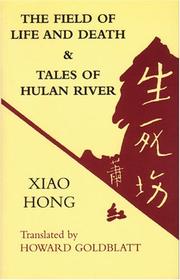 Xiao Hong · 1935The Field of Life and DeathLvl 6Slow burn
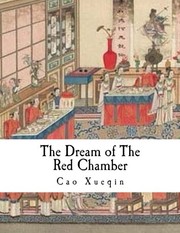 Cao Xueqin · 1791Dream of the Red ChamberLvl 9Slow burn