

Around the World in Eighty Days
Jules Verne · 1828–1905 · France
Originally Le Tour du monde en quatre-vingts jours (French)
Why it matters
Phileas Fogg bets his entire fortune on a wager: circle the globe by train, steamship, and elephant in exactly eighty days. Verne's lightest, most purely delightful adventure runs on nothing but a ticking clock and Victorian confidence in machines.
At a glance
Plain, brisk adventure prose aimed at a popular audience.
Deep dive
Why the wager that drives this whole novel isn't really about geography, and what the mathematics of the International Date Line has to say about the kind of man Phileas Fogg actually is.
Written for readers who have finished the book. No plot recap, and nothing here is safe to read first.
Themes & symbolism
Fogg is introduced almost entirely through timetables and habit, a man whose life runs with such exact, unvarying regularity that his own club members can set their watches by his card games, and Verne's real subject in the opening chapters isn't adventure at all but a kind of human clockwork, a Victorian gentleman so disciplined he barely registers as a person with an interior life. The eighty-day wager, taken on almost as a logical extension of that same precision rather than as a romantic impulse, becomes the mechanism Verne uses to test whether a man built entirely out of schedule and self-control can survive contact with a world that refuses to run on time, floods, storms, snowbound trains, and a rescue that has nothing to do with any itinerary.
Fogg's decision to divert from the wager's precise schedule to rescue Aouda, a young widow about to be burned alive in a suttee ritual in India, is the crack the whole novel has been waiting for: a man who has organized his entire existence around never wasting a minute chooses, once, to spend days he cannot spare on a woman he has no obligation to save, and Verne treats that single deviation as more consequential than every mile of the journey around it, since it is the first evidence that Fogg's clockwork exterior might have an actual person running inside it. Passepartout, his volatile, warm, endlessly resourceful valet, supplies the emotional register Fogg withholds, panicking, improvising, falling in love with a circus and a woman in turn, so that the novel's real journey is watching Fogg gradually absorb some of his servant's humanity along the physical route.
Losing a Day That Was Never Actually Lost
Detective Fix trails Fogg across three continents convinced, on flimsy evidence, that he is a bank robber fleeing London with the stolen money, and his repeated attempts to delay Fogg long enough for an arrest warrant to catch up supply most of the novel's suspense without ever needing a villain more sinister than an overzealous, badly mistaken policeman. Fix's mistake is procedural rather than moral, and Verne uses him to keep the stakes personal and legal rather than physically dangerous, a bureaucratic shadow chasing a man who has broken no actual law.
The last seal: what actually happens, and why it lands the way it does.
The ending, explained
Fogg arrives back in London believing he has lost the wager by a single day, having tallied his own travel time meticulously against the calendar the entire journey, and resigns himself calmly to financial ruin and disgrace rather than argue the point. Passepartout, sent out on an errand, discovers the truth first: traveling eastward around the globe means gaining an hour with every time zone crossed, so Fogg has actually arrived a full day earlier than his own careful count showed, a fact no one in the story realized because none of them thought to question the date rather than the distance. Fogg wins the wager with minutes to spare, marries Aouda, and Verne closes on the joke that a man this precise was undone, briefly, by the one variable his own meticulous arithmetic never accounted for, the shape of the earth itself working in his favor without his permission.
Where to go next
 Jules Verne · 1864Journey to the Center of the EarthLvl 3Fast paced
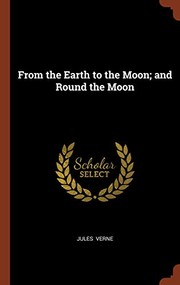 Jules Verne · 1865From the Earth to the MoonLvl 3Medium pace
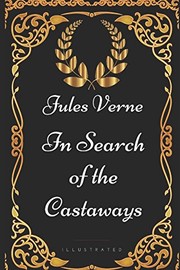 Jules Verne · 1868In Search of the CastawaysLvl 3Fast paced
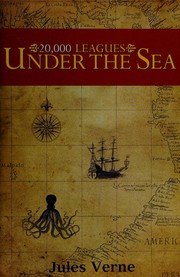 Jules Verne · 1870Twenty Thousand Leagues Under the SeaLvl 3Medium pace
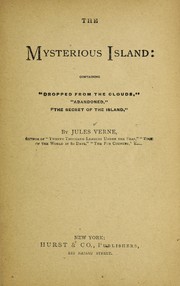 Jules Verne · 1874The Mysterious IslandLvl 4Fast paced
 Raymond Queneau · 1959Zazie in the MetroLvl 5Fast paced