
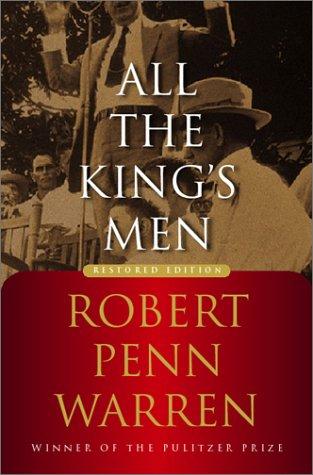
All the King's Men
Robert Penn Warren · 1905–1989 · United States
Why it matters
A cynical journalist becomes the conscience-wracked aide to Willie Stark, a folksy populist governor modeled on Huey Long, watching charisma curdle into corruption. Warren's political novel remains American fiction's finest study of power's seduction.
At a glance
Ornate, rhetorically dense narration voiced by a brooding, digressive narrator.
Deep dive
Why Jack Burden's theory that nothing anyone does really matters is the novel's real villain, not Willie Stark's corruption.
Written for readers who have finished the book. No plot recap, and nothing here is safe to read first.
Themes & symbolism
Jack Burden spends most of the novel hiding behind what he calls the Great Twitch — the idea that human beings are just meat responding to electrochemical impulse, that history has no moral content and therefore no one, including Jack, can be held responsible for anything. It's a coward's philosophy dressed as sophistication, and Warren builds the entire Judge Irwin plot to demolish it: Jack digs up the Judge's old corruption purely as research for Willie, not malice, and the digging kills a man who turns out to be his own biological father — proof that even disinterested, purely intellectual acts have consequences that land on people you love.
Willie Stark's arc refuses the easy 'power corrupts' reading precisely because his corruption and his achievements are the same motion: his hospital, his roads, his taxes on the rich are real, and his blackmail, his affairs, his contempt for the legislature are the tools he uses to build them, delivered in his own gospel that everybody's got 'a little jolt of the stuff' — original sin — buried somewhere, and Jack's job is just to find it. That doctrine turns out to be true of everyone in the book, Jack and the Judge included, which is Warren's real argument: populism's seduction isn't a personal flaw in one folksy governor, it's a mechanism built out of the same compromised material as everybody around him.
The Spider Web and the Doctrine of Complicity
Jack's own recurring counter-image to the Great Twitch is the spider web: touch one strand and the whole structure trembles, every life connected to every other whether you acknowledge it or not. The novel keeps proving the web true against Jack's preferred nihilism — his research into Judge Irwin's past, meant as detached fact-finding, vibrates outward into the Judge's suicide, Anne Stanton's affair with Willie, and Adam Stanton's assassination of Willie in turn. By the end Jack can no longer maintain that actions dissolve into meaningless physiology; the web forces him toward the harder, more adult admission that everyone in the story is at least partly responsible for what happens to everyone else.
Willie Stark and the Kingfish
Warren, a Louisianan who watched Governor Huey Long's career up close, built Stark from Long's unmistakable outline — the hayseed-turned-demagogue, the free textbooks and hospitals funded by soak-the-rich taxation, the total contempt for procedural niceties, the assassination by a man with a personal grievance. But the novel isn't a roman à clef so much as a study of why that particular bargain, real material gains purchased with real moral corrosion, kept proving irresistible to Depression-era voters, and why intellectuals like Jack kept finding themselves working for men they professed to see through.
The last seal: what actually happens, and why it lands the way it does.
The ending, explained
Dr. Adam Stanton, learning of Willie's affair with his sister Anne, shoots Willie dead in the capitol and is immediately gunned down by Willie's bodyguard, Sugar Boy — a double killing that leaves Jack without either the man he served or the friend whose idealism he'd envied. Separately, Jack's investigation into Judge Irwin's old corruption forces a confrontation in which the Judge, confirmed as Jack's actual biological father, shoots himself rather than face exposure. Stripped of the Great Twitch's comfortable fatalism by these consequences he can no longer disown, Jack settles into a harder, sadder maturity — reconciling with his mother, understanding his stepfather differently, and moving toward a shared life with Anne — closing the novel on complicity accepted rather than power simply condemned.
Where to go next
 William Faulkner · 1930As I Lay DyingLvl 9Medium pace
 Joyce Carol Oates · 1969themLvl 6Medium pace
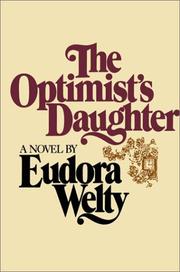 Eudora Welty · 1972The Optimist's DaughterLvl 4Medium pace
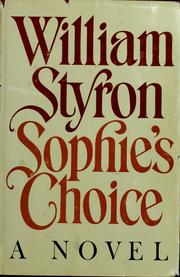 William Styron · 1979Sophie's ChoiceLvl 6Slow burn
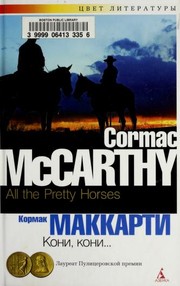 Cormac McCarthy · 1992All the Pretty HorsesLvl 6Medium pace
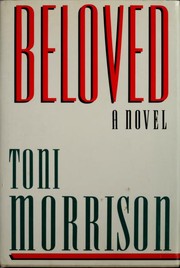 Toni Morrison · 1987BelovedLvl 8Slow burn