
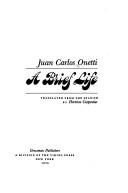
A Brief Life
Juan Carlos Onetti · 1909–1994 · Uruguay
Originally La vida breve (Spanish)
Why it matters
An advertising copywriter, his marriage collapsing, invents an alter ego and a film script that lets him live a second, secret life next door. Introduces Santa María, the invented town Onetti would inhabit for decades, and the Boom's acknowledged precursor in interior defeat.
At a glance
Nested fictions-within-fictions and a deliberately evasive narrator obscure where reality ends and invention begins.
Deep dive
A depressed advertising copywriter starts inventing a fictional doctor and a fictional town to survive his own marriage, and the invention gradually becomes more real than the life it was built to escape.
Written for readers who have finished the book. No plot recap, and nothing here is safe to read first.
Themes & symbolism
Brausen's marriage has stalled around his wife Gertrudis's mastectomy, which he can't stop registering as a wound to his own desire rather than hers, and rather than deal with that failure directly, he starts building an alternate world to disappear into: Díaz Grey, a laconic doctor in an invented town called Santa María, sketched out scene by scene as Brausen's actual life narrows toward losing his job and his marriage at once. The fiction isn't escapism in any simple sense. Onetti lets it function as Brausen's only remaining form of agency, a place where he can still make things happen, even as his real Buenos Aires apartment fills up with the sounds of La Queca, the prostitute next door, whose fights and clients Brausen starts absorbing through the wall as raw material.
To actually approach Queca rather than just listen to her, Brausen invents a second, more capable self, Arce, a harder and more decisive man he can perform when his own paralyzed personality won't get him what he wants. Onetti treats the split without any psychiatric vocabulary or authorial judgment: Arce isn't a delusion overtaking Brausen so much as a tool Brausen builds because his given self was never going to be adequate to his own desires. That's the novel's real theory of identity, that a self is less a fixed core than a set of masks assembled out of necessity, worn until one of them starts making decisions the original man would never have made on his own.
Santa María Outgrows the Book That Invented It
Díaz Grey's fictional town, sketched here as nothing more than Brausen's private refuge, becomes the fixed setting of most of Onetti's subsequent fiction, recurring across Juntacadáveres and El astillero as a durable, detailed geography rather than a one-off daydream. That afterlife retroactively changes how this novel reads: Santa María was invented inside the book as one broken man's private coping mechanism, and then went on, in Onetti's larger body of work, to outlive and outweigh the Buenos Aires reality it was built to escape from, which is close to the most literal vindication a fictional escape hatch could ever receive.
Arce Does What Brausen Can't
Everything Brausen is too passive to do himself, approach Queca, follow her to Montevideo, involve himself in her volatile world, gets done instead under the name Arce, and Onetti is careful never to let the reader settle on which identity is the real one. Brausen narrates both, sometimes slipping between them mid-scene, and the effect is less a psychological case study than an argument about how much of anyone's decisive action depends on believing yourself to be, briefly, someone else.
The last seal: what actually happens, and why it lands the way it does.
The ending, explained
Queca is killed, and Brausen, having spent the novel performing Arce closely enough that the identity has stopped feeling like a costume, is implicated in her death alongside her old associate Ernesto. Rather than face the consequences as himself, the two men flee toward the real coastal town that Brausen's invented Santa María has been modeled on all along, collapsing the distance between his fiction and his life almost completely. The novel's final chapter hands the narration entirely to Díaz Grey, who slips past a police confrontation of his own alongside a woman named Annie, and Onetti offers no clean return to Brausen's own voice to close the book. The fictional escape hatch has, by the last page, effectively become the only self left standing.
Where to go next
 Juan Carlos Onetti · 1941No Man's LandLvl 7Slow burn
 Juan Carlos Onetti · 1961The ShipyardLvl 8Slow burn
 William Faulkner · 1930As I Lay DyingLvl 9Medium pace
 Juan Rulfo · 1955Pedro PáramoLvl 7Slow burn
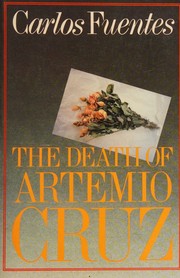 Carlos Fuentes · 1962The Death of Artemio CruzLvl 8Slow burn
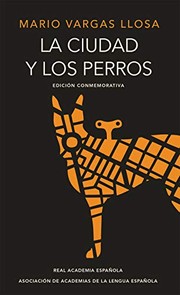 Mario Vargas Llosa · 1963The Time of the HeroLvl 6Medium pace