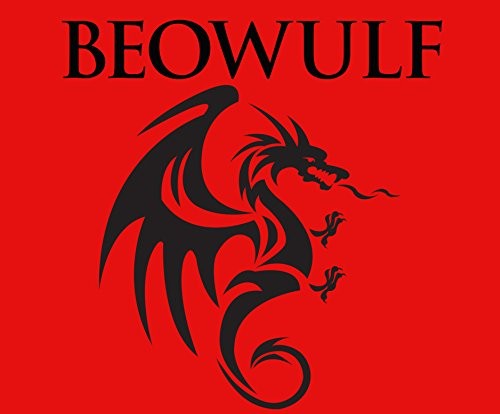
Beowulf
The Beowulf Poet · 940 CE–1010 · England
Originally Beowulf (Old English) · translated by Seamus Heaney
Why it matters
A hero crosses the sea to kill a monster, then its mother, and returns home to a long, celebrated reign that is tested one last time, decades later, when a dragon's disturbed hoard demands a final reckoning. The lone surviving Old English epic, elegiac about its own vanished pagan world, and English literature's deepest root.
At a glance
An alien heroic world and digressive structure, though Heaney's translation reads with muscular clarity.
Deep dive
What the dragon's hoard is actually punishing, and why the poem keeps telling you the ending is coming long before it arrives.
Written for readers who have finished the book. No plot recap, and nothing here is safe to read first.
Themes & symbolism
The poem's three monsters aren't a random escalation — they're three failures of the mead-hall's gift economy taken to their logical extreme. Grendel, descended from Cain, is exile and kin-feud made flesh, unable to join the joyful noise of Heorot he can only destroy from outside it. His mother enacts the blood-vengeance the poem's whole social order runs on, just with the sympathy stripped out. The dragon, finally, guards gold that does nothing — hoarded rather than given, the opposite of a good king's ring-giving — and a good king's death is what it takes to expose how much of Beowulf's own authority was always propped up by that same economy of gifts and debts.
A Christian poet is narrating pagan ancestors, and the seam shows everywhere: God gets credit for outcomes that read, structurally, like wyrd — fate — running its course regardless. Heroism here is magnificent and doesn't actually save anyone permanently; the poem's constant digressions into future disasters (the Scylding dynasty's collapse, the doomed Finn and Hengest feud, the Swedish wars still to come for the leaderless Geats) mean the audience is never allowed to enjoy a victory without already knowing what it will cost.
Ring Composition: From Scyld's Ship to Beowulf's Barrow
The poem opens with the funeral of Scyld Scefing, a foundling king sent back out to sea in a treasure-laden ship, origin and destination both unknown. It closes with Beowulf's cremation and barrow burial on a headland, visible to sailors, the treasure he died winning buried uselessly with him at Wiglaf's order rather than distributed to the people who need it. The symmetry is deliberate: a poem about the birth and death of protective kingship frames itself with two funerals, and the second one answers the first by showing exactly how little has actually been secured in between.
The two halves of the poem itself are built on the same before-and-after logic. Young Beowulf's fights against Grendel and his mother happen in someone else's hall, won with his bare hands and celebrated with feasting and treasure freely given — glory with an audience. The dragon fight, fifty years later, happens on his own land, alone but for Wiglaf, and the gold he wins buys nothing but his own funeral. The poem doesn't let its hero's early triumphs stand as the whole story; it insists on showing what becomes of that same glory once the body carrying it grows old.
The last seal: what actually happens, and why it lands the way it does.
The ending, explained
A thief steals a cup from a dragon's hoard, and the enraged dragon starts burning the Geatish countryside. Beowulf, now an old king, goes to fight it with a small retinue; when the fight turns against him, every retainer flees except his young kinsman Wiglaf, who stays and helps land the killing blow. Beowulf is mortally wounded and dies having secured the treasure but not, really, his kingdom — with his death, the poem makes clear, the Geats have lost their protector and face imminent invasion from old enemies. He's given a lavish ship-funeral and a barrow burial with the dragon's gold sealed inside it, useless to the living, while the poem closes not on triumph but on collective dread about what happens to a people once its one great defender is gone.