

Giovanni Boccaccio
Italy
Worldly, frank, comic storytelling nested inside a frame tale: earthy realism about sex, cunning, and mortality delivered with brisk narrative control.
Boccaccio was raised partly in Naples, trained unhappily for banking and canon law before turning to poetry and prose under the influence of the city's vibrant courtly culture, and returned to plague-stricken Florence in his mid-thirties, having lived through the Black Death of 1348 that killed a large share of the city's population.
The Decameron, written in the plague's immediate aftermath, frames a hundred stories (of love, trickery, lust, and cunning) as tales told by ten young Florentines who've fled the dying city for a country villa. Its vernacular Italian prose and frank, often ribald realism made it a direct model for Chaucer's Canterbury Tales a generation later.
Later in life, under the influence of a stern friar's deathbed warning, he grew ashamed of the book's earthiness and urged friends to burn their copies; they didn't, and it survived to become one of the founding texts of European prose fiction.
Lines of influence
Their books in the atlas
- 1353
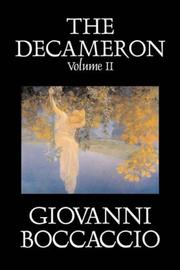 The DecameronLvl 5short story collection
Meanwhile, elsewhere


If you like Boccaccio, try
 1343–1400Geoffrey ChaucerEnglandshaped by Boccaccio · shared movement: Medieval Storytelling · both shaped by Alighieri
 1265–1321Dante AlighieriItalyshaped Boccaccio · shared movement: Medieval Storytelling · both shaped by Ovid
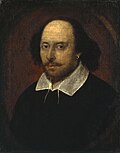 1564–1616William ShakespeareEnglandshaped by Boccaccio · both shaped by Ovid · neighboring movements
 43 BCE–17 CEOvidItalyshaped Boccaccio · both shaped Chaucer · neighboring movements
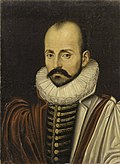 1533–1592Michel de MontaigneFranceshaped by Boccaccio · neighboring movements
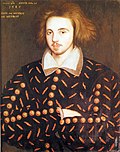 1564–1593Christopher MarloweEnglandboth shaped by Ovid · both shaped Shakespeare · neighboring movements