

The Wild Ass's Skin
Honoré de Balzac · 1799–1850 · France
Originally La Peau de Chagrin (French)
Why it matters
A desperate young man finds a magic skin that grants any wish, shrinking with each one granted and counting down what's left of his own life: Balzac's fantastical fable turns pure desire into a countdown, philosophy and horror fused into one relentless bargain.
At a glance
Philosophical digression and fantastical framing slow its otherwise brisk fable structure.
Deep dive
A desperate young man is handed a talisman that grants every wish and shrinks with each one it grants, and Balzac spends the rest of the book asking whether wanting anything at all was ever survivable.
Written for readers who have finished the book. No plot recap, and nothing here is safe to read first.
Themes & symbolism
The title's untranslatable pun is the whole conceit stated twice at once: chagrin means both the shagreen leather of the skin itself and grief, so that every wish Raphael de Valentin makes literally shortens his remaining life while also, in the language's other sense, simply grieving him toward death. Balzac gives the antiquarian who hands Raphael the skin a long opening speech dividing human life into willing, which burns a person out fast, having power, which burns almost as fast, and knowing, the only mode that preserves a life by refusing to spend it, a framework the rest of the novel tests to destruction.
Raphael's two women map that framework onto flesh: Foedora, the glittering, unattainable society beauty he chases before he owns the skin, wanting her nearly kills him through sheer unrequited effort, while Pauline, the devoted, poor woman who loves him plainly, becomes the danger only after he's rich, because now even wanting her honestly costs him irreplaceable time. Balzac's cruelest turn is making benevolent desire just as lethal as vain desire; the skin doesn't distinguish between wishing for a fortune and wishing to hold the woman who loves him, it only measures the wanting.
Balzac frames the whole bargain inside a gambling den, where Raphael has just lost his last coin and is walking toward the Seine to drown himself when the antiquarian's shop intervenes, so the skin arrives less as a fantastical intrusion than as one more table at the same casino, offering the same wager, life against desire, with sharper odds and better decor. The shop itself, crammed with relics from every dead civilization Raphael can name, functions as a museum of exactly the vanished willing and having the antiquarian has just finished warning him against, a cabinet of consequences he walks straight past on his way to acquiring one more.
The Fable That States Balzac's Whole Theory Outright
Balzac believed, and would keep restating across the Comédie humaine, that people are born with a fixed reserve of vital force that ambition and desire draw down irreversibly, the same premise that quietly governs how Père Goriot's devotion to his daughters consumes him or how Lucien de Rubempré burns through his own talent in Lost Illusions. This novel is the one place Balzac makes the premise literal rather than implicit, handing his protagonist an actual, visible gauge of how much life is left and letting the reader watch the needle move with every choice.
The last seal: what actually happens, and why it lands the way it does.
The ending, explained
Wealthy now and living with Pauline, Raphael tries to survive by refusing every stimulus that might register as a wish, avoiding conversation, entertainment, even sunlight, watching the shrinking skin with the fixation of a man reading his own death sentence in real time. A sudden surge of jealous desire for Pauline finally overwhelms his discipline; he seizes her in a feverish, half-violent embrace and dies almost immediately after, the skin having nothing left to give. Pauline, left holding a man who died wanting her too much rather than too little, attempts to take her own life rather than survive him, closing the fable on the same bleak arithmetic it opened with: in Balzac's ledger, love spends exactly the same currency as ambition does.
Where to go next
 Honoré de Balzac · 1832Colonel ChabertLvl 3Medium pace
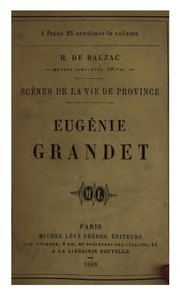 Honoré de Balzac · 1833Eugénie GrandetLvl 3Medium pace
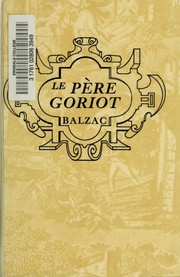 Honoré de Balzac · 1835Père GoriotLvl 4Medium pace
 Honoré de Balzac · 1837Lost IllusionsLvl 5Medium pace
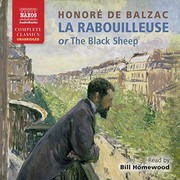 Honoré de Balzac · 1842The Black SheepLvl 5Medium pace
 Honoré de Balzac · 1846Cousin BetteLvl 5Medium pace